[00:00:00] Speaker A: The truth can break through
[00:00:04] Speaker B: housing. It isn't just a headline. It's pressure. It's pressure everywhere. It shows up in our workforce, in our schools, in our ability to grow communities, and ultimately who gets to live where.
And right now, one of the biggest challenges that we're having is people can't afford what's being built.
[00:00:22] Speaker C: No.
[00:00:23] Speaker A: And today we're going to talk about the missing middle, what that even means and how it fits into the larger housing ecosystem.
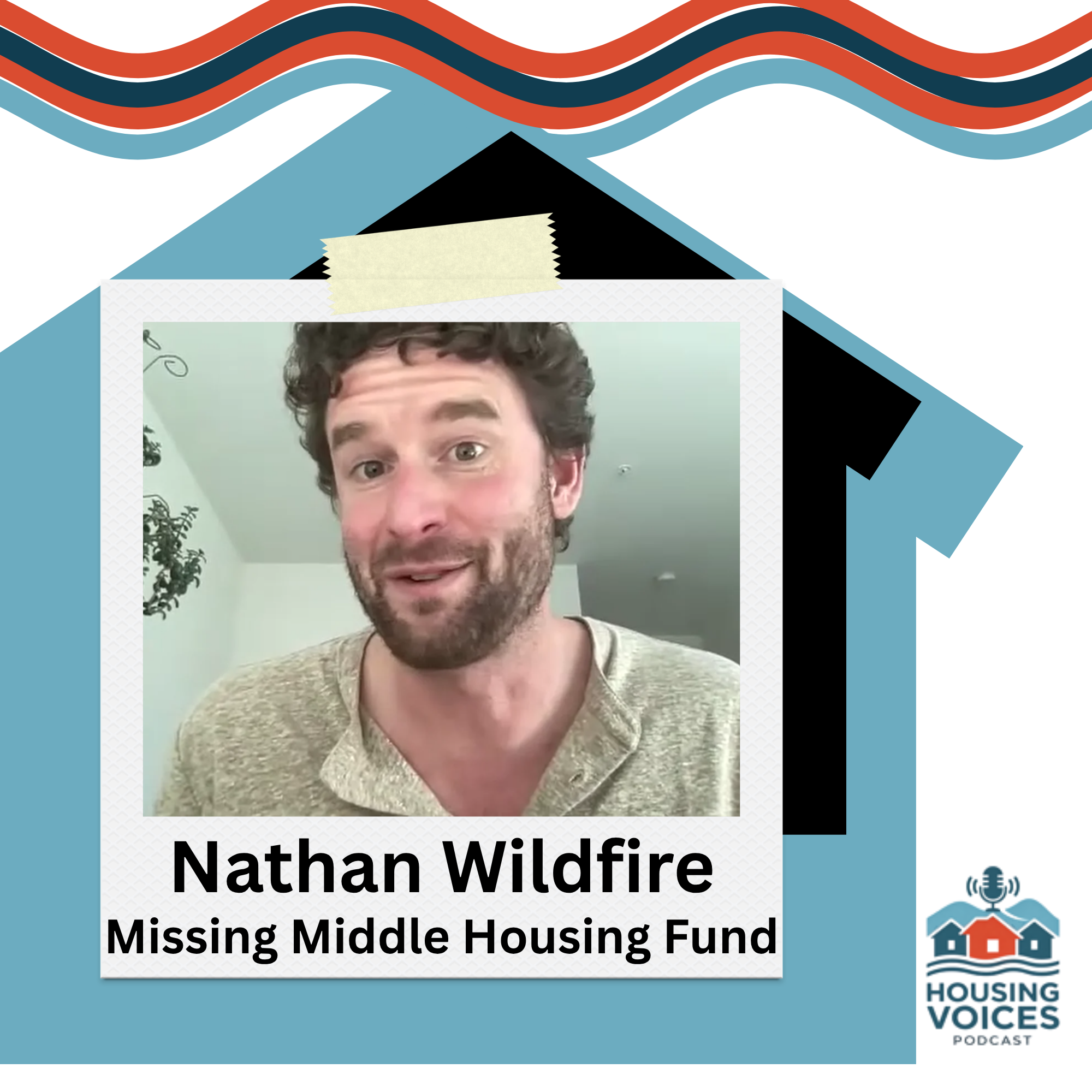
We're going to talk about our development bucket, probably a little bit of financing bucket, but it's going to be a great conversation with Nathan Wildfire. He's the CEO of Missing Middle Housing Fund, and he works with a lot of different folks in the housing industry sector universe, however we want to describe that.
[00:00:58] Speaker B: He's like a catch all.
[00:00:59] Speaker A: Yeah.
[00:00:59] Speaker C: Yep.
[00:01:01] Speaker B: I'm interested in hearing as to how he is bringing all of that together as one.
Right. The infrastructure, the funding, the building to reach the missing middle, that 80 to 120%.
[00:01:16] Speaker A: Absolutely.
I'm really interested. It's a new area of housing that I haven't ever heard. Missing middle or. Or middle housing up until maybe a couple years ago, and now it's all over the place. And I'm really interested to talk with him about that.
[00:01:31] Speaker B: I know it's going to be really cool.
[00:01:33] Speaker A: Yeah.
[00:01:33] Speaker B: I'm Marty.
[00:01:34] Speaker A: And I'm Bri.
[00:01:35] Speaker B: This is housing voices
[00:01:39] Speaker C: from the porches
[00:01:40] Speaker A: and shelters, streets and the rooms. If the houses have voices, the truth could break through.
[00:01:54] Speaker B: Nathan, thank you for being here with us.
Tell us, what is the passion behind you starting this missing middle and who you are.
That's important too.
[00:02:06] Speaker C: Sure. Hi. Hi. Hello to both of you and thank you so much for having me in my organization on your lovely podcast, which is, in my opinion, pretty awesome.
Yeah. Good. Good. That makes three of us.
So I grew up in Pittsburgh, Pennsylvania.
My hometown had been this huge city leading up and through World War II. That's way before my time. But a lot of civic infrastructure remembers this heyday right through the 50s and 60s.
In the 1970s, steel production, which was our reason for being, started leaving.
And with that, people left.
And so the city that I grew up in was about half vacant, half empty.
And I would take the. The train, the little, little commuter train into downtown to have whatever internship or to go watch a Pittsburgh Pirates game. And I rem. I was puzzled. I was puzzled why one block could be so full of vibrancy and vitality and then the very next block, the houses were falling down or they were empty.
And this kept going because Pittsburgh's a series of hills and rivers, and so the neighborhoods are pretty starkly defined.
Meanwhile, My grandmother had 12 children. My mom is the seventh of 12.
[00:03:34] Speaker B: Wow.
[00:03:35] Speaker C: Wow.
Rural Pennsylvania. I grew up in the city, but they grew up in rural Pennsylvania. And Grandma worked for HUD full time until she was 80 years old and then kept working a few more years building housing for seniors in rural areas. So my whole life, every Christmas time, I was having a Friday night pizza party at some housing development Grandma built.
She's my hero, right? So here I'm trying to figure out why Pittsburgh has good neighborhoods and rough neighborhoods. And meanwhile, grandma is doing these amazing things in rural Pennsylvania. And that. That really stuck with me.
Fast forward all the way towards, you know, I have a career in community development in Pittsburgh and then do that type of work in Vermont.
Then I start doing some of that work in Oregon a little bit more than 10 years ago.
And while I'm, you know, a government employee for Business Oregon and their innovation team, I create a community choir.
And I'm the choir director of a community choir in, in Portland.
And the pandemic begins. Now, when the pandemic begins, you can't sing. You can't sing in a group.
[00:04:56] Speaker A: But.
[00:04:56] Speaker C: But more critically, we had a over 20 folks in our choir, and within a few months, we were down to eight.
And that's because when you have a choir, people join from all walks of life. We had folks working as machinists and bakers and barbers and senior care workers and retail and college professors and computer programmers. And they would have an economic disruption in their life like everybody did the pandemic. But they couldn't afford to live in Portland anymore. And so they left. They went to the coast, they went to Texas to go to school. They went back home to Montana.
So my community, which relied on harmony, literal community harmony, was broken. And so it's personal to me for those three big reasons, right? Pittsburgh, why does a city grow the way it does? Grandma bringing me to these senior care facilities in rural Pennsylvania, and then I'm leading a choir, and all of a sudden, more than half of it's gone because of housing.
And so that's, that's where the passion comes from. That's where I think my drive to, to solve our housing underproduction crisis comes from. I mean, it's. Let's be honest, right? It's the largest check most of us write every month is our mortgage or our. Or our rent. It's foundational to people's sense of stability and pride and economic vitality. And I truly believe it's the foundational issue of our time. If we can't have a place to live, our people, our places and our economies don't reach their potential. So I'll pause because that's quite a bit. But that's where it comes from.
Yeah.
[00:06:40] Speaker B: It's always nice to know where people's passion comes from because to create something like this, it has to come from the heart.
And it's really lovely hearing that.
[00:06:51] Speaker A: Right.
[00:06:52] Speaker B: And your grandma sounds like a really amazing woman and such a trendsetter. Because working for HUD back in the day wasn't an easy job. Right. My mom worked as a lease manager for HUD housing outside of D.C. and so I can remember going to some of the communities and. And yeah, that's awesome.
[00:07:12] Speaker C: Thanks.
[00:07:12] Speaker A: So then what led you to create missing middle housing fund? And because we were talking a little bit about this pri prior to us sitting down to record it and I only really started hearing middle income housing and middle housing like a couple years ago is when I really start started hearing it. And I was very interested in where the hell did this term come from?
Why hadn't it existed previously and why like why do we need it now?
[00:07:47] Speaker C: Sure.
So couple questions there. So let's go backward.
Where's it come from? It's always been there, but we don't build it anymore.
We don't. Less than 5% of all the housing that is built in America is built for those making middle incomes.
And the reason is because it just doesn't pencil out. Right. Like the folks that would live in those homes make too much money to qualify for any big a affordable subsidized housing.
And you know, creating affordable big affordable housing. Right. As HUD defines it usually has subsidy with either the rent or the creation of the housing itself right through the development pipeline. But middle income, that's been missing for a long time. We don't see subsidize that in any way. And then of course market rate housing, basically you build homes of some kind and you charge the biggest rent or the highest sales price you can.
Well the folks that can afford that go get it. And so there's this missing piece in the middle, we call that workforce housing or middle housing and sometimes attainable housing.
And that is the piece that caters to folks making between 80% of area median income and 120% of area median income. And depending on where you live in the world, you know, and maybe in Benton county that, that could be some of the folks that are working in your schools. That could be some of the folks that are caring for our sick or senior care workers.
It could be retail workers.
Their jobs make too much money to qualify for any of that affordable stuff, but they don't make enough to really have housing of choice near the economic opportunity or the family or the amenities that they love. Right, okay. So you ask another thing though. You said, like, why did I do this? Like, why, why did we start?
[00:09:41] Speaker A: Yeah, why? What led to the creation of the missing middle housing fund?
[00:09:45] Speaker C: Sure. So we'll go back to that pandemic day and I, In October of 2019, I left my work at Business, Oregon.
I had been feeling a little far from the people I served, and I didn't know what to do. I didn't know what to do. And so I, I went backpacking a lot and I went to Cuba and, you know, had a little midlife crisis. And. And the whole time a colleague of mine that I worked on a different project with kept saying, you got to come meet with these guys. We've got this idea for housing and we want you to join our team. And I was like, what is it? And they're like, we don't know, but you should come join this team. We're going to launch.
[00:10:29] Speaker A: I love those invites.
[00:10:32] Speaker C: So finally, like, you know, after the new year, so right at the beginning of 2020, I had coffee a few times with these folks that were creating a little for profit company to try to get to the bottom of why does it take so long and why does it cost so much to build housing?
And they were like, but we don't know a lot about housing. And you do, you should, you should join our team. And you know a bunch about public private finance from all your government work. Why don't you join our team? And I said, okay, I'll give you guys three months to test me and I'll test you for three months. And like 40 days into it, the world shut down.
And so for the next year, not much was happening in the real estate development. Space costs were skyrocketing because of material costs.
And, you know, I'm more or less a golden retriever puppy by temperament. And I was stuck in my basement, like creating a startup, right? So the only thing I could do was just talk to people and try to get to the bottom of like, what are you seeing? What are you learning? So we talked over 100 developers, probably 30 architects, 30 GCs, banks, you know, public policy for literally everybody because that's all you could do.
After a year, we came to two big conclusions.
Number one, this is a terrible business plan. Shut it down. There is no silver bullet for how you solve the housing under production crisis. Right?
But the other big conclusion was it's kind of no one's job to fix our housing ecosystem writ large. Right? There's lots of people that do a piece of it. They're really good at building XYZ housing and ABC geography, or maybe they're really good with low income housing tax credits or they're, they run a city and they're really good at like their policy. Right. But nobody's job was really to kind of consider that writ large.
So we naively raised our hand and created the missing middle Housing Fund to try to understand and solve why it takes so long and costs so much. And our goal to by 2040, double housing production for half the cost and half the time across all of Oregon.
And I can tell you a whole bunch about how we do that, but that's sort of how it was born.
And we also kind of figured out that there's innovation everywhere we looked.
That's another big thing we learned in the, we keep learning there are housing innovators in government, in contracting in materials, but there's very little infrastructure to link those to each other and then crucially to the cities, towns, groups of employers that, that need them.
So that's what we do. We go find those innovators and we connect them and then help them scale and get customers. And now I'll bring it back and then I'll pause for a minute.
The, the, the key bit of business here is like, okay, so why middle income?
Well, it's the hardest to build and it's built the least. And crucially, you know, five years ago there was just no cooks in that kitchen.
So if you were trying to get people to, to learn with you and pay attention, you know, there was a lot of folks in the affordable housing space and the market rate housing is more or less functioning okay, but nobody was in, in that middle income space. So that's, that's. So I hope that's.
[00:14:17] Speaker A: But yeah, that's how it's really interesting to me that there were, there was nobody in the middle income development space in particular.
Why, why is it so hard? Because from someone who I am not deeply enmeshed in the intricacies of, of the development. My background is I worked for Senator Wyden, so I, you know, I know that side of it. But in terms of the Actual doing. Right.
Like what does that look like? Because on its face it sounds like, okay, just built, like build a house. Why is a middle income house more expensive to build than a market rate house? And what, what makes it more complicated?
[00:15:00] Speaker C: Sure. So there's two big reasons it's not more expensive.
[00:15:04] Speaker A: Okay.
[00:15:05] Speaker C: Same cost as the lower income house or the high end income house, but there's less revenue.
Okay.
[00:15:13] Speaker A: That's, you can't make more off the top from like a developer's point of view or.
[00:15:17] Speaker C: Yeah, yeah. So like why would you build something where there's no subsidy to build it?
[00:15:23] Speaker A: Okay.
[00:15:24] Speaker C: You have to charge less rent or sell it for less. Why, why would you do that?
You're just going to make less money and crucially, you're usually not going to make enough money at all to make it worth it.
[00:15:38] Speaker A: Interesting. So then is the fund, are you giving money to developers, for example, to make it more profitable for them?
[00:15:47] Speaker C: No, we do not give money away.
So what we're always trying to do is reduce cost in time.
So it's not like we have a bunch of cash that we just, you know, because that's not really sustainable if you're, if you're just trying to have a pile of cash to smooth out that difference. Well, once the pile of cash is gone.
[00:16:08] Speaker A: Yeah, exactly.
[00:16:09] Speaker C: Done. Right.
So our job is to fix the entire ecosystem. Right. Why is the public policy piece so broken and onerous? Why are we short 14,000 construction workers in Oregon to meet our housing goals?
Why is there no commercial financing for middle income products? Or housing innovation just doesn't exist. Right.
So, so we're trying to get to the bottom of each of those things. There's another reason though, why middle income housing was built seldom over the last four years.
Some people would say missing middle housing. We, we use that term to refer to income, but a lot of people use that term to refer to like a typology of a house.
So think of like a cottage cluster or a courtyard housing. Right. Or adus, which we used to call granny flats or single room occupancy. These are all types of housing that were more cost effective to build and often helped folks get their first rung up on the ladder on their pathway to maybe being a homeowner or really stable renter.
But we legislated out of existence or allowance most of those housing types usually through zoning codes. And so you don't see a lot of courtyard housing built anymore or cottage clusters. I mean, in the last decade you've heard so much about accessible Dwelling units. Well, yeah, Used to be everywhere. Right. There was like, there was a place you could live above your garage, but, yeah, then we kind of got rid of those. So there's these two pieces. Right. It doesn't make a whole lot of financial sense for a developer to do it.
And a lot of the ways they could have done it were suddenly off the table.
That's why we're here.
[00:18:13] Speaker B: So, you know, I'm in the real estate world, and so that was an understandable reason. Right. People do it for profit. Right.
Hearing what Bri has to say from her perspective. Not in that world. Right. Is. Well, why wouldn't you do it? Right. Because it's about money and policy.
How are you bringing the juncture of educating people about why this hasn't been happening and what we can do about it? Right. From the policy standpoint, along with the reduction in costs, does that make sense?
[00:18:47] Speaker C: Yeah. So.
So housing's on everybody's lips, thanks to folks like you. Right. People are really caring about it in a way that I would say is different than the last couple decades. Yeah.
And so there's there's sort of two big. Well, two or three big groups of people who are desperate to solve this housing crisis, and they don't. They don't know how. Right. Or they know a little bit, but not a lot. So I'll give you a couple examples. One would be big employers.
Big employers. Now cite over and over and over again. The biggest barrier to hiring and retaining employees is now housing. It's the ability of their employees or inbound potential employees to find the right type of housing at the right price points to take the job or keep the job. Right. We know that if you are having a commute of about 45 plus minutes to your job, on average, you quit after about 18 months.
So employers are.
I mean, it's hitting their bottom line, but they make cheese or they care for our sick or they teach our kids.
Housing is not really their thing.
So. So they. But they have a big, big soapbox. Right. Because they drive the town or the city's economic fortune.
So if you get enough of them together saying, please help fix this, stuff starts moving. Right. The civic infrastructure starts to turn, and hopefully it's turning in smart ways because there's smart folks at the table. But like that, that starts to make a big impact on your public policy side. Right. So you can start to cut some of that red tape. The next group of folks that cares is often the cities themselves, but especially in rural Oregon, you might have A quarter of one human that cares about housing and knows about housing on the city's payroll, generally smaller places that are cash strapped. So these are also places that are just desperate for what should I do? How can I help my community? How can I help my citizens? I don't know what to do. And I only have so many levers, right? Maybe they have land, maybe they can change public policy, right? Like a zoning code or a permitting process or SDC fee or something.
But they are also a good convener. They generally know everyone.
So they can put the smart people together and get them to think differently. The third group of people is like economic development entities. So a chamber of commerce, you know, a group that's a nonprofit that, that maybe covers a county or more.
Economic development districts in Oregon are a big one of these and they are responding to their employee ers, right? But also to their cities that they represent.
Once again, sometimes they have some levers to pull in housing, sometimes they don't.
And so these are like the three kind of like so why do we, why is it hot now? It's because like people are caring, right? And they're like we need to fix this or our, our city is not going to be as vibrant as it was or could be.
[00:22:15] Speaker A: Do you think, and this might be a dumb question, but I'm going to ask it anyways is do you think that addressing our middle income housing needs would be addressed if we change say our federal poverty level or changed what we consider like capital a affordable housing as well, do you think that would address it? That's not necessarily an easy route because the FPL hasn't been changed for decades, since the 70s, I think.
[00:22:45] Speaker C: So it's a really good question.
So when I think about like you know, like so you know, I talked about 80 to 120, right? So if suddenly 120 down to 50% of AMI was somehow eligible all of a sudden for low income housing tax credits or housing trust dollars or some of the usual. Or cdbg, right? Some of the usual suspects that the federal government uses to impact this work.
Great. That's awesome. There's less of them per housing unit needed because again your, your income on the other end, right, the sale price or the, the, the rent can be higher than deeply affordable housing. So you're using less of those dollars for more housing units.
But it's a finite pool.
So you're competing now like because you just slid the scale higher.
Unless you radically upfund all those sources of capital. There's just More mouths to feed, right? There's more. You still have the exact same.
Right.
So we generally presume there's no extra money coming and instead let's go deal with the other half of the equation. Right. How much it costs, how long it takes, that kind of stuff. So I, I'm a big, big fan of folks that are trying to create more pathways to federal dollars for housing, but we, we generally leave that to other folks and organizations and focus on the, that actually how you're creating it and trying to reduce the cost per unit, you know.
[00:24:32] Speaker B: Well, so now that you brought up the bottom dollars, the money, right. How are you guys funded? Right. And how are you reducing the costs for others to help build?
[00:24:43] Speaker C: Okay, so the how we're funded question is easy. The other one's much harder.
So we were launched with a very generous grant from Umpqua bank, which is now Columbia bank, to, to begin.
Since that date, we've had very few grants in our existence. We mostly are by different cities. So like the city of Boardman hires us to figure out their housing strategy.
The Newberg Workforce Housing Consortium, which is a group of Newberg based employers, was led by sedcor. SEDCOR is an economic development agency that covers three counties in the Mid Valley.
They were able to get state funding, hired us, and now we're doing projects with them in Newberg and Yanhill County.
Southern Oregon coast. Regional housing is another regional housing engine. They hire us, we come in and we help them do interesting housing work from Reedsport to the California border. So mostly we are funded by contracts. We get hired.
That's how we're funded. So that's the, you know, if any of your listeners have grants, please bring them to me. I'd love that.
Um, but, but we, that's generally how it works. The other side of this is a little bit bigger of a story.
So we always talk about the four quadrants of housing innovation opportunity. Okay. And I'm, I know, I think your listeners are just right, they're just listening. So. But I'm going to point to like the four corners of my zoom screen here, right?
So if we talk to most, not all, but most local developers and we say, why does it take so long? Why does it cost so much? Why, you know, what is holding you back?
Almost always they would say it's red tape.
And so that's corner one, right.
They're going to say it's, I can't navigate this zoning code. They're all different.
It takes forever to get through the permitting process. Either at a state level or a local level.
These SDC fees are killing me. I don't understand why they're charged the urban growth boundary.
Right. And they're all kind of. Right.
However, we understand that even if you solved all the policy pieces, you really wouldn't be delivering all that much new housing because there's still four other or three other parts of this quadrant. Right, okay, so that's, that's piece one. And so, you know, Marty, you said, so what are we doing?
So in that first piece, we work a lot with local officials to try to say, well, what are the pieces in your control of red tape that we could change or update? What are your neighbors doing?
What's happening nationally? How can we still generate revenue for your city and at the same time reduce or maybe augment your sdc, your systems development charge environment? Right.
We work a lot with technology companies to digitize zoning code. So it's more like Google Maps for zoning.
Urban form is a company that we work with a lot to digitize zoning codes across Oregon. I think they've done 20 now.
Yamhill county is the first county in America to have all of its zoning codes digitized.
[00:28:24] Speaker B: Wow.
[00:28:24] Speaker A: No way.
The first county in America.
[00:28:28] Speaker C: Yes, that's true. Yeah, that's awesome. You helped do that. Now it's spreading. So you should bring them to, you know, Benton county if you can.
[00:28:36] Speaker B: Yeah, that'd be nice.
[00:28:38] Speaker C: But, but that's like an example, right? Like that, that one bit of software saves someone on the planning side, the government side, hundreds and hundreds of hours per year so things go faster or they provide better quality care. Right. To a zoning applicant. So that's just, those are some examples. Let's, let's keep moving.
So then the next piece, if I talk to almost any general contractor, literally anyone, and I say, what's holding you back?
They say, labor.
I don't have enough people that have the skills to, to do the job or even just show up on time.
Construction works hard, and until you start talking about off site work, it's like showing up at 6am on a rain in December in Oregon.
And you know, I'm, I'm 44 years old. I have four younger brothers. I was the last Wildfire brother who was able to take shop class in high school. The other four didn't exist.
So, like, we've disincentivized people from working with their hands for 40 years.
[00:29:48] Speaker A: Yeah, absolutely.
[00:29:50] Speaker C: Just don't have as many of those humans. Our state economist worked with us to figure out if we really were able to double housing production, we would need 14,000 new workers, which we don't have.
[00:30:03] Speaker A: Yeah, we don't have that. We don't have the pipelines even to create them.
[00:30:08] Speaker C: That's right. So, so back to Marty's question. So what do we do? So then we start working with the different GCs and builders and contractors to try to build those pipelines through non traditional means.
A lot of times that looks like off site construction which is happening now in a manufacturing facility. Right. You build 85% of the thing in a factory. Well that looks a lot different of a job than, you know, your traditional folks out on site. So how do you create those programs to do that? Training?
I will tell you Shout out to a program called Build to Scale led by mods PDX and hone. These are off site builders with support from the Home Building Foundation.
This is launched in part by a guy named Nathan Young, who I call Nathan 1.0. I'm obviously 2.0 and Nathan's like a pretty hard nosed, seldom to smile, get to the point contractor. And when you shake his hand, it's like shaking granite. Right?
And I don't see Nathan smile a whole lot but when he talks about his workforce training program, he lights up. It is the biggest smile. Because I think a lot of contractors and builders are quite worried about legacy, right? Like how do I give back and, and have the lessons I've learned move on. So that's, that's that second bit, right is the contracting and the, the workforce piece. The third bit's money.
So I already said earlier, like there is no commercial loans from middle income housing doesn't exist for obvious reasons, doesn't make money.
The second is we don't really have federal horsepower behind housing innovation. Not really. Not like we do behind agriculture or the automotive industry or silicon chips. There is no real research lab that has some sort of federal or even state support to innovate in housing.
So, so what do you do if there's no capital?
So for us we try to go find those housing innovation companies like I mentioned. Maybe it's software, maybe it's workforce, maybe it's how you build the housing. And we try to get them customers, right? Because you either have working capital or you have customers. Customers.
So we're always trying to get them customers.
We also help local geographies build housing funds. So that's where the missing, we should probably be called missing middle housing network.
But we do help launch and operate housing funds that are then always locally controlled. So the first one we did was in Newburgh. That was born with state capital raised by SedCorp and the local employers. And now we help manage those funds to do housing innovation, work and workforce housing. Boardman came next. Boardman wanted a fund based on Newberg and what they.
Every time they open a data center out there, which is usually Amazon.
[00:33:26] Speaker A: Yeah.
[00:33:27] Speaker C: They pay the county 5 million bucks and then people divvy that capital out and so they used a million of it to create their revolving housing fund Fund. These are dollars that are meant to be catalytic and paid back most of the time so that you use it over and over and over the south coast. I mentioned Reeds port to the California border on April 1st. So exactly one month ago today they launched the capital campaign for their $10 million revolving fund.
So the capital matters. Right. But also just like the sharing of resources. So a lot of the. Now we'll get to the fourth one. So because it, it's very relevant. So the fourth one is like the everything else. It's how you design, how you manufacture and how you assemble the housing. It's kind of the cool stuff, right? It's making homes out of cross laminated timber or mass timber or geopolitical concrete or steel frame modular housing or wood wool or.
Etc. Right.
I'll get back to the cool parts. But let's, let's have a moment to talk about the apocalypse. So that's all the interesting things that could be happening around material assembly and design.
However, it's usually illegal, it's against some code or other. Right. Until you update, no one knows how to build it and no one wants to fund anything newfangled.
So even though there's all this creativity and innovation happening on that side, there's those other three. We talked about those other three barriers.
So we help find those innovation companies and right now we're helping them try to create kind of two basic things, but they've never been done. Or three. One is a consortium. So like hey, let's just talk to each other. Do you have a good architect?
I need this in my supply chain. How are you dealing with the crane and the transport? And they just started talking to each other. That's called the Housing Innovation Launchpad part two.
We were very blessed to have space at the Portland incubator experiment for the last four years. That's where our office was.
We are now relaunching that in a new building and we're doing housing co working space.
So like I don't think I've ever seen a Whole bunch of companies that work in housing innovation co locate. This is in my knowledge the first time in Oregon.
The third thing is that all these companies need a place to assemble their actual homes especially if they're young and just starting out. So we're working with a few different entities to try to create a shared manufacturing and assembly space in Portland for these companies.
So Marty, I hope I answer. That's a long.
[00:36:22] Speaker B: Did I have a follow up question? Of course.
What does your housing look like? Right. Are we talking single family homes? Are we talking townhomes? Are we talking condominiums?
[00:36:35] Speaker C: Yes, all of it. We are agnostic about the typology.
We are 100% sure we need 140,000 units of housing in Oregon. So we'll take it all, please.
[00:36:50] Speaker B: So are these for mostly. What have you been seeing? Is it mostly for purchase? Is it for investors?
[00:36:58] Speaker C: You know, again, we don't care. We don't care if it is homeownership or rental. I would rather not create housing that's short term rental or investment housing like second home or.
[00:37:15] Speaker A: Do you put any prohibitions on that though? Because I know there has been talk about, you know there is affordable, affordable not capital, a affordable or middle income housing or, or any type of housing that has been built and then immediately set upon by investors who then flip it or just resell it or rent it out sky high. Are, are you intentionally prohib at all in your.
[00:37:43] Speaker C: I mean we're, we're young so we haven't actually built a ton of housing. We're building our first total project right now. But. But yes. So it would be the intention of the communities we serve that these do not become flips or short term rentals. So you, there's a couple ways to do that. You can use an hoa right. Particularly if it's a homeownership thing. You can do a community land trust and have it a deed restriction.
[00:38:08] Speaker A: Yeah.
[00:38:09] Speaker C: In the deed of the house. So there's depending on the project. There would be a different way to, to figure it out.
But yes, now that all said like if somebody came to me and said we're going to build 500 houses in X community and you know, it's the wild West, I'd say great, like if you. They haven't built any housing there for 40 years like go, go, go.
But I would vastly prefer to be able to ensure that the homes that get built with our support go to the workforce that needs them.
[00:38:46] Speaker A: As I'm listening to you describe what Missing middle does as Somebody who worked for the government. I keep thinking, well, that sounds like a job for the government to be the interlocutor. And I kept thinking of Oregon Housing and Community Services. Right. Like, it seems like it's in their name that they're doing a lot of the stuff that you're doing. And I'm not. And I'm not. I'm not asking this as any type of, you know, disrespectful way to the work that Missing Middle is doing, but why can't the people that are elected and have the responsibility of housing creation do the work that you're doing?
[00:39:26] Speaker C: I would love that. It would be the greatest win ever for our nonprofit for us to not have to exist. Exist, right. 100%.
But, you know, OHCS focuses almost entirely on big A affordable housing, in particular, 60% AMI and below.
They're at their core, they're a funder. They're generally not a developer.
They don't have a mechanism, not really, to invest in small startups that touch the housing space, whether that's labor force creation or zoning, digitization or, hey, we've got a steel frame modular company. They need working capital to deliver unit one like that. We haven't seen them do that work. I'm grateful for the work they. They do.
But. But that's generally not what the federal or state governments fund.
[00:40:25] Speaker A: Yeah, yeah. And I, I was. And I want to be clear, I wasn't trying to phrase that in any pejorative manner towards OHCs at all. I just think, well, why? Like, why not? Right? Like, just asking the basic question, zooming out there, well, why not? Like, is there a good reason why not? And I don't expect you to have an answer to that per se, but. Because that's, That's, I think, a much, much larger conversation about, you know, what the government is for and, and all
[00:40:52] Speaker C: of that, whether I'm qualified to answer or not. I always have an answer. Commodity.
[00:40:56] Speaker A: Well, yeah, I mean, listen, so I would.
[00:40:59] Speaker C: I would actually say it's speed and it's risk.
Right.
So governments rightly have to be very good stewards of public tax dollars. Right. I worked with two governments.
Like, that's just. That's kind of core. Right. And when you are talking about innovation, you're just necessarily talking about risk.
Right. New ways of doing things, period.
And government's not quite set up to take a whole lot of risks in that manner, writ large, right. Across many scales. Big, small.
And then the speed and nimbleness, you know, takes a long time.
[00:41:40] Speaker A: Never Been the strong suit.
[00:41:41] Speaker B: No, not existent in government work.
[00:41:44] Speaker C: But the speed of business is fast. And, you know, a lot of the companies that we serve, like, they'll die like 90 days from now. They get the next customer. So it's go, go, go. And that's, I mean, quite frankly, we've been talking about being 120 to 140,000 units short for five years. We're getting worse.
[00:42:09] Speaker B: So we heard the really great thing you guys helped facilitate with the city of Newburgh and getting all of that online, which is fantastic. Can you tell me, or tell us, sorry, some of the wins that you're having in Boardman, what that's looking like?
[00:42:24] Speaker C: Yeah, sure.
So I'll just tell you each of those cities, if you, if that's okay.
[00:42:30] Speaker B: That'd be great.
[00:42:31] Speaker C: I'm so excited about all of them.
So the city of Boardman launched their housing fund and crucially, at the same time launched, for the first time ever, a housing committee.
So the housing committee makes recommendations about how to spend those dollars and then the city council has to approve. So I'll tell you a couple things they've, they've done so far.
So number one, they just, they, you know, they worked with the city manager and we worked with them, and they went out and they bought a 10 acre piece of property.
And that piece of property is like right in the middle of their city. And they are now going to create a little bit of retail, but mostly housing on that site. That will be workforce housing. So to drive their economy. Boardman's one of the fastest growing cities in the state.
It's got about 5,000 people, but they have 8,000 people that work there.
And out of the 5,000 that live there, half of those are seniors or kids. So they have a massive influx from, well, you know, 45 minutes to an hour away. Tri Cities in Washington, folks are driving the Boardman to work. Ever had a frozen French fry from a restaurant in your life? It almost certainly came from Boardman, Lamb, Weston, Tillamook, Cheese. It almost certainly.
[00:43:51] Speaker A: There's been some trouble there with some of those companies, too.
[00:43:55] Speaker C: Yeah, but they need homes, so, so, so that's some interesting things. We're doing the development master plan for that right now and hopefully building a couple small pilot projects before they get the big thing up and running. They're going to start infrastructure, or they just started infrastructure work on that site just now.
They also are one of two pilot cities that we're working with a consultant called Community Innovation Partners to try to implement the moderate Income revolving loan fund. That's a state program in Boardman. Coos Bay is the other one.
They are one of our cities that's doing a developer 101 training program. So we're training their committee and staff about why developers do what they do.
[00:44:41] Speaker A: That's nice. Actually. I've known a lot of city staff that are doing really good work but I think only know that the kind of the municipal, the code side of it and don't know the other side of, of the picture.
[00:44:58] Speaker C: That's right. That's right. And then you know, lest we forget, like they launched a million dollar housing fund. Right? Yeah. And they like that's a big deal. And they, and they can use it now in all different types of housing innovation work. And so that's, that's just a snapshot of Boardman. I want to go back to Newberg for a minute.
Newberg has an awesome project. It's, it's, we call it the Hive project, the Housing Innovation Village Experience. We're nonprofit. You got to acronym everything, right? Yeah.
So it's 10 for sale homes sold at middle income prices around a courtyard and we're using five different builders, so five different technologies.
So mass timber modular cross laminated timber, geopolymer concrete built with drones, fire resistant panelized cottage cluster housing and then steel frame modular housing. So all on one site.
And in October I would invite all of your listeners, please come over the course of a few weekends in October we will have a housing innovation exhibition.
Those homes will be done.
This will be the fastest permitted subdivision in Oregon's history in the fastest built.
[00:46:22] Speaker B: Wow.
[00:46:23] Speaker C: It would. There will be two workforce training programs all both on off site construction. There, there will be, I mean there's already funky financing out because of, you know, their, their fund that they raised. Yeah. And it's honestly, it's very exciting. I don't sleep very much because it's complicated.
Five in the room at the same time is a lot of, a lot
[00:46:48] Speaker A: of cooks in the kitchen.
[00:46:50] Speaker C: Yep.
But it is amazing what we are doing together. And I'm so, so grateful for their, their collaboration, their courage.
I'm so, so grateful to the employers in Newburgh who kick this all off with the help of cedcorp, which is that regional dev agency.
Mayor Bill Rosecker was at one of our very first let's Build events. We do these day long workshops for the cities that we work in and he was kind of crotchety and skeptical. He's always a skeptic and he's a general contractor his whole life. But by the end of the day, he was saying, I get it, I get it. I see what you're trying to do. And he is the guy that kicked off that zoning digitization project across all of Yamhill County. He didn't want to just do something for Newberg. He wanted his other nine mayors plus the county to do this interesting thing together.
And his city has just been a joy to work with. They are hustling and being way out of the norm and what they're trying to do. So we're hoping to take all the lessons that we learned from this project and then bring them statewide.
[00:48:02] Speaker A: So that you, you alluded to kind of. My next question would be as far as, like, the future of housing in Oregon, is it going to come down to missing middle housing fund to bring all of these people together in perpetuity for the state of Oregon so that we make sure that we create the 120,000 units that we need? Is it, does it come down to then nonprofits and folks like yourself that are going to have to strong arm this issue forever, or do you see this branching off through the rest of the state to continue this work?
[00:48:38] Speaker C: Yeah, I'd say no, it won't work if it's just us. Right?
[00:48:43] Speaker A: Yeah.
[00:48:44] Speaker C: So what we try to do very intentionally and methodically is to work with these different cities or towns or regions, get them the tools, set up their ecosystem, and then they're the champions and the heroes in their own story. Right. That we've helped build together.
Like, we want employers at the table. They usually have not been.
We want their elected officials and bureaucrats thinking outside the box. Sometimes they have, but not always.
We want the banks and financiers and contractors to be thinking differently. That takes time.
It takes our process and our system. We're not the only ones that can do it, but our hope is that we do it again and again and again and then that's organic, Right.
Then all of a sudden, instead of us trying so, so hard to have a single housing innovation company get a customer, it's just obvious that, like, they should be working together across many geographies. So, yeah, I don't. I think it would be a terrible way to scale a system if it relied on us every time.
[00:49:57] Speaker A: Right.
[00:49:58] Speaker C: We're, we're trying to grow a movement and network here.
[00:50:01] Speaker B: It sounds to me like it's really coming down to the basics of education. Right. Informing and educating cities, towns and counties on how we can do something a little bit more efficiently and Effectively for the greatest good. That's what I'm hearing. That's the vision that I have in my head. But it probably means, right, that you're going to have to go back to the same city or town a few times, right? To be like, yeah, we did this really great and now we can do this. Because you know, as humans it takes us a little bit of time to learn new skills, right? Because it's easy to fall back into complaints complacency. It's easy to fall back into the things that we've always known and how things have always been.
[00:50:43] Speaker C: Marty, I would contend there's sort of three really important elements there. The one is like educate or learn by doing.
Like everybody, everybody is either skeptic or they don't know how to impact their community.
So you just kind of have to go do a thing. Like if you got a project or you've got a new technology or you've got a fund you want to create, like go, go do it.
Like the best time to start was yesterday, right? So, so that, and the second bit of that is trust, right? The only way you're going to build trust locally and then with the folks that are coming into your community is like go do a thing, right? Like you gotta, you gotta go do a project. And then everybody's working together and they, they build trust. Because a lot of these trust is
[00:51:28] Speaker B: earned, it's not given.
[00:51:30] Speaker C: Yeah, correct. That's great. Well in a lot of these places are small and they already know everyone in town so but getting to know folks from out of town can be a challenge sometimes. So you know, learn by doing and build that, build that trust. And so you said education, like do it, just go do it. And then number two, like build the trust. I'd say the third thing that you're, that you kind of want to start doing is like actually record what worked.
Like you got to track this, right? So like everyone should go in clear eyed knowing some of it won't work.
Like that's another big change, right? Government generally needs things to work every time but in the innovation world you should just expect a bunch won't and then why, right, like track it, learn from it. If something did work, go do that again, go do it again, Scale it, systematize it. So when you're educating, these shouldn't be one offs, these shouldn't be like Hail Marys. These should be well thought through, considered
[00:52:39] Speaker B: risks because that's what reduces time and money expenditures, right? Is by having the systems in place that are Reliable and consistent and easy to follow. Right. As long as it's repeatable, we can do it again and again and again.
[00:52:57] Speaker C: That's the theory, anyway.
[00:53:00] Speaker B: Or the hope and the prayer and all of it.
So something's happening in the background here, and I think I'm clueless because they're all giggling.
[00:53:11] Speaker A: No, I have. Are you guys. This is also just a personal, curious question. Are you guys working with, like, the League of Oregon Cities or the association of Counties as well?
[00:53:20] Speaker C: Sometimes. So we have spoken at League of Cities events.
We're getting to know them better.
The economic development districts, which, of course work with them very closely, are also folks we work. Work with. Right. They cover many cities within county areas, typically.
And we have not worked much with the association of Counties.
[00:53:45] Speaker A: Okay, interesting. Because both of those organizations do a lot of educating for the electeds, obviously, and the staff of counties and city governments. And I think that would be a great opportunity for some education because those are some really cool folks that do a lot of good work that I think could be a lot more innovative.
[00:54:06] Speaker C: Bri, perhaps you can connect us.
We're still young nonprofits.
[00:54:11] Speaker B: We would love some connections, too, to other people who you think might be great to come and talk to us. That would be really fantastic.
[00:54:20] Speaker C: Yeah.
[00:54:20] Speaker B: What is one big thing, and you can only pick one, Right. You're going to bring out your magic wand, but really, you can pick as many as you want, but I'm going to say one. Your magic wand. If you had the magic wand and you could do anything you wanted to do regarding middle housing, what would that be?
[00:54:38] Speaker C: Wow, that's awesome. That is an awesome question.
[00:54:41] Speaker A: That's the tough one.
[00:54:42] Speaker C: Can I have. Can I have a.
A few seconds? Think about it.
[00:54:45] Speaker B: Take your time.
[00:54:46] Speaker A: The jeopardy.
[00:54:47] Speaker C: Give. Give me some tunes.
[00:54:52] Speaker B: That's so distracting.
[00:54:57] Speaker A: You don't appreciate my dulcet Jeopardy.
[00:55:00] Speaker C: Okay, I got one.
[00:55:02] Speaker B: Okay.
[00:55:02] Speaker C: All right. So I said earlier that we like to work with the coalition of the Enthusiastic.
They will remain nameless, but this happens a lot.
We are connected to someone.
They say we have a housing problem.
Here's, you know, here's what we've done.
What do you think we should do?
And you have a meeting or three.
And often the folks on the other side of this meeting, at the end of three meetings, they're kind of like, oh, that's just a lot of work.
That. Yeah, that's so different than what we've been doing. That's crazy town.
And that's the end.
We don't work with them anymore because they don't. They kind of. They're like, just kidding.
[00:55:54] Speaker A: You either see the vision or you don't.
[00:55:56] Speaker C: And if I could wave that magic wand, Marty, I would want every community to have a champion or three or ten.
Who. Who said we don't? We know a lot, actually, about our community and about housing. But there's these missing pieces and. And we've heard you or some of your partners or, you know, this podcast has the links to. To what we're missing. Let's go, let's go, go, go, go, go. Yesterday.
That's what I want for Oregon. I want this collective yes. And if you ever do improv, you know, it's like, yes. And I want this collective enthusiasm for thinking outside the box in partnership to raise, like. Collaboration's hard. It takes trust, takes loss of control, seeing things through the eyes of some different people who you might serve.
And that's hard. It's really hard. But if I could wave a wand, that's really what I would.
Because, like, at this point, we're. I gotta be honest, like, we're pretty good at what we do, and our partners are incredible at what they do. And I just want them in front of as many potential collaborators as possible.
It's a lot of time to introduce them to folks who ultimately don't want to do the thing. Right.
[00:57:25] Speaker B: It was really interesting reading on your website, all of the advisors, and I liked how you phrased that with the technology advisor and this advisor and this advisor. And so I would go down into their bios and go, oh, what do they do? How do they know? And that was really great and creative.
What's an action item that you're going to leave the listeners with? Something, some way to make positive change.
[00:57:47] Speaker A: And also I will add an addendum to that. If there is somebody listening right now that thinks that they are part of the coalition of the enthusiastic and they want Missing Middle to come to their community or their city.
How do they do that too?
[00:58:03] Speaker C: We're really easy to find. Just Google our needlessly long name on the Internet.
I think there's only one Nathan Wildfire out there too. So you can. You can find us pretty fast and just send us a note, give us a call.
We'd love to learn about your community and what makes it strong and what you need.
[00:58:23] Speaker A: And does it have to be an elected, or can it be a community member or a planning commission member or.
[00:58:29] Speaker C: It can be anything. In Boardman, we work with the city.
In Newburgh, we work mostly with the agency. In the south coast, we work with the housing folks. In Polk county, we worked with three different city governments. In Bend, we worked with the Chamber of Commerce.
The flavor changes depending on where you are in the world.
We just need that enthusiasm. Right.
To collaborate. So the one way to participate for, like, other than. Thank you, Bri. Trying to get folks through our door. I appreciate that.
The. The one I would urge everyone to pay attention to our hive project.
We think we'll have a few thousand people come through that project in October.
We will have in the parking lot, because there's a parking lot, we will have about five or six different innovation companies showing off in addition to the five builders that are building out of new materials and new methods. So I think it'll be a really interesting way to highlight policy and red tape, workforce training, funky finance, and then the new materials, assembly and products. Right. And so I'd urge everybody to pay attention to that project, come see it, come visit us.
Hopefully it all happens before pumpkin patch season so we don't get a ton of rain.
We're excited about that one. And then there was one other piece of this. Is that true?
You asked. What's the one?
[01:00:00] Speaker B: Yeah, we just wanted you to educate or give somebody an action item that they can do this next week that's going to bring forth progress in middle housing.
[01:00:10] Speaker C: Okay. So we always say that everyone can be a champion or a hero in this shared housing story. A lot of times you'll talk to a banker and they're like, I don't know, we make loans. Like, that's not our. It's not our thing. And I say, no, no, it is. Like, if you can be financing these new building technologies, that's groundbreaking. You are an innovation hero, Mrs. Banker. And so what I would urge your listeners to do is, like, you know your lane.
You know what you're good at. It might be finance, it might be policy, it might be science.
It might be using your hands to build. It might be education and training. Like, find your lane and then go find the people innovating and housing in that lane. I guarantee you they exist. If you're like, all I do is underwriting, I can. I know five companies that are using AI to do underwriting for loans.
Like, find your passion, connect it to the housing innovators and go meet them. They're desperate to talk to you. I guarantee it. They need your help. They need your voice box, please.
[01:01:29] Speaker B: I hope you all are going to join Bri and I when we go up at for Housing Voices to in October to visit you guys. So thank you so much, Nathan, for coming on the podcast and being such an informative and wonderful guest.
[01:01:42] Speaker A: Yeah, I want to see the drones built housing. I'm personally very interested in that. But thank you for, for coming on and talking with Marty and I about missing middle housing fund.
[01:01:55] Speaker B: We appreciate you. Thank you.
[01:01:56] Speaker C: Thank you both. It's been a pleasure and you guys are great interviewers.
I'll send you some good folks to interview next time.
[01:02:04] Speaker A: Okay, excellent.
[01:02:05] Speaker B: We'd appreciate that. Thank you so much.
[01:02:07] Speaker A: And we're going to put notes in the description of this, where it is online, all of the places with how to get in touch with you, your website and the like. And yeah, helps help us spread the word on Housing Voices.
Like subscribe, tell a friend all of the things.
[01:02:25] Speaker C: Awesome. Thanks, team. Thank you for what you do. We need it. We need more of it. Appreciate you.
[01:02:30] Speaker A: Thank you, Nathan. Talk soon. Bye.
[01:02:32] Speaker C: Have a good one.
[01:02:33] Speaker B: You as well.
[01:02:36] Speaker A: Solutions meet.
A special thanks to our partners MartyBullford.com and Signet.net for supporting thoughtful dialogue around housing in our communities.
Music for Housing Voices is provided by Karen DeWolfe and Adrienne and Chris, thank you for helping us set the tone.
You can find
[email protected] and connect with us under Housing Voices on Instagram, Facebook, LinkedIn, Blue Sky, Tik Tok, and our YouTube channel.
If you found value in today's conversation, share this episode, follow the show and help us expand the dialogue.
Until next time, this is Bri. Let's keep listening, keep learning, learning and keep building practical housing solutions together.