[00:00:00] Speaker A: The truth could breakthrough.
[00:00:05] Speaker B: I'm Marty.
[00:00:07] Speaker A: And I'm Bri.
[00:00:08] Speaker B: And housing isn't just a headline. It's pressured, complexity. It's the most critical human issue underneath our problems here today. It's affecting childcare, it's affecting schools, seniors, mental health, the workforce.
[00:00:24] Speaker A: A lot of stuff.
[00:00:25] Speaker B: Lots of stuff.
[00:00:26] Speaker A: I'm really excited about our conversation today, as I am for all of our conversations.
[00:00:32] Speaker B: Say that every time, and I think you mean it every time.
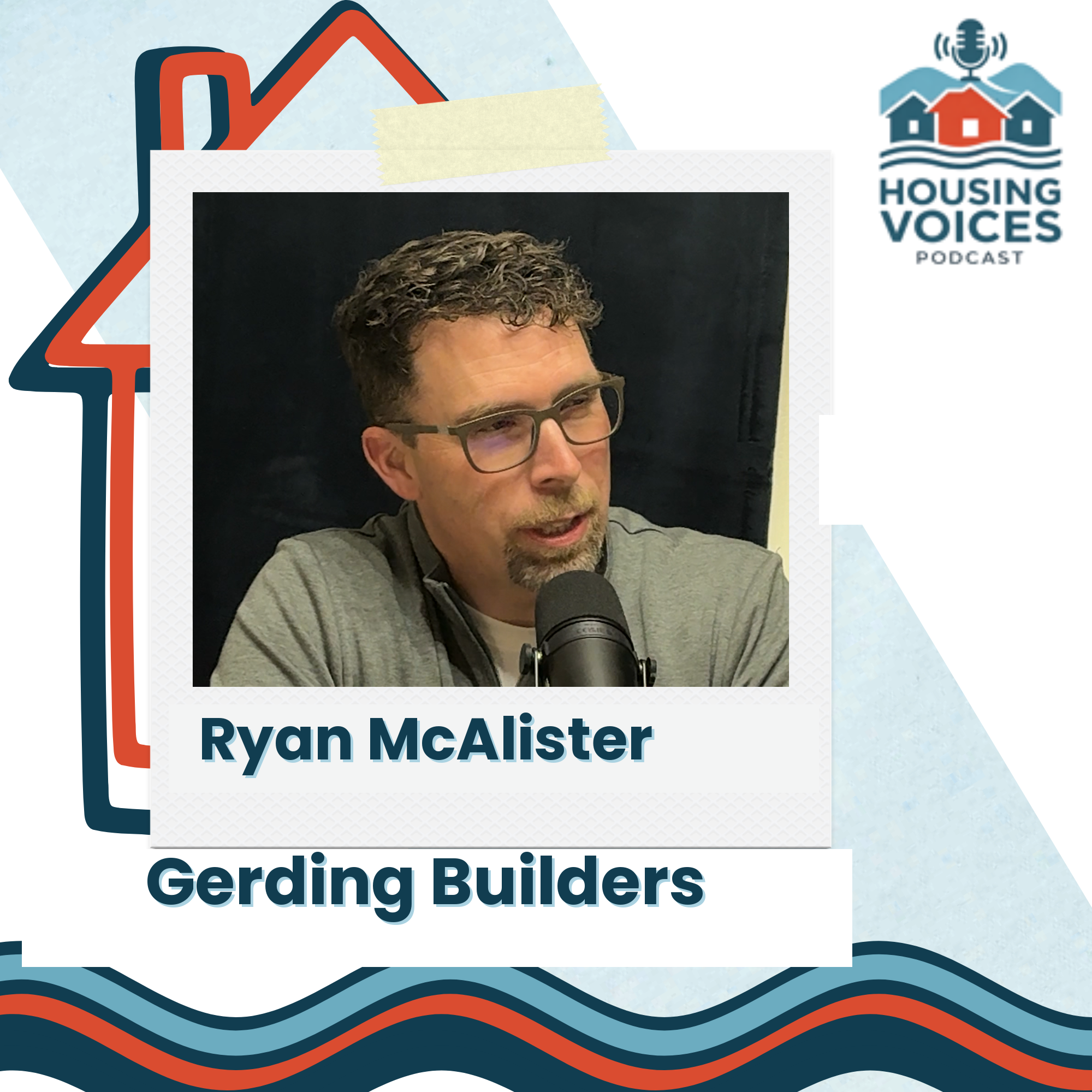
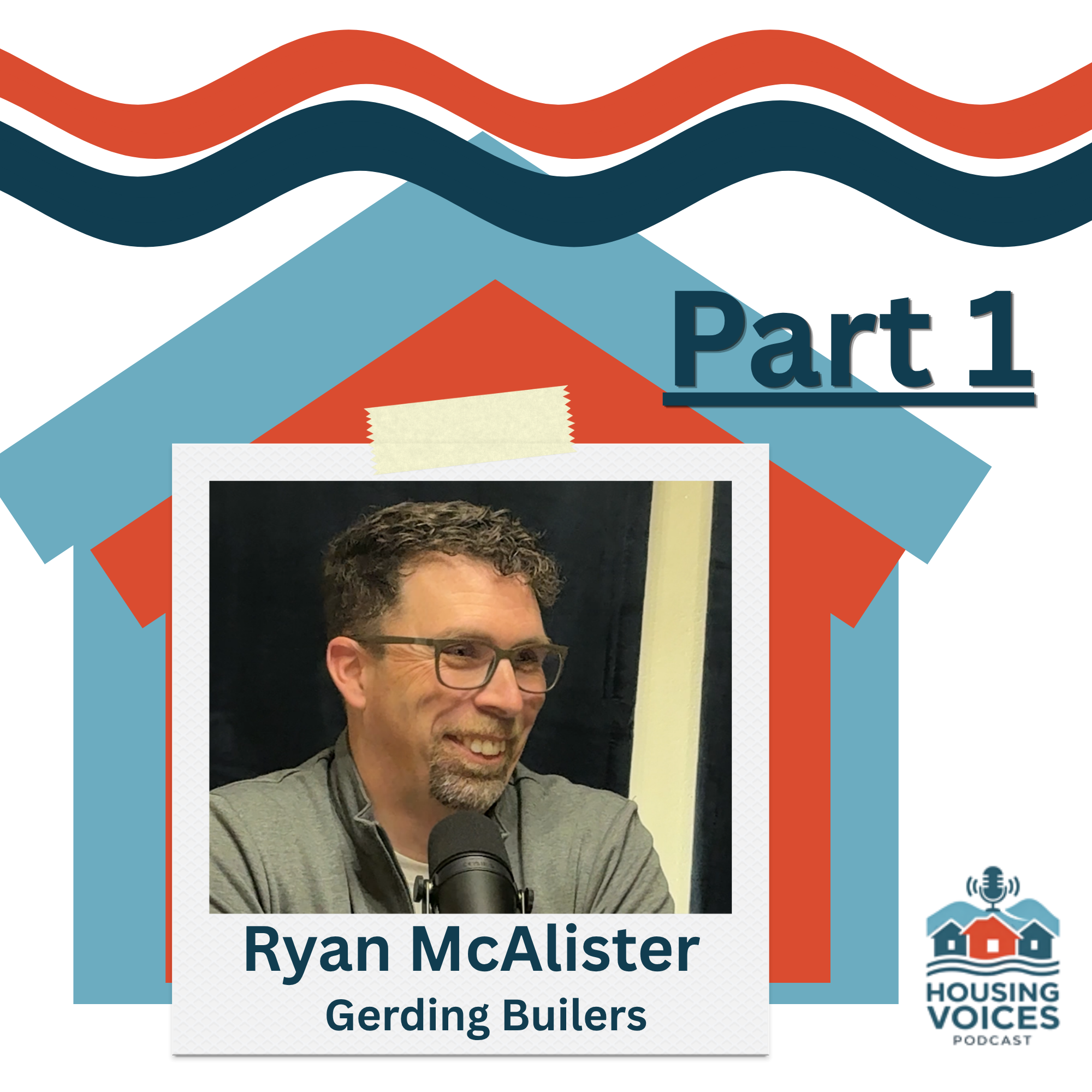
[00:00:34] Speaker A: I'm just very enthusiastic. But today's topic, we're meeting with Ryan McAllister. He works for Girding, and they do a lot of big construction across the state. And I'm really interested to talk about one of our buckets, which is development or how baby houses are made.
[00:00:54] Speaker B: I know you love that. You know, Ryan is the first non girding to be the head of Girding Builders.
[00:01:01] Speaker A: Oh, okay. Fun facts.
[00:01:02] Speaker B: Wow. I know. Sometimes I know fun facts. I like it when I do.
All right, so it's going to be really fun. It's going to be really interesting to hear his perspective on what's going on in housing. So, yeah, this is going to be cool.
[00:01:18] Speaker A: Yeah, there's just a few things going on in housing.
[00:01:22] Speaker B: At least eight buckets worth.
[00:01:24] Speaker A: There we go.
[00:01:25] Speaker B: This is Housing Voices
[00:01:29] Speaker C: from the porches
[00:01:30] Speaker A: and shelters, streets and the room.
If the house had voices, the truth could break through.
Welcome back to Housing Voices. I'm Bri.
[00:01:47] Speaker B: And I'm Marty.
And right now, right this minute, you have the opportunity to talk to and hear from Ryan McAllister. Thank you so much for being here with us today.
[00:01:58] Speaker C: It's a pleasure to be here. I'm really excited to have a conversation and just talk about housing.
[00:02:03] Speaker A: Us, too.
[00:02:04] Speaker C: Yeah.
[00:02:04] Speaker A: Yeah.
[00:02:05] Speaker B: We kind of are passionate about it. Yeah. Tell us a little bit about you.
[00:02:11] Speaker C: So I've been in the construction business for gosh, it's closing in on 30 years.
And got my degree in construction management at Oregon State and had been back in Corvallis for, gosh, closing in on 20 years now. So Corvette went to school here.
And, you know, I kind of stumbled into construction just because I really wasn't sure what I wanted to do. It seemed like the easiest degree at the time in the engineering field, which it. It is.
But one thing I came to learn about construction is that it's about people and it's about solving problems. And I realized that the more I got into it, the more I began to value the fact that, hey, we can work together and solve really cool problems. And the Built environment is simply just that reflection on. Problem solved.
So that's, that's, that's why I'm in construction.
I've got, I'm married, I've got three daughters. And so one is just finished up at Western Oregon, one's at Oregon State, and one is a sophomore, just got her driver's license. So I know a little freaked out about that, but she's doing good so far.
[00:03:19] Speaker B: All right, awesome.
That's in the, the insurance rates are pretty high.
[00:03:23] Speaker C: Oh my goodness.
[00:03:25] Speaker B: Imagine sons.
[00:03:27] Speaker C: Yeah, I, I, they would probably be riding bicycles.
Right?
[00:03:31] Speaker B: It's so, they are so expensive.
[00:03:33] Speaker C: Oh, yeah, yeah, yeah, yeah.
[00:03:35] Speaker B: So. Well, congratulations. Go Beeves.
[00:03:37] Speaker C: Yes, we're Beeves.
[00:03:39] Speaker B: Yeah, we're Beeves fans here.
[00:03:41] Speaker A: Oh, yeah.
[00:03:42] Speaker B: All right. So my understanding has been that you're the first non girding to be leading the charge.
[00:03:50] Speaker C: Yeah, so, yeah, I actually, I am.
So Tom Gerding stepped away as president, moved to chairman of the board.
And so, yeah. Of Girding Builders, I'm the first non girding. So. Which is kind of cool. And you know, the cool part about our company is we're employee owned.
And so in 2017, that was the decision Tom made to make us an employee owned business. And you know, that is just a really, it's a pretty cool model because then it really takes a lot of the things that on succession planning kind of get, get to be messy takes that away and it's more about like purpose and leadership and we can really focus on that and doing what we want to do as far as a company and focus on that. It doesn't have to be like, we've got to make all this money to get to here to, you know, fighting with shareholders or anything like that. It's employee owned and it's a really good thing. And I think the state has actually in this last year recognized that as a, even a potential set aside businesses as well. Just like you've got different set asides, types of set asides for minority owned business, small business, women owned business.
You know, employee owned businesses are kind of the same thing because really it's all the employees are together in a bucket as far as employee owners in the company. So I think it's pretty cool.
[00:05:04] Speaker A: I love that it gives your employees ownership over the profits that they have a hand in creating.
[00:05:10] Speaker C: Absolutely. You know, kind of a stake in what's going on. And you know, it's not about just enriching just one or two people. It's about making sure the whole company does well, and it really fits our community mindedness as far as our core values.
[00:05:23] Speaker A: That's really cool.
[00:05:24] Speaker C: Yeah.
[00:05:25] Speaker A: And can you talk a little bit about what type of projects that you do at Gerding and the areas you generally serve? I know there's, there's multiple, you know,
[00:05:35] Speaker C: so pretty much most, I would say like 80 to 90% of our projects are in Oregon. And of that another 80 to 90% are in the mid Willamette Valley, I'll say from like Eugene to Woodburn to Lincoln City to Sweet Home. So kind of, you know, that general area.
And we, since we really seek to stay in the mid Willamette Valley primarily, we have to be kind of flexible on the projects we do when the school bond measures are out. We're doing a lot of school projects. You know, we do a lot of work with different nonprofits, Boys and Girls Club, ymca and then we also do a lot of housing. And we started back in 2011 doing a lot of market rate housing. And then in 2016 it's really started to do more affordable housing and so been really heavy in the affordable housing space for the last like five years.
And that space continues to, you know, have a lot of projects. Although there's some legislative pauses coming up here as far as funding cycles that we're going to have a gap in funded projects until 2027. So that's really going to create a gap in the projects coming online.
You know, is that a good thing or a bad thing? It's a thing.
But there was a time, you know, a few years back when there was really a lot of inventory coming onto market.
And so what, what I'm hearing and what I'm seeing is that the market is finally absorbing a lot of those units that all got built out. But there still may be a gap in projects as far as gap in the number of units coming online for 28 and 29. So we'll see.
[00:07:11] Speaker B: So can we take a step back to kind of go over and tell the difference from your perspective as a developer and builder, the difference between doing market rate housing and affordable housing and how do you define each one?
[00:07:27] Speaker C: So the.
I want to be careful on how I kind of walk through that. So primarily, you know, market rate is driven to, you know, create a product that fits in, that meets the needs of the, let's call the general population typically on market rate. In the past we've seen them, you know, try to really attract renters with amenities and all that. So you have really nice pools or recreation areas, basketball courts, and all that a little higher end, if you will, on some of the finishes, on some of the market rate stuff.
And then affordable housing is really meant to kind of fill a gap, you know, as far as AMI. And so the 60 to 80% is really kind of the typical range that it lands in.
But it's interesting, you know, the funding sources for the two are different, you know, private equity for, you know, the developer driven market rate stuff and then state subsidies for. And there's also some elements of different financing pieces as far as gap funding that come in on the affordable housing as well as. But the quality of construction, I would say is both very, very similar. You know, it's really just, there's prescriptive things that need to be done from a construction standpoint on an affordable housing project to meet the qualifications. And so you just got to check a few more boxes to make sure you've got unit sizes, you know, set within a certain parameter, you've got the finishes or at a certain level. So it's all meant to make sure that when you're doing affordable housing it is a comparable good product that is going to last that it doesn't have the.
So that feels a lot closer to market rate kind of what we're seeing.
[00:09:13] Speaker B: And when we're comparing those two like you just did.
[00:09:16] Speaker A: Thank you.
[00:09:17] Speaker B: We're speaking towards apartments.
[00:09:21] Speaker C: We're speaking right now. Yes. Strictly towards apartments because that's really where the tax credits come in as far as the. Different.
[00:09:27] Speaker A: From the state.
[00:09:28] Speaker C: From the state. Yeah, yeah. That's where they really come in from a. You know.
You know, we don't, as a company, we generally are not in the space of selling units to the public.
So we've done a condo development in the past. Condos are who. Yes. Extremely touchy, you know, don't really want to ever do those again, you know, kind of thing. I know the state is working on kind of untangling that, that liability issue that goes with building those. Because from a personal standpoint, I'll just jump into it. I mean I think affordable housing is a great. And it fills, it's great and it fills a need.
But my personal goal is to see how can we help someone get their first home. How can we get that first time homebuyer in there and establish ownership so they can start building even just a little bit of equity so they can roll it into their next home, you know. And again, apartments don't allow you the ability to build a lot of wealth.
[00:10:22] Speaker A: Yeah. So yeah, that's actually it Kind of speaks to me a little bit, because there I'm turning 30 this year, and I'm not seeing a lot of starter homes on the market. The way that I recall maybe my parents first moving into, after they were done renting, you know, a cheaper, smaller, you know, it doesn't have to be fancy. I'm not seeing those anymore. It feels like the opening salvo into the housing market would be around 400,000 and above. And there are not jobs out there that are paying the money for me to qualify for a mortgage for a place like that.
[00:11:01] Speaker C: And for me, I mean, that is a huge problem, because then again, it feels like we're not allowing people the ability to get from A to B. They're stuck at the first starting block. Because when you're paying, maxing out the amount you're paying on rent, how are you gonna set aside any additional funds, build any sort of residual equity that. To get you there? I mean, our first. When my wife and I first got married, our first place was a small little condo, you know, and we were there for two, three years, and then from there moved to our first starter home. But you just kind of have to leapfrog along and. And I agree. I'm not seeing any of that. I'm having a conversation with my oldest daughter, and she's kind of throwing up her hands like, you know, I would love to do something that I'd, you know, I don't necessarily relish the idea of living in an apartment, but I will. But can we just put a tiny home on the back of the house? I'm like, well, yeah, maybe.
[00:11:54] Speaker A: Well, it's really interesting, especially having seen other generations coming up the ranks, buying a house in the system that we live in right now, it's one of the biggest decisions people make in their entire lives, their biggest financial decisions. And while we're living in a system that's predicated on the amount of money that you can make until you hit 65, that feels like a recipe for disaster for a lot of people. If I'm stuck paying rent and I can maybe ferret away a couple hundred dollars every month, and then, oh, crap, I gotta retire and I don't have any assets.
[00:12:30] Speaker C: Yeah, your. Your vehicle for putting, you know, basically accruing wealth is very limited, you know, your 401k or any sort of, you know, outside investments that you can put money in. But that major driver that has been a huge part of, you know, what's. What our country's been, you know, I think I would Say probably since about what World War II really seeing that growth. I see the same thing, I look around and if it's got a three in front of it on a house price, it's like, what's wrong with it? Right.
And you know, so the goal is like, well, someone's got to come up with a solution to help us get to a point where your one bedroom apartment, you can get your first starter home and it may be a really, really small home, but you own it and you're getting equity for the a similar price point. Or we're going to continue, it feels like we're going to continue just to kind of push the problem down the road and then what?
[00:13:19] Speaker A: Yeah, right, exactly. Which is why we I think started this podcast in this conversation because there's so much going on with regard to the housing, housing industry and the market and the state is really getting involved pretty heavily because of, of that problem.
It's like a slow moving car accident essentially at this point is what I feel like. And one of the things I want to talk about, you mentioned market rate and you mention affordable, but there's a new push for middle income as well. Can you talk about that?
[00:13:49] Speaker C: Yeah, you know, so middle income is going to be just what it is is, you know, kind of fill in that gap of it's allowing sometimes we call it like workforce housing, you know. And so I think the funding mechanism not terribly, you know, 100% sure where all of those usually come from, but it's a different target.
And so, you know, sometimes when you think of affordable housing, you know, it tends to maybe slow slide towards the lower end of the, you know, the wage spectrum where middle income I think can go. Was it like to 130 or 120?
[00:14:23] Speaker B: Yeah, I think so.
[00:14:24] Speaker C: Yeah. AMI and so that product, you know, seeing that get to the marketplace as well, we haven't really done a lot of it. We've talked to some, you know, developers that have thought about it. But right now the current economy is being, is super challenging to get the cash to the deal, to get the deal going.
It's just because interest rates and private equity is so unavailable and there's so it just what we're seeing is there's a tremendous amount of pressure that the deals just aren't really happening. And so it's like, so it feels like it's stuck. I think the demand is there, but there's constraints there that are sticking it.
[00:15:10] Speaker B: I want to talk more about that. I want to go back before I forget because I'm not turning 30 this year. I've passed that milestone.
You mentioned earlier when we were going through about the apartments with some changes being made on the condo front.
[00:15:27] Speaker C: Yeah, yeah.
[00:15:28] Speaker B: Can you speak to that?
[00:15:31] Speaker C: So what they're looking at or what they're in the process of moving forward with right now on the condo side for, as a general contractor for, to develop that and build condos which, you know, condos create ownership, which is equity. My first place was a condo.
The liability that is attached to that as a builder is, is really, it's basically untenable. And that's why you see that them not being built, it's just, there's too much risk on the back end. Basically what you're having as, as a contractor or you know, developer, you've got, let's say it's, it's 50 units. You've got 50 individual owners that have the ability to file grievances against you, you know, against the project itself at any one point in time. And so there's insurance vehicles out there that you can put in place to basically make sure the project's done correctly, make sure there's everything's taken care of for the full 10 years.
It's called like a wrap policy.
But that particular policy tends to be very, very expensive. And so again you have to add that to the cost of the deal. And so, you know, it really has to do with.
There's been a lot of litigation surrounding condos. And so because there's been so much litigation, the, the, the basically the way the, the laws are out there, it just makes it challenging for a builder to build them and feel like they're not going to get face some sort of lawsuit down the road. And so I know what we're looking at is the idea of taking the, from a 10 year statute possibly down to a six, you know, reducing that and then also trying to untangle some of the litigation that goes with that. You know, it's just different single family homes just have a whole different model and so they're not tied to the same sort of requirements because has to do with where the property lines are as far as walls and shared common spaces. And so it's, it's, it's just one thing that we're just, I would like to see further traction on because I've talked to some folks that are very interested in how can we do some conversions. You've got some built environment spaces, you've got some up offices, you know, how can we then repurpose those? Because you've got basically a, you know, intrinsic building already there. Hey guys, what can we do with this Now? Unfortunately, most of the time the office layout and ceiling heights don't blend too well with homeownership as far as making it feel like a warm and welcoming place. And so I think that's the part that you have to untangle. But you know, I think the, the idea of, you know, some of the recent stuff that's moving out there as far as, you know, cottage cluster homes, I think that has the potential to kind of even fill some of that middle income type bracket, you know, as far as stuff for rent or even stuff for sale.
[00:18:17] Speaker A: What's a cottage cluster? For those of us who.
[00:18:19] Speaker C: Yeah, so, so cut.
[00:18:22] Speaker B: You're doing the. Marty.
[00:18:23] Speaker C: I know.
[00:18:24] Speaker A: I thought I'd try it on.
[00:18:26] Speaker C: So cottage cluster is a. It was passed at the, I believe state level at I think 20, 23. Three, I believe. And so what it is, it allows us or allows anyone to take a, a lot, let's say an existing lot, like a larger lot and maybe there's an old dilapidated house on it or less efficient designed house.
Remove that and put in a, you know, maybe I think it's 900 square feet or less.
Homes, let's call them, I'm going to use the word tiny homes. They're not a tiny home, but they are a home on an existing lot. So basically what you're doing is you're densifying the built environment already. The great part for, for us is all your utilities are there at the street. Generally speaking, you're not, you know, out in a green field, you know, getting, trying to deal with a whole bunch of other issues. It's already built. You just connect up to the city. You're just taking what would be maybe an older, older 60s or 70s home that you know, is fairly energy inefficient. And now you're allowing potentially four or five, six people to have individual ownership of an area there. So the state has passed this, this basically this, I'll call it like a code Amendment where cities, 25,000 population or greater, it's kind of automatically pushed into the code, which is great. Smaller jurisdictions are looking at, you know, can adopt it as well, but it's not automatic. So I think that is a huge push to start to solve.
What does my first home look like? Yeah, you know, I think that's fantastic.
[00:19:57] Speaker A: And since it's already basically that property that we put a cottage cluster on, it's already has the utilities and, and the water and the sewer there it do we then save money on the service development charges from the city or.
[00:20:12] Speaker C: I don't know that. I mean, I. When you're developing a brand new lot, let's say Greenfield, typically some of the biggest barriers for a developer to deal with is all the infrastructure costs have to go in first, like road extensions, sidewalks, landscaping, underground utilities, you know, stormwater, water, firewater, power, gas, you know, whatever has to all be in. That all has to be done upfront, passed and ready to go before you can really start the rest of your development. So the amount of dollars needed up front to get that done on a traditional development is fairly high. So it's a high barrier to entry.
So what I like about cottage cluster is the idea that if the existing city water line out the street has the capacity, which it should, then you're just talking about taking a single tap and you're putting in, let's say there's four units, so you're putting in four taps and four separate meters. So you're going to have meter costs, you're going to be, you know, connections for the sewer. You have to deal with the stormwater. But you're not building a brand new road, you're not building a brand new sidewalk. Maybe you're improving the existing sidewalk, but you're not having to do a major infrastructure, you know, site clearing. As far as, you know, getting rid of, you know, elevations and soil and all that, you're just really focusing on how quickly can we get homes in place. And I think that model has the ability to, you know, I think it can. It's fascinating to think about what we could do with that because what, you know, instead of pushing out of, you know, pushing against the urban growth boundary, why can't we push in? But, you know, in our, let's say, our rural mid Willamette Valley communities, I don't think many people aspire to live in a 12 story or 14 story or 20 story building. There's a reason we live out here. And so the idea to have an, an autonomous location where you can have a house with four walls and a little yard that is Maybe it's only 2ft all the way around, but it's yours. How cool is that?
[00:22:11] Speaker B: Yeah, you know, I'm a big fan of college cluster, cottage clusters. So there is one coming here or that's being built currently in Corvallis.
[00:22:20] Speaker C: Yes.
[00:22:21] Speaker B: I don't know if they're going to, what the ownership is going to be after they're built.
[00:22:25] Speaker C: I heard they're going to they're going to be for rent. They're not going to be for sale.
[00:22:28] Speaker B: And that made me really, really sad.
[00:22:31] Speaker C: I, I agree. I, I feel like that's not, in my opinion. I don't know. That was the intent of cottage cluster. Maybe it was, but it doesn't really solve our affordability problem because you're still renting. Whether you're renting an apartment or a separate cottage cluster, you're still renting.
How are we fixing a problem?
[00:22:49] Speaker B: Yep, it's. Yeah, it was really disappointing. I was like, oh, good, they're going to be college clusters.
[00:22:54] Speaker A: Oh, good.
[00:22:54] Speaker B: This. Oh, good.
[00:22:55] Speaker C: Yeah. Oh, what? Right, right.
[00:22:57] Speaker B: It was, yeah, it was a lot of disappointment. We did get from the yahoos behind the camera the question of, hey, can you guys go over what AMI is?
So I'll just tell you. It's average median income and it's the percentage of the average median income as to what people can afford. And, and that leads into, is it affordable?
[00:23:19] Speaker C: Right.
[00:23:20] Speaker B: Is it middle? How does that go?
[00:23:22] Speaker C: Yeah.
[00:23:23] Speaker B: Did we answer your question there?
All right. Because that was an important point.
[00:23:27] Speaker C: Yes. To note because it's a parameter on the.
[00:23:31] Speaker A: Yeah, well, I, One of the things I would like to talk about while we have you is the development process.
We talked about the cottage clusters, but for folks who are not familiar with.
Okay, so this city needs housing.
[00:23:47] Speaker C: Yep.
[00:23:49] Speaker A: How does it start? Like, how does that ball get rolling in from, from your point of view?
[00:23:53] Speaker C: Sure.
So I'll use an example. I'll keep the details fairly generic, but so a recent development that we're actually under construction on that takes. That starts by finding a piece of property and then looking at the zoning and making sure the zoning. And I'm going to talk about, okay, you're going to build some apartments, affordable housing, apartments.
Looking at the zoning and can this particular zoning support what needs to be done there?
Okay, great. So you find land that is available and then what you do is typically you will bring in, we'll work with the developer and we'll work with an architect and really start to understand what are the density elements that we need to bring to the job as far as how many units can this site support?
And so you start there and you start looking at, can, you know, can we. Does this site say that we can only go three stories? Can we go four stories? Is there requirements on. Do you have to have a ground floor commercial?
What are the minimum setbacks? And so what you're really trying to do is again, solve a puzzle. Like, I've Got a rectangular lot.
What can I do with this? And so there are guidelines and regulations with every jurisdiction both, you know, at the city and the state level saying, okay, you can only go so far before you have to put in a fire hydrant. You have to, you have to put in roads that have to be a certain width if you're going to do this many units. And so you kind of have to work backwards and really begin to understand what are all the variables that affect what I can do with this dirt. And then from there you start to kind of solve a problem and say, okay, so now I know that if I'm going to do this I need to bring water or I need to bring power. So you're having a conversation with the power company and say, hey, we're going to be bringing in, let's say 120, 180 units, apartments, and we know what the metering is going to be on those on average. And so they're looking at their service. And so we're asking the question, do you have capacity in the grid to Support this? Which 10 years ago it was never a question. We had plenty of power, but now, but now it's a brand new constraint that's out there. Not only do you have power, but you know, a couple of years ago is really challenging because do you have a transformer and to support the project, you know, and that we were getting answers of, you know, it'll be there in 80 weeks. Well, in 80 weeks we're going to be done with the job and the units can be ready to be rented and they're going to be sitting vacant for 30 weeks. That does not work.
[00:26:18] Speaker A: That's incredible.
[00:26:19] Speaker C: Yeah, it was really 2022, 2023, 2024, there was just a massive shortage. So things are starting to get squared away. There's.
So you think, okay, that's great we've solved the problem for power, but wrong, we haven't. Because a looming thing out there, and it's been in the paper, is we're going to have a major power deficit.
[00:26:44] Speaker A: Think to the tune of nine gigawatts.
[00:26:46] Speaker C: Gigawatts. Yes, huge. And right now what are we doing about that to fix it?
So, I mean, our existing grid is aging, so there's upgrades that need to happen to the grid and we have a massive demand coming and there's a general best practices out there or trying to seek to electrify as many things as you can. And so you're adding constraint upon constraint upon constraint and all good Stuff. But we still have to go back to the fundamental thing. If we don't have power, we don't have power.
[00:27:23] Speaker A: Yeah.
[00:27:24] Speaker C: And so that's one of those things that I know people are working on. I would love to hear from them. As far as what is the solution. I mean, there are things out there, but we're.
I don't know that.
I don't know that a clear, concise solution has been. And roadmap is out there.
[00:27:42] Speaker A: Today we talked with Representative Gomberg, who he's on Ways and Means in the state legislature, and we specifically talked about the infrastructure problem.
That we can build all the houses that we want, but if there's no grid to plug them into, let's say. Or water, and also clean water at
[00:28:04] Speaker B: that, and disposing of the waste.
[00:28:06] Speaker A: Yeah.
What can we do here? And he really suggested that that was gonna be on the forefront of his mind going forward, as in the leadership of the Ways and Means Committee. Because if we don't have. Also up to date as well. And this is where I'm gonna get on my soapbox just a little bit here that we. We have these private utility companies that are essentially limiting our. Our expansion for housing. And what are we going to do to. To make them, as well as also upgrading their grid as well. Because in a lot of cases, I'm not gonna. I'm not gonna take the diverging path here right now. But there are also fires that have been caused by derelict equipment that this private company chose not to update and instead kept their money. How are we also going to juggle that, too?
And I think it's really unfair to. Just from the state's point of view and from. As a taxpayer, I think it's really unfair to have a situation, a limiting situation like this and have it prevent something that I need to. To survive, literally. And all of my neighbors and I will get off my soapbox now.
[00:29:16] Speaker C: Well, you know, it's such an interesting problem because, you know, the more you dig into it or the more you start to educate yourself about it, I don't know, it just feels like it is a real problem that we're facing. And the road every day gets shorter and shorter when we're going to run out of road and we're going to be there and, you know, and so what are we going to be doing in the meantime to begin to solve that problem? Because, you know, if you look at the.
This is neither here nor there. This is just what was. What code allowed to be built 20 years ago is different than what we build today. We build much more energy efficient homes, but at the same time you start looking at, they're more energy efficient.
But we're also, there's a lot of energy demand overall too, because we plug it. I mean, everything's plugged in from, you know, your wi fi, everything is dependent upon electricity. And so how we begin to decouple that is just, it's, it's fascinating to, to try to understand and you know, even talking to developers and you know, on, in some of these housing projects, you know, there are, there have been state incentives out there to do solar, which is great, but without some of those incentives, when you start looking at the roi, the payback on those solar panels, it doesn't pencil out yet. And so we're kind of stuck. I mean, I think solar is great, but if it's not penciling out, then there's a financial gap that the developer's going to look at their pro forma and say, well, why would I do this?
In one sense, you're adding power back to the grid, which is what you need to do. But if it doesn't make sense, it doesn't make sense.
So how do we help things make sense? Right?
You know, I don't know, it's.
Yeah, it's interesting. Probably talk a long time about power because it is really, from a builder standpoint, it never used to be a question we would ask like seven, eight years ago.
We just call the power company, say, hey, we got a project coming in. Okay, great, you know, we'll let you know, we'll be there in the typical lead time. It's no big deal. Now is one of the very first things we check off the box is having a conversation with the local public utility to say, hey, this is coming up. What is, what is your, can you feed it? First of all, because we've looked at projects in the area where they're not able to feed it.
And so then the projects have to go elsewhere.
And so that's not a good thing if we're trying to cause growth.
Yeah. Okay, so you asked me a question like Ryan, how do we develop a project? Well, so you go through this big scope matrix of understanding all these constraints to basically it's a puzzle. When you start looking at, okay, how many buildings, where are they going to fit? Now if I put them this way, this code gets violated because we don't have enough frontage requirements or frontage is like how much of the building is street facing or the buildings are too close together. From a fire code standpoint. And so it's very iterative process that takes three to six months to really figure out what is the best configuration on this site. And then you're meeting with the local jurisdictions, the city and all the different stakeholders and talking about the project.
And then from there, then you start really, once you get concurrence that this is a viable path forward, you begin to assemble the drawings, the documents, and go through the permitting process.
And so the permitting process can take a while depending upon the jurisdiction.
But, you know, that's kind of, you know, it just is one of those, one of the hurdles that we get to jump through to make sure that we're, you know, adhering to all the different requirements requirements that are out there.
So permitting process takes what it takes and then you get to the other side of that and then you get issued a building permit. And typically on a development, building permit gets issued.
You don't get to go vertical as far as build vertical construction until you have your infrastructure in first. And you know, part of that is fire life safety, which is good. You have to have your fire hydrants there and all that. But the other part is making sure that all the public utilities are in and the roads are in first before you build your houses or before you build your apartments. Now there's ways to kind of bond around that. You can put surety on this saying, okay, we're going to go ahead and put a bond here and we'll finish this road at this point in time or work out what's called a developer's agreement with the jurisdiction to talk about the idea that before we lease a single apartment in this case, we will guarantee all the roads are done and we can't, you know, and all the sidewalks are done and the landscaping is done and all that stuff. And, and this all stems from the fact that there's been bad actors in the past that it kind of messed it up for everyone. And so the ability to kind of go super fast and get this done kind of gets slowed down a little bit. It just has to a little more creativity and good communication with the jurisdiction to make sure it gets there.
It's, it's not a, it's not for the faint of heart and it's not a simple process.
So I mean, I think that's the thing that, you know, just standing back, it's like, why? That's my land. I'm going to build on it. It's like, well, there's some step, really, it's going to Take a bit.
[00:34:21] Speaker A: Yeah.
[00:34:21] Speaker C: And so I think that's probably the biggest thing to know is you really have to understand, I'll just call it the layers on top of a piece of property and the zoning and all that and the different requirements to. Before you start. That's key.
[00:34:38] Speaker B: Can you go back with those steps? What is your, what is the timeline?
[00:34:43] Speaker C: So a typical timeline for a, let's call it a larger apartment project.
[00:34:50] Speaker B: And larger is defined as more than 100.
[00:34:52] Speaker C: More than 100 units. Yeah. And you're going to put in a small street or street extension. You're going to do some, you know, utility improvements and stuff like that. 12 to 14 months to get through the drawing and permitting phase, sometimes 16 months.
So from the time you have the idea to the time you get your first building permit, that's moving right along. So on the 14 to 16 months and then the construction cycle and the construction build on let's say 100 units, like is like 16 to 18 months. So if you look at holistically, I mean, you're talking three years. Yeah. So from the idea is like we're building something to. It's fully built. It takes a while. And so you're navigating all those hurdles as far as what's going on in the economy in those three years as well.
[00:35:37] Speaker A: And also I've heard as I've worked for the federal government, I've heard timelines way longer than that though as well. I mean, I've heard of even like 130 apartments taking five years from beginning to final completion of the construction. When I went to the ribbon cutting ceremony.
That is insane for me to say out loud that it takes that long. And it was an affordable housing. It was an affordable apartment complex.
That seems like an untenable timeframe for just 130 units. It seems kind of.
[00:36:14] Speaker C: It's a long time.
[00:36:15] Speaker A: Yeah, it's a long time. Some folks had suggested that they were getting a lot of money from the state and that's really what kind of gummed up the works. And I'm not asking you to throw the state under the bus or anything, but do you think that that's one of the choke points is getting state funding?
[00:36:33] Speaker C: I think one of the choke points that I've observed is actually getting a deal to start.
So when you start moving through the affordable housing process and the applications, there's a lot of things you have to have figured out before you get started. So the development team spending a fair amount of dollars and time to get something figured out and then submitting an application for, and those applications are competitive and then getting selection. And then sometimes when you look at the pricing that comes in and if there's been a change in the economy, then you have to go back and maybe ask for some additional financing on top of it. Then it can push you out another six, eight months or a year for another cycle. So it can absolutely. The timeframe to actually get the cash in hand to start construction by cash. You know, the loan in place to start construction can really vary on that front end. You know, once construction starts, it should be fairly predictable, provided the cash is there, because it's, you know, you want to build it as quickly and efficiently as possible and you generally know how long that should take unless there's again something that is, you know, you have a really crazy thing happen where you just can't get transformers. And you know, that really did happen. You know, you're probably 20. Yeah, 22 and 23. I mean we saw it happen where projects were delayed for six months waiting for a transformer and you're just dead in the water because you, you get to a certain point in construction and you can't start testing.
You have no power, so you can't do anything. You can't test the fire alarm system, you can't test anything. You're just sitting there waiting for the power to show up.
But back to the, you know, on the state side, as far as the funding, you know, the different mechanisms in place there in packaging those together and then getting the different lenders, the tax credit lenders and all that to come to the table and make the deal work. Sometimes that can be a very time consuming process.
You know, is there a better way?
I'm sure there's smarter people that are really looking at that saying, you know, what is the best way to do this?
Is the system we're working in right now the best way to do it? I, I don't, I'm not an expert in that. So I don't know. But I'd be curious to know, is there a more efficient way to get the necessary funds out there to build the projects? The most efficient way possible? Because that's really what we're going for when we're talking about affordable housing. We want to make it as economical as possible. And so doing that, we should minimize the amount of funds need to be contributed by the state because it's hitting at a point where we're able to make it pencil without that. And I know there are developers out there not in this state that are looking at ways to how can we do it apart from state funding? You know, how can we entirely, you know, how can we create livable, affordable housing, entry level housing with no subsidies whatsoever? And they are starting to do that as far as sell some units.
And so that's kind of cool to hear. It's like, okay, how can we peel the onion back and figure out a different way to do it? I think you have to have a really good combination of the right dirt available is probably the big thing. Because typically on this you're talking about like new and you have to have the right economic climate to be able to make it go that way. But I think there's a lot of people that I've talked to that are working on ways to figure this out, because it can't just all be one source.
That one source is extremely important.
But what if there were, you know, just asking the question, what else could be true here? Could there be another way to do this that is not what we're doing today?
I'd be curious. Let's figure it out and maybe we come back, say there's no other way to do it. But at least now we've proved it to ourself to say, hey, we looked. And so I guess that's where I would wonder is like, should we be looking at a different way to do this?
Because if what we're doing right now is challenged, then maybe there's a way to not do it that way.
[00:40:27] Speaker A: Yeah, absolutely.
[00:40:28] Speaker B: So was it a fair assumption to say that the affordable housing build just count on it taking longer than market rate housing?
[00:40:40] Speaker C: I wouldn't say that just because once the affordable housing funds are in place, you can go. But maybe it used to be that way a couple years ago. But what we're seeing right now as far as private investors and getting banks to loan and set aside construction loans, they're really challenged to get there as well. I mean, it's taking a long time to get all the different funding pieces together and all the requirements they're putting on the developer and then pushing down to the contractor to have.
It's just become a lot more onerous. And so that onerousness, if that is a word, does slow down. It is now. Oh, great.
[00:41:21] Speaker B: It is now.
[00:41:22] Speaker C: It does slow down the process.
So across the board. And so I think honestly that I see them both kind of moving right in today's economy. Moving about the same speed, not very fast.
Yeah. To get to green light, get started construction.
[00:41:38] Speaker A: Great. Yeah, well, and I can't imagine the economy is going to get leagues better in the foreseeable future to address the stresses on, on the banks and our financial institutions.
And then as you said, I also, I agree that I think it's wise not to put all of our money on, on one opportunity.
But also you mentioned something that I want to follow up on is the funding from the state is lapsing. There's.
[00:42:05] Speaker C: Well, you expound well, so I'm not an expert at this. I just, you know. Yeah, talk to enough individuals. But the way the funding cycles happen, you know, basically we've spent, if you will, our funding through 2027. So we've kind of pre allocated stuff. So all that stuff through 2027 we kind of taken a loan on 2020 up to 2027. So we can't issue any new dollars until 2027. So like if we had a project today that we wanted to do affordable housing and submit a grant, the grant fund process is not open for 2026 to accept. To basically say, hey, we got dollars allocated for 2026. My understanding is that we've kind of pre allocated that stuff to kind of, you know, continue to push the build. So, so what we have is that we've basically created a gap for ourself kind of self imposed and so things that are currently in the pipeline will continue all the way through. But new projects, starting with brand new funding vehicles, 2027 is the time when those new funding vehicles are coming out.
[00:43:07] Speaker A: Okay.
[00:43:08] Speaker B: And when you say that the process, that's when the 2027 is when that it's going to start. What defines start?
[00:43:18] Speaker C: Boy, when I say start, I mean start is when you can get issued the grant if you, you can open up the application process.
[00:43:26] Speaker A: Like the notice of funding.
[00:43:27] Speaker C: Yeah, a nofo. Yeah, a nofo. Yep. Yeah.
[00:43:31] Speaker B: How do local jurisdictions play into your decision to develop in certain areas?
[00:43:38] Speaker A: And we're not, we're not trying to, you know, have you throw certain jurisdictions under the bus or.
[00:43:44] Speaker B: I didn't ask anything specific.
[00:43:46] Speaker C: You did good.
[00:43:47] Speaker B: I really worked on that question, by the way, in my head, which this
[00:43:51] Speaker A: is a known choke point already because the state tried to do something about it through legislation HB 2001 or 2100. I transposed those numbers and removed some local control to stop housing.
[00:44:05] Speaker C: That's right. That's right, they did. And you know, I think that.
Can you repeat the question again? Because I was.
[00:44:13] Speaker B: No, that was really well done.
Golly, Ryan. Okay, let me try it again and see if I can remain a Little neutral and politically correct.
Knowing that one of the choke points. Right. Is local jurisdiction.
[00:44:28] Speaker C: Yes.
[00:44:31] Speaker B: Does where you're planning.
[00:44:34] Speaker C: Does where we're planning to do projects or anticipating doing projects change? Absolutely. I mean, are there jurisdictions that are open for business and say build here? Yes. Are there jurisdictions that are open for business? But the hurdles to get to starting as far as the number of boxes you need to check, the number of forms you need to fill out, are maybe a little more than their neighbors. Absolutely. And so does that then change the time you have to plan on the front end to get to groundbreaking? The answer is yes.
But I also know that in talking to some of these jurisdictions, they are actively seeking to figure out how can we go faster. And so that's the great part, is they're actually aware of the fact that we're kind of slow and we kind of get stuck. And so how can we then work to move things through quicker? And I do see that proactiveness, but I also see that there are some jurisdictions that have some additional tools out there to allow development to happen a little bit quicker, just maybe from whether it be available land, whether it be some sort of mupti. So there's another word. Right. So municipal. Now don't ask me.
[00:45:53] Speaker A: So municipal Multi unit property tax exemption.
[00:45:56] Speaker C: Thank you. I knew folks in this room would understand that. I know what an UPD is, but what the acronym is. So when you have some of those different funding sources available as far as tax credits, those do help it move along a lot quicker and make it more. And the other part is there are zones within the state that have been identified as.
I'm going to probably get this wrong, but accelerate or are more favorable for low income or affordable housing. They kind of get like extra bonus points when you start to figure and they go through the matrix. And so there are areas that are less incentivized for that. And so you start to.
[00:46:35] Speaker A: Opportunity zone.
[00:46:36] Speaker C: Yeah, that. And then there's also. I'm missing the terminology on that.
[00:46:40] Speaker A: The census tract.
[00:46:41] Speaker C: Census tracts. I think that's right. Yeah. Yeah. So, yeah.
[00:46:46] Speaker B: So basically, yes. Right.
[00:46:48] Speaker C: Yes. Solutions meet.
[00:46:51] Speaker A: A special thanks to our partners Marty Bulford.com and Cyanet.net for supporting thoughtful dialogue around housing in our communities.
Music for Housing Voices is provided by Karen DeWolf and Adrian Kriz. Thank you for helping us set the tone.
You can find
[email protected] and connect with us under Housing Voices on Instagram, Facebook, LinkedIn, Blue Sky, TikTok and our YouTube channel.
If you found value in today's conversation. Share this episode Follow the show and help us expand the dialogue.
Until next time, this is Breen. Let's keep listening, keep learning, and keep building practical housing solutions together.