[00:00:00] Speaker A: The truth can break through.
Welcome to Housing Voices. I'm Bri.
[00:00:08] Speaker B: And I am Marty. And today we're doing things a little bit differently.
We are having our executive producers or the people behind the scenes join us to kind of talk about our first 10 episodes that we can't believe. We've done 10 episodes.
[00:00:23] Speaker C: Yeah.
[00:00:23] Speaker A: We're taking a look back at how far we've come.
[00:00:26] Speaker B: How far we've come. Okay. That kind of sounds really corny. Yeah, we are.
[00:00:31] Speaker A: But we.
[00:00:31] Speaker B: We have learned some stuff.
[00:00:33] Speaker A: Yeah. A thing or two or three.
[00:00:36] Speaker B: Yeah.
[00:00:37] Speaker A: From the porches and shelters, Streets and the room.
If the house had voices, the truth could break through.
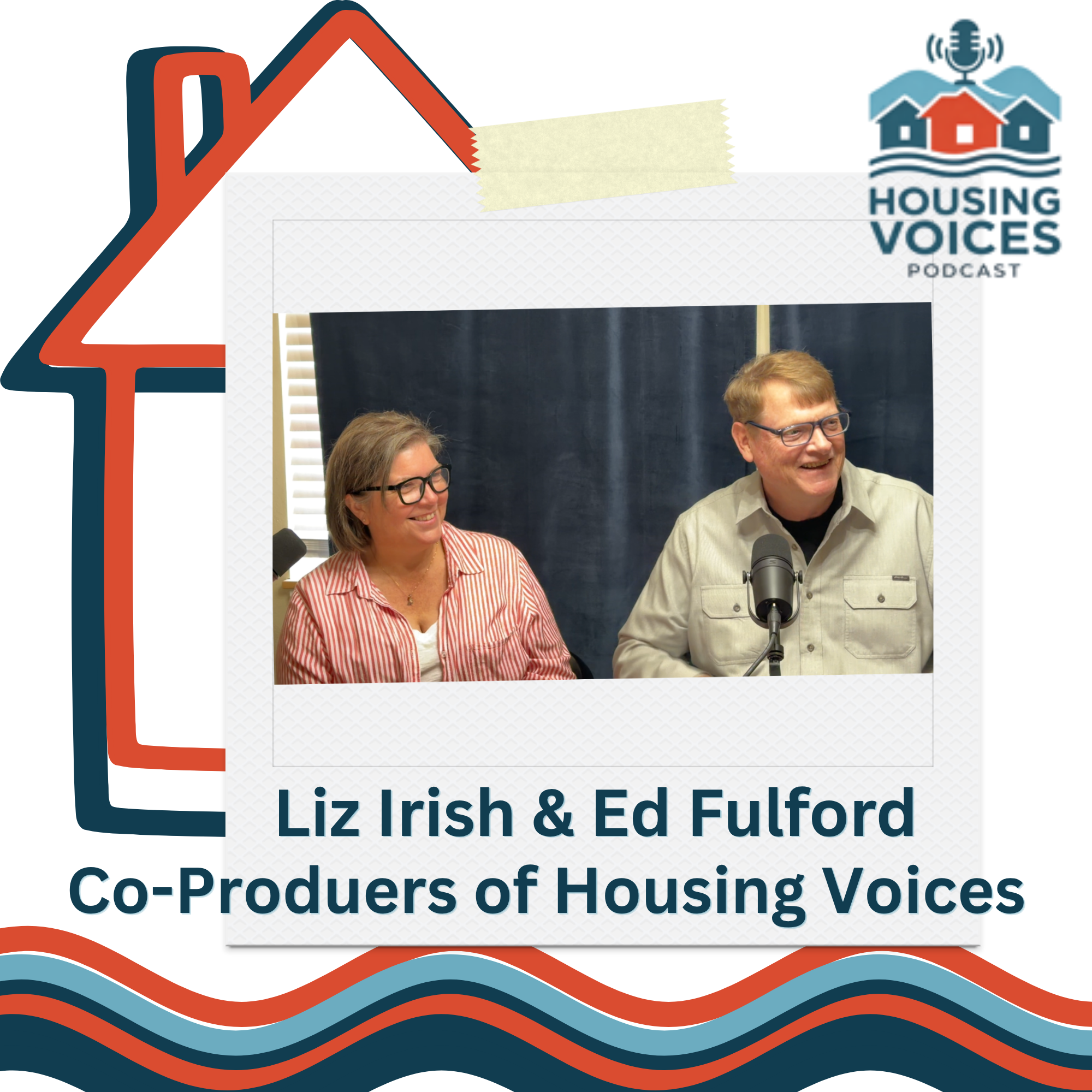
[00:00:53] Speaker B: Well, with us is Ed Fulford.
[00:00:57] Speaker C: Good morning.
[00:00:59] Speaker A: Or good afternoon.
[00:01:00] Speaker C: Oh, good afternoon.
[00:01:01] Speaker B: Or good day.
[00:01:02] Speaker C: Good day.
[00:01:02] Speaker B: Okay.
And Liz Irish.
[00:01:06] Speaker D: Howdy.
[00:01:07] Speaker B: So tell us, do you guys have a favorite episode?
[00:01:13] Speaker A: They've got to watch it all, all the footage.
[00:01:15] Speaker D: So I just want to say.
[00:01:16] Speaker B: And they get to edit this.
[00:01:17] Speaker D: We don't know what the questions are. So we are authentically thinking right now.
[00:01:20] Speaker A: Yeah, they're going to be on the hot seat this episode.
[00:01:23] Speaker B: And we love that. It was their idea, by the way. Yeah. We wanted to do something different, but.
[00:01:29] Speaker D: Yeah, here we go. But I'm just gonna say I feel like they're all my children, and it feels wrong to pick a favorite.
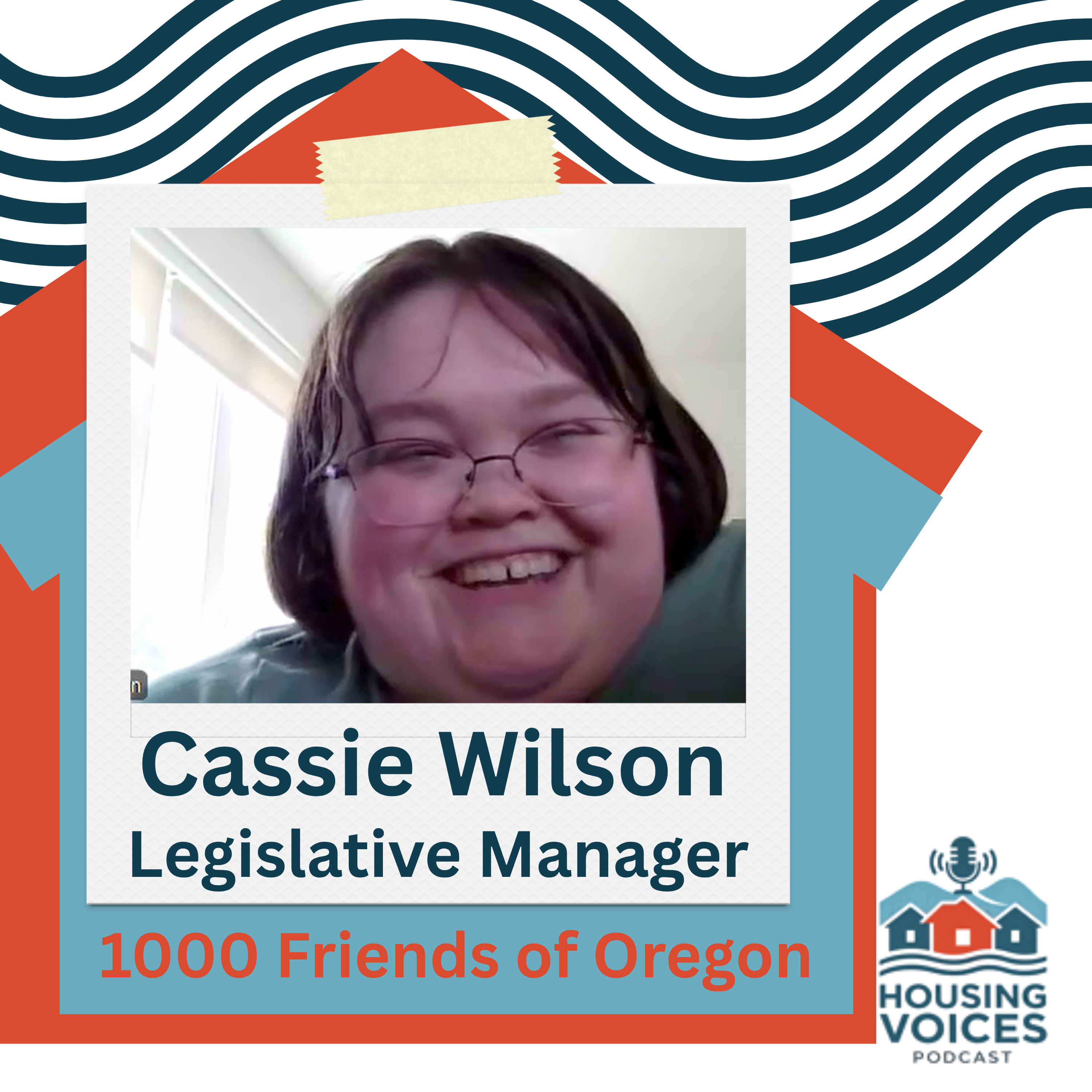
[00:01:38] Speaker C: Right. I thought Cassie was really good.
Watching Cassie wheel around in the scooter that she had. Oh, my. That was one of my favorites. Just.
[00:01:48] Speaker A: Well, the video that she did on her apartment and the accessibility challenges.
[00:01:53] Speaker D: Yeah.
[00:01:53] Speaker C: And when I say favorite, I was like, o. Oh, my gosh, that's horrible. Like, non stop.
[00:01:58] Speaker A: Well, it's really eye opening.
[00:02:00] Speaker C: It really is. And this whole Housing Voices podcast has been eye opening. I mean, you know how teachers basically watch, and if the kid's sleeping in class, it's like, maybe they have housing issues. Right. That kind of thing.
[00:02:15] Speaker A: Oh, yeah. I mean, I was one of those kids in school. I got a folder sent home to be taken to my parents when we were living in an rv.
[00:02:26] Speaker D: And I remember thinking, what? I'm homeless. I remember being shocked by that. Like, not realizing because you live in a house on wheels, you're officially homeless. So it was even a shock to me, which makes me think in the homeless conversation that we have with Sean, right, we talked about the shame and the embarrassment of being homeless. But also, I often think to myself, maybe, maybe you don't know what you don't know. And maybe sometimes people just don't realize how awful or difficult or challenged Their situation is because they've just been in it for so long.
[00:03:05] Speaker A: Right.
We are in survival mode in a lot of ways. Like, it is very hard to be unhoused every day. You have to figure out, is this place safe? How can I eat? How can I clean myself?
Do I have access to fresh water, a bathroom? Yeah. A whole host of things that we come to our home, and we already have all of this. They have to. They have to think through that all day, every day.
[00:03:32] Speaker B: And the stress that is on their body and their mind.
Right. Because they are truly in survival when
[00:03:38] Speaker A: you're homeless, and the same with homeless children.
[00:03:41] Speaker B: Right.
[00:03:41] Speaker A: It is hard to learn when you're worried about where you're gonna sleep at night or where your family's gonna sleep at night or. I think. I think a lot of people can relate to being kids and realizing, I think my family has money problems.
Right. And how hard that is to realize. And then, gosh, how do I help my family?
When you're trying to learn in school, same reason that, you know, we provide food or we should provide food for our kids in school, because it's hard to learn when your stomach's rallying.
[00:04:12] Speaker B: It's so hard.
So we're going to go back and let's revisit each of the episodes.
[00:04:17] Speaker A: Oh, yes.
[00:04:18] Speaker B: All right. So the first episode we came on and we were talking about our different buckets.
[00:04:23] Speaker A: Oh, yeah.
[00:04:24] Speaker B: Right. And kind of our thoughts behind why we wanted to do this podcast.
[00:04:29] Speaker A: Yeah. The buckets really represented some key areas of the housing conversation that we felt needed to be discussed. They're absolutely not limiting.
I think it's. As we've learned throughout this podcast, people don't fit in one single box. Right. One of our buckets was seniors. Right. But there are a lot of seniors that are unhoused. Right.
[00:04:58] Speaker D: Or disabled in some fashion.
[00:05:00] Speaker A: Exactly.
[00:05:01] Speaker C: Well, it's so complicated. Right. And to get people to be involved, if you overly focus on, let's say, affordable or. Or elder housing or. Or any of these pieces and parts or legislative.
I think the podcast world kind of pigeon you hold you into. Oh, that's just a, you know, a.
This piece of the. Of the housing piece. But no, it's. It's all intertwined. Right. I think you guys have said that a few times. It's all interconnected and. And how do you talk about it all without, you know, with making good progress on the overall topic? Right. Which is tough.
[00:05:41] Speaker A: Which really makes me think, actually.
[00:05:44] Speaker B: You actually think.
[00:05:45] Speaker A: Yeah, I know.
I don't know if you noticed the smoke coming out of my ears. But thinking of the origins of housing voices really started with you two.
And I think it would also a good question for both of you is when you guys were cooking this up or the idea for the housing subcommittee that eventually then led to the podcast idea.
How has the podcast kind of measured up to what you were expecting or what you were envisioning in the early days?
[00:06:17] Speaker C: I'll let Liz take a first pass at that.
[00:06:20] Speaker D: Well, I don't know that I knew exactly what we were getting into first off, because we've been kind of duct taping this. We've all been learning as we've been going. So I think we'd hoped to bring information to the general public.
The overall arching message would be, it's not a one size fits all. Everything's super complicated. Everything's intertwined.
And oftentimes when we're talking about really difficult subjects, we're only talking about one little sliver of the problem. And housing is made up of a million of those little slivers.
And so our hope is, and I think we're doing a pretty good job of that, is bringing on some of the best people that we know and we've talked to over time to kind of come up and just shine a light on a little piece of it.
And my hope is that when you watch all of them in a complete group, you really walk away from this going, oh, darn, I understand now why that was so difficult to get that housing project off the ground or to get the neighborhood behind it and enthusiastic about it.
I think that's doing it.
[00:07:33] Speaker C: Yeah. No, absolutely. And it kind of all started right with the. You invited me over to, hey, Ed, why don't you be on the planning commission? Right. And so I interviewed, and I got a job, so I get to sit next to Liz during the planning commission. And then they assigned us the housing subcommittee. Right. Regional housing. And so we. We basically interviewed 50 regional leaders from the coast, probably Eugene, out to Lincoln City, up to Salem, I think, and then over to, like, Lebanon and 50 different people.
[00:08:08] Speaker D: Yeah.
[00:08:09] Speaker C: And some of them were groups of people. Right. That we interviewed. And after that, you just go, wow, that's a lot.
[00:08:16] Speaker D: Every interview was great, though.
[00:08:18] Speaker C: It was.
[00:08:18] Speaker D: We were having the aha moment. Every interview that we had with everybody, we learned something.
And it didn't matter who it was, whether it was a nonprofit government agency for profit, it just didn't matter. Everybody had something to tell us that we didn't have realize was a challenge.
[00:08:37] Speaker C: Oh, yeah. We talked to mayors and reps and, like you said, developers and everything else. And every aha moment, you're like, wow, that was.
I had no idea. Right. And so we didn't want to have that go to waste. Right. And the county was really nice. Right. They hosted us and enabled us to have these discussions. We had all these interviews at the county, right. At their facilities and stuff. And it was wild. And then we presented it and said, okay. And then there was no funding. Right. We're like, well, what can we do next? And so we pitched the podcast idea. For about a year, we're interviewing different people. And then Liz came up to me and said, what do you think about Bri? And I go, what do you think about Marty? And it was like, that's a match.
[00:09:21] Speaker D: Well, that's because they work for free.
[00:09:26] Speaker A: Yeah, that's true.
[00:09:28] Speaker D: And they're a little better at being hams than we are. They. They don't mind the camera as much as we do, so it's perfect.
[00:09:33] Speaker C: It's kind of funny on this side, isn't it?
[00:09:35] Speaker D: It is weird.
[00:09:36] Speaker C: All of a sudden, I'm kind of like, shell shocked a little bit standing over there. It's much easier.
[00:09:40] Speaker A: Well, Ed put on his fancy shirt.
[00:09:42] Speaker C: I did.
[00:09:43] Speaker B: He did, yeah.
But really, what we're trying here, if I can, you know, be a little bit. Be the one to be concise. Think about that, guys.
[00:09:53] Speaker A: Yeah, it's not me, it's.
[00:09:56] Speaker B: No, no. But you have other really fantastic gifts.
But I'm gonna go back to trying to be concise here for a minute.
Is what we're trying to do is we're trying to educate Oregonians on the problems of housing and on the spectrum of housing and its interrelatedness. Do you guys agree with that?
[00:10:12] Speaker A: Yes, absolutely. And also how to address it.
[00:10:15] Speaker B: Right. Action items that's important to us every week is for us to say, hey, what can we do? A lot of it is reaching out to our legislators, which is the first episode that we had.
[00:10:27] Speaker A: Yes. With Rep. Gomberg. He the vice chair of the Ways and Means Committee. I think that was his role. He's on Ways and Means, which controls all of the money. So he was a great first guest, especially since, as you alluded to, there are funding problems, many such cases of funding problems across the entire gamut of housing. And it was a really interesting conversation with him.
Cause I was. I was ready to ask him, okay, so what are you going to do about infrastructure? Because we need a lot of infrastructure in the housing space. And he was already way ahead of. Way ahead of me and had brought it up out the gate.
[00:11:15] Speaker B: He did, yeah.
[00:11:16] Speaker A: Which I was. I was really happy to. To hear that. That he already knew.
[00:11:21] Speaker B: I think we should invite him back right before the next big session.
[00:11:25] Speaker A: Yeah, we're going into the long session.
[00:11:26] Speaker B: Yeah. And so when they call it the big session, it's also called the long one, but whatever. Long, big, big, three letter, four letter, whatever.
Go ahead. This is what happens all the time. Marty gets made fun of and Marty probably deserves it.
[00:11:43] Speaker D: Yeah.
[00:11:43] Speaker B: We'll switch over to Ed here momentarily, but to ask him some more of those piercing questions and how the federal bill that just passed relates and what they're going to do about it. But he was a nice first guest and I think he really appreciated being the first one on.
[00:12:00] Speaker A: He was a great first guest for us to kind of, for lack of a better term, cut our teeth and in the podcast space and get used to asking questions. And it was. It was a really insightful conversation.
[00:12:14] Speaker C: He had a lot of energy, too, didn't he?
[00:12:16] Speaker A: Oh, he does he. I mean, I think broadly, he's. He's a pretty spry guy.
[00:12:20] Speaker D: He's a politician.
[00:12:22] Speaker B: Well, he's also a kite man.
[00:12:23] Speaker A: He is, yeah. Do you remember that?
[00:12:25] Speaker B: I always thought that was really cool about his, you know, business on the coast and how he did the big kites and all of that. It's what stuck out with me on this background.
[00:12:34] Speaker A: Yeah. I'm really interested to see, as we move towards the long session, how, especially with our infrastructure problems. A lot of places across the state don't have the water that they need, don't have the, you know, wastewater capacity, the electrical capacity. And we are dealing with some wildfires happening right now where there are communities that don't have enough drinking water because there are fires being fought.
And how do we deal with that? Because that's going to be in our foreseeable future as climate change continues to
[00:13:09] Speaker D: accelerate and beyond that. Yeah, we're passing all these laws to build houses, build houses, build houses, but we are going to have a loss of houses.
I'm wondering if we even have a net positive if we continue to have all these wildfires. Doesn't matter how fast we ramp up to build more houses. If we have all of these houses burning and we're so scared at replacing and giving homes to those who are now newly homeless from wildfires.
[00:13:34] Speaker A: Yeah. As we heard from Jamie McLeod Skinner, who was instrumental in the wildfire recovery down in southern Oregon, that there are still people that are not several years ago, from 2020. Six years.
[00:13:48] Speaker B: Six years. That's been six years.
[00:13:50] Speaker A: The 2020 fires.
[00:13:52] Speaker B: She was so amazing in her conversation with us. Right. And in explaining how that process went about and. And how fundamentally critical her role was in doing that and taking. Taking the helm and the leadership and.
And the heartbreak that ensued with the fires.
[00:14:09] Speaker A: Oh, yeah. And how. I think part of the infrastructure conversation as well is how are we building these houses to be fire resistant?
I think increasingly, as these fires get bigger, hotter, last longer, they're more intense, they're going to start getting closer and closer to our urban areas. It is just a fact of life. Right. As we saw with the 2020 fires. Phoenix.
That fire barreled through Phoenix faster than really anybody thought a fire ever would in that area.
How are we hardening our infrastructure to make sure that our houses are safe?
They're not quite as flammable. And also, what about our power lines? Are we burying our power lines?
[00:14:52] Speaker D: And what about building emergency housing? So we have that ahead of time. We heard from Hope Community. They have the capability of popping out a couple houses a day if needed. Why aren't we investing in emergency housing for our own Oregonians? Why aren't we spending our taxpayer money to help support people who will be homeless ahead of time instead of having them just be in hotels or doubling
[00:15:16] Speaker A: up with families or at the fairgrounds.
[00:15:18] Speaker D: Or the fairgrounds. So I think there's a lot of room for improvement in that department when we come to fire preparedness.
[00:15:24] Speaker A: We have to get creative going forward because the. The same solutions that we've been relying on for decades, they're. They're not going to be helpful anymore because it's just. It is just worse. The situation is worse, and it's not getting better.
[00:15:41] Speaker B: Let's go and talk a little bit about. We had a couple episodes or a couple guests. I guess we've done more than 10 episodes because some guests.
[00:15:49] Speaker A: We've had 10 guests and part one, part twos.
[00:15:53] Speaker B: Yeah. But we had a couple with disabilities.
One host was with our nearby friends, the Ark. Thank you very much. Misha and Abby came.
[00:16:04] Speaker A: They were delightful. So lovely, so smart, both of them.
[00:16:08] Speaker D: I think we terrified Abby. I was really proud of her for being brave.
[00:16:12] Speaker B: Yeah.
[00:16:14] Speaker A: As we know, there are some of us that are more suited to. To talk into a microphone in front of cameras than others. Or maybe that they don't like it as much.
[00:16:23] Speaker D: I don't want to just stare in the camera. I wonder who we're talking about.
[00:16:27] Speaker C: Yeah.
[00:16:29] Speaker A: Incredible conversation.
Because I don't think a lot of people really understand how hard also it is to be a person with disabilities. And what you're facing as a person with disabilities is you have the same needs and the same, you know, requirements for living as anybody else does.
But it is hard on your own to navigate this system if you don't have disabilities, whether physical or intellectual, developmental.
[00:16:58] Speaker B: And it's hard when your disabilities aren't noticeable and out there to be seen. Right. When you see someone without sight, you can visually see, oh, they might need a helping hand or if someone's in a wheelchair. Right. You can physically see that. But the intellectual disabilities are a lot more challenging in certain ways. Right. For, you know, fellow humans to help and assist with. Because sometimes people will make unkind assumptions, assumptions or judgments.
[00:17:32] Speaker D: Kind of a side story. I had a sister who was dying of pancreatic cancer and had a handicap placard for her car. And somebody, because she was walking normally even though she got. But they thought, they thought she shouldn't have a handicap placard or park in a handicap spot, approached her and told her. And I think these are the moments, just like you're saying, it's not always obvious if you're intellectually disabled and you're just below the line, whatever that line is, and I don't know what it is, and you seem to be functioning and carrying on a conversation, but you really, your daily tasks of living are just too much for you. People are going to assume you're fine and why don't you just have a job and pay your own way? And I think that this is a time for us to maybe all of us step back and stop making assumptions about people and the situations that they live in and have a little compassion and empathy and just assume. Maybe you just don't know.
[00:18:29] Speaker A: I think it opens the door to a conversation about more creative living situations that when we talk about variation in housing supply, it means not just more multifamily or single family housing. That also means housing that is supportive for people with disabilities.
Right. Intellectual and physical, you know, houses for seniors who want to age in place. Right. A single level home or something like that.
That's what we're really talking about, talking about when we say, you know, increasing the housing variation and housing supply. It is not just so that there are starter homes and then middle income homes and then high income homes. It also means how can we support people with disabilities in a way that helps them. Right. And gives them control and ownership and self determination over their lives. Because that's what everybody deserves.
[00:19:28] Speaker C: And extend on that a little bit. That disability statement, what was it? New developments, have to have 2% additional housing set aside for that aspect. And you're like, oh, 2%, that seems a little low, doesn't it?
[00:19:46] Speaker B: Yeah.
[00:19:47] Speaker C: And I think the number was 26% of today. And everybody's going to be disabled at some point in their lives. Right.
[00:19:53] Speaker D: Will all be disabled as well.
[00:19:55] Speaker A: And some of us sitting at this table are disabled, but we have an acceptable disability.
[00:19:59] Speaker D: I don't know what you're talking about. My eyes are perfect.
[00:20:02] Speaker B: Wow.
[00:20:04] Speaker C: And so the thing that was really surprising was the, you know, back in the 70s where they had institutions, not that I'm for institutions, but when they had the 2% rule, that was when they go, oh, you only have to have 2% because you got. Got these institutions to house those people. But they did away with the institutions and they didn't change the number. So we're stuck at that 2% number. And it's obviously drastically under.
[00:20:34] Speaker A: Yeah. And as Cassie talked about in her episode as well, that there are units that should have more space for people like her with a mobility device who need more space to move around.
[00:20:49] Speaker C: Just turning circle.
[00:20:50] Speaker B: Yeah.
[00:20:50] Speaker A: Just to like the physical space that she needs. And they probably maybe should be on a ground floor.
[00:20:57] Speaker B: Right.
[00:20:58] Speaker A: And not always the case.
[00:21:00] Speaker D: No.
[00:21:00] Speaker A: Yeah. And there's not requirements.
[00:21:02] Speaker B: There's not requirements. I was really impacted and I watch it now really carefully when I see the doors to get, you know, with the button to push it open. Right. Because I'm like, how long is that going to last? And is someone in a wheelchair or on a scooter and gonna have the ability to do that? Right. Because I never thought of that beforehand.
[00:21:23] Speaker A: Or. The shocking part for me was that she has to pay for the improvements to be installed, like the grab bars in her apartment. And I'm thinking about all the other people who maybe are on ssdi, have very limited income. And now just to be able to get around in their own apartment, they have to pay. Pay thousands of dollars more just to be able to get into apartment that should already be accessible for them as it is. And then she has to pay for it to be removed too. That's crazy.
[00:21:54] Speaker C: Well, and how about the fire aspect?
[00:21:56] Speaker A: Oh, yeah, that one. Really scary.
[00:21:58] Speaker B: Oh, that was scary.
[00:21:59] Speaker C: I was like, what do you mean? You just. You just die? Is that. Is that what it comes down to?
[00:22:03] Speaker A: Yeah, I mean, essentially that is how much our society values people with disabilities.
[00:22:08] Speaker D: I would love to see the Legislation. Sorry to interrupt that. I'd love to see the legislation where we require the device to help keep people come downstairs when they're disabled. We currently. If you're in a four level walk up or three level walk up and you're a disabled person or you become disabled from some accident and you're upstairs, you're just out of luck.
You're left behind sometimes.
[00:22:33] Speaker C: Yeah. Because they shut the, shut the elevators down too. Emergency, like. Oh, sorry, no, get. You don't want to. Well. And to be honest, you don't want to be in an elevator, right?
[00:22:40] Speaker A: Yeah.
[00:22:41] Speaker C: But how do you get down? You're going to crawl?
Is that what you're going to do?
[00:22:45] Speaker A: It's just untenable. I think it's really barbaric. I think it's a very barbaric, antiquated way to support people.
[00:22:53] Speaker B: Well, I think it is barbaric. It is antiquated, but it's thoughtless.
[00:22:57] Speaker A: Oh, yeah, right.
[00:22:59] Speaker B: There's a lack of kindness and a lack of compassion and looking out for our fellow humans when we don't plan for all humans.
[00:23:08] Speaker D: I would say I take a little darker view and it may be because I hang out with Bree too much probably. Yeah. I think that. I think it's capitalism. I think when we prioritize dollars over humans, this is what we. This is the intersection, right. People get left behind, people die in burning buildings and we don't make units as accessible as they should be. Because if we were really building right, why aren't we building houses automatically with a little wider doorways?
Why aren't we building houses that have at least one bathroom that has some good turning radiuses? I know we've all known people in our lives who've had a surgery and maybe their bedroom was upstairs and they're sleeping on the couch while they're healing because the stairs are too difficult to navigate. I mean, we really forget. We think again, we think. We don't realize when we're in it that we're exactly who we're talking about.
Right.
[00:24:05] Speaker B: I went over and showed a new home, right. It was getting ready to be built and I was with the clients who have a child in a wheelchair. A child.
And all they wanted was for the doors to be expanded. And I'm bringing up, hey, you know, let's talk about fair housing. And it doesn't apply. Builders don't have to make that accommodation to open the doors a little bit
[00:24:30] Speaker A: wider to the 36, which seems like low hanging fruit.
[00:24:33] Speaker D: But we also know now that it Is not very or at all more expensive to build houses ahead of time that way to design and put the thought in it. It's just we choose not to.
[00:24:45] Speaker C: Yeah.
[00:24:45] Speaker B: It's a single level home and you're not going to go and see this beautiful child and you're not going to have the doors wide enough. This family potentially. Right. Is going to have to go and pay thousands of dollars after market so that their child can get into a room and get into a bathroom.
[00:25:02] Speaker A: Right.
[00:25:03] Speaker B: And it was just so objectionable.
[00:25:06] Speaker A: We know.
[00:25:06] Speaker D: And we Talked to Ryan McAllister in one of our interviews and he confirmed that if you plan ahead and you design ahead, then those accommodations do not drive up the cost of the build. Right.
We all heard differently. Haven't we heard that differently, that if you build to accommodate, it's more expensive. But we now know with two different. Hope said the same thing. As long as we build ahead of time and that's how we build it, it's not going to be a huge contributing factor to overall price. So why don't we do it? Why don't we think ahead for most of our, if not all of our builds?
[00:25:39] Speaker B: Well, especially if you're doing a single level.
Right. Just go ahead and make the standard 36 inches. Right.
Not a big deal.
But if somebody comes in with an actual need, why can't you make an accommodation?
[00:25:53] Speaker A: Yeah, exactly. And I think that's something as I really want to tie into our conversations with legislators as well. Like this seems like a relatively easy thing to do.
[00:26:05] Speaker B: Yeah.
[00:26:05] Speaker C: It's not retro.
We're just doing everything forward, just moving forward. Go from 2% to, let's say 8% to start on that side and make the doors all accessible. Right.
[00:26:18] Speaker D: We have a list.
[00:26:19] Speaker C: We do have a list.
[00:26:20] Speaker D: We have a list going of what we think legislators should put into their bills after these conversations.
[00:26:26] Speaker A: Yeah, absolutely.
[00:26:28] Speaker C: Yeah. I think we're queuing up some folks too to have those discussions. So those will be some nice follow ups.
[00:26:33] Speaker A: Yeah, you gotta know better to do better.
[00:26:35] Speaker D: You do.
[00:26:36] Speaker A: That's what we're doing here because I
[00:26:38] Speaker B: continue to learn and I continue to look at it through a very different lens going, what about that? You know.
[00:26:44] Speaker A: Absolutely.
[00:26:45] Speaker C: Don't know what you don't know. And all of a sudden you're sitting with all the experts. There's no agenda. Right. We're just letting the experts talk and they're living it. And you're getting the unfiltered firsthand upfront view of, of, of what's going on. It's not mainstream media putting a filter. It's not an algorithm, you know, showing you different things. It's. It's just this podcast talking to experts.
[00:27:08] Speaker B: Well, sometimes it's me or Bri standing on our.
[00:27:11] Speaker A: Well, come on.
[00:27:12] Speaker C: You're doing your own filtering, right?
[00:27:13] Speaker A: Yeah.
[00:27:14] Speaker C: Is that what we're saying?
[00:27:15] Speaker A: Absolutely.
[00:27:16] Speaker D: They're not filtering.
[00:27:17] Speaker B: Breed doesn't filter.
[00:27:19] Speaker A: No, I actually do. Believe it or not, I do.
[00:27:21] Speaker C: It comes here and goes,
[00:27:26] Speaker A: yeah, this would be a much different podcast if I was unfiltered.
[00:27:30] Speaker B: That's true. And I probably would do what, Bri?
[00:27:33] Speaker A: You probably get up and leave,
[00:27:36] Speaker B: and that's true.
[00:27:38] Speaker A: Yeah. Little lean.
[00:27:39] Speaker B: We do.
We do compromise.
[00:27:42] Speaker A: We do, absolutely. Yeah.
[00:27:45] Speaker B: All right, let's go over. So we talked about Ryan McAllister, who was really lovely, gave us a lot of great information and a huge gift in his time.
[00:27:53] Speaker D: So beginning to end of the development process, which was great.
[00:27:57] Speaker B: It was fantastic.
[00:27:59] Speaker C: And I thought one of the ideas for me, I was like, okay, it's either wetlands or it's not.
Right. And it's not the case. There's actual different shades of gray. And he was like, okay, if we have a pond, we have cattails, we have blackbirds, we have frogs.
Wetlands.
[00:28:16] Speaker B: Soil.
[00:28:16] Speaker D: Soil's the other factor.
[00:28:18] Speaker C: Right, right, right. And then over here, you have a field that we grow grass seed on, and it's got a little puddle in it during the wet season. And all of a sudden, well, those are wetlands. Right.
There should be some way of having some sort of rating system. Obviously, the pond with the cattails is a 10.
Maybe there's a few fives and sixes that we steer clear of, but the one, twos, and threes, where it's just a decent sized puddle on the rainy part of the year, maybe we could.
[00:28:49] Speaker D: There is.
[00:28:50] Speaker C: We could.
[00:28:50] Speaker D: There is a rating system. So the wetlands banks work, like, for, like.
So if you needed to purchase wetlands credits, you have to figure out what type of wetland that is, and you go purchase that kind of credit.
So there is. It's kind of a rating. It's not exactly a rating system, but it's kind of a rating system. The challenge we have right now is we don't. In our area where we're located in the central Willamette Valley, we don't have any wetlands credits currently, and we don't have any coming.
So if you take a city Like Albany, Oregon, 1500 acres within the urban growth boundary of Albany, 900 have wetlands on them. So we think within a city, we have. Look at all this buildable space. And we don't want to expand our urban growth boundary because we don't want sprawl. We don't want to damage our farm or our forest land.
But we don't have any credits to build on those 900 acres. We really have very limited space. And what we're doing is we're building around those wetlands. Right. We're creating. We're not enhancing them. They're not getting any care or love. They're not really becoming the wetlands that they should be. We're not really even maintaining many of the creeks and. And ditches within the city limits. They're just there.
And so there's an argument that's out there that is, why can't we do a better job overall with our wetland system? So the wetlands are taken care of and cared for the way they need to be, but we still can prioritize housing so it continues to be affordable. The last time I looked, which was months ago, $180,000 of wetlands credit.
[00:30:26] Speaker A: Ooh, and that drives up costs.
[00:30:29] Speaker D: Yeah. You get a few credits you need on a project, and now all of a sudden, everything's unaffordable. And so we're talking affordability. That's a huge piece of it.
[00:30:40] Speaker C: Gotcha. Gotcha.
[00:30:42] Speaker B: So next we're gonna go and talk about Nathan Wildfire.
[00:30:48] Speaker D: Oh, yeah.
[00:30:48] Speaker A: Missing middle housing.
That was a great conversation.
Yeah.
[00:30:53] Speaker B: Look at you bringing that up.
[00:30:54] Speaker A: Yeah, he was. He's a really great talker, a great gregarious guy.
[00:31:01] Speaker D: And you did an on site visit.
[00:31:03] Speaker A: Yeah, I went to one of their groundbreaking up in Newburgh, one of their projects where they're really working on that creativity part that we've talked about on. On this podcast, trying new things, which I really, really appreciate. Instead of the standard builds, they're really stepping outside of the box. And it was a really great conversation with them.
[00:31:26] Speaker B: And did you get to see. Because isn't he the one that. They were doing five different kinds, kind of all in a pod?
[00:31:31] Speaker A: Yeah, yeah.
[00:31:32] Speaker B: And to have different builders and things do that.
Is that what you visited?
[00:31:36] Speaker A: Yeah. And it was. It was really cool. Also the people that were there, also from across the political spectrum, all different beliefs. And it was really cool to see all these people come together and say, yeah, we are all on board with this to do something about our housing situation. We've got a creative solution for folks in the area. And it was just really cool to see people coming together like that. And I really hope to see more of that in the future from them. And I think they got pretty big plans.
[00:32:12] Speaker D: I think there are some applications for those housing too. I came through my email if you're interested in that. Look at missing middle housing and SaidCorp, which we talked to SaidCore during our initial interview.
[00:32:23] Speaker C: That's right, yeah.
[00:32:24] Speaker D: Are doing that project and there are. I'm not sure if that's closed or not, but it's worth looking into.
[00:32:30] Speaker A: And I think also on that podcast, Nate did say that if you are looking to partner with them on anything to reach out to them, particularly I think in the rural parts of the state, especially who. Because there are so many cases of smaller localities that just don't have the funding to have the staff time to be able to devote to these really, you know, novel and creative housing solutions. Because, you know, there's one person, one or two people in the planning department in the small city and they're busy working on the basic functions of the job and they're doing three other jobs at the same time, then they don't have the time to then think of creative solutions and how can we work with the code to get this cool new housing project going.
And so I think Nate had said, you know, reach out consultants, right.
[00:33:25] Speaker B: And I, in my mind's eye, I'm hoping that at least one or two people reached out because of it. Right? Yeah, because he gave that example.
[00:33:32] Speaker A: I hope so.
[00:33:33] Speaker C: And I was thinking Corvallis might be a perfect. So one of the things we have in Corvallis is sort of the missing metal, right? We don't have workforce housing and what do we have? We have a regional medical center, right? We have hp, we have osu, right. And those engineers, scientists, doctors, they come into town and what do they do? You take them around, right? All of a sudden they go, I can afford a half million dollar house.
No, I'm just starting out, I need something less expensive. And so I think maybe challenging Corvallis to, to work with missing middle folks, to, to come up with a project or two. Right. Because I know, I know several people, I used to work at hp, right, that would come into town and wow, they'd go, how can I afford this? And HP actually pays pretty good. So does the doctors, and so does osu. But half a million dollar house, when you start first, starting out is, it'll. It'll break you.
[00:34:33] Speaker A: I think it's also an opportunity that we have here with osu. We have construction management graduates, we have engineer, the engineering school as well.
Those people, I mean, those students have incredible ideas. Always like, that's that's the thing about being in those programs. Why don't we utilize this incredible resource that we have literally in our backyard here to try something new?
[00:35:01] Speaker D: I want to also mention that missing middle housing fund works with organizations and municipalities to come up with, like, revolving loan funds. And I want to talk a little bit about that. I work with them on the south coast where they're working really hard, and hopefully we'll have some of those people on our. On our call here pretty soon where we sit and we come up with a way where the community and the typical givers of our community actually pitch in. And we develop a fund where they can be nimble and decide what to invest in. And it does the gap funding. And for those that are in housing development, it could be what we call the horizontal, which is infrastructure, wetlands, delineations, and all these kind of engineering complicated things. Or it could just be streets, gutters, and curbs. But that initial money that you need to actually build a housing development, super hard to come by. And missing middle housing fund works with communities to come up with that fund. And it just. It gets paid back a little bit of its grant. A grant here, but then a loan gets paid back and then it goes to another project because the state can't fund everything.
[00:36:21] Speaker A: Yeah.
[00:36:22] Speaker D: And these nonprofits just don't have the money for that infrastructure in that beginning.
[00:36:27] Speaker A: Yeah. Which alludes to our conversation with Gomberg as well on the infrastructure. Because a lot of the grant funding, like federal money, comes down to is your project shovel ready. And shovel ready means you've got the utilities there already.
[00:36:44] Speaker D: And where does that come from?
[00:36:46] Speaker A: Exactly.
And a lot of these utilities as well, like, they don't have a lot of capacity. And we're talking millions of dollars. Millions that our municipalities do not have.
[00:37:00] Speaker D: And development loans, if you're a developer, whether it's a $25 million project or a $5 million project, typically will not fund that either.
[00:37:08] Speaker A: Yeah.
[00:37:09] Speaker D: And I don't know that many people realize that. So you. That in the ground, everything's there. Okay. Now we'll. We'll fund vertical. Vertical financing is relatively easy to find. Yeah. But that. That on the ground, horizontal is very difficult. And those gap funds help with that.
[00:37:25] Speaker B: Now we have Jacan.
[00:37:27] Speaker A: Oh, Jacan. We love Jacon.
[00:37:29] Speaker D: Yeah, we just had coffee with him the other day.
[00:37:31] Speaker A: Did you really?
[00:37:32] Speaker B: That's so lovely. So Jake in is the one that has the houses that we can get ready here in a day or two.
[00:37:37] Speaker A: Right.
[00:37:38] Speaker B: Hope. And they are out of Eugene, if I remember correctly.
[00:37:42] Speaker A: Yeah. They're partnered with St. Vincent de Paul down in Eugene.
Really cool model. I don't want to overwhelm them, but really check them out on their model. It's, it's great. They have trades programs going at their facility. So there are high school kids who are learning the trades while they're building these houses. Houses for people who really need it. It's like a win win situation.
[00:38:08] Speaker B: It's total win win.
[00:38:09] Speaker A: And they come, these students come out of the program ready to jump into more trades education.
I think it's, it's a really stellar model and they're creating a lot of more affordable housing for folks who are really priced out of the market.
[00:38:25] Speaker B: Yeah. Taking people who had the manufactured homes, giving something with a little bit more solid of a base. Right.
And that are safer.
Right.
So I thought that was really lovely what Hope is doing. Do you have something new?
[00:38:41] Speaker C: Yeah. I was going to add this sort of intersection with the fire discussion we had that they build it to be fire resistant because most of those type of mobile homes catch fire from the inside. Right. Because it pulls it in. So they've got the wire mesh. They have a non or fire retardant outside, outside roof. And it really, really slows that piece down. So.
[00:39:05] Speaker A: And they can. And they can. He also said they can turn them out pretty fast too.
[00:39:09] Speaker D: Thought it was two a day in.
[00:39:11] Speaker A: I'm, I'm blanking.
[00:39:12] Speaker B: I don't remember that.
[00:39:13] Speaker D: I think it's two, but let's say it is.
[00:39:15] Speaker B: And if it's not, they can, they can get there.
[00:39:18] Speaker D: We'll advertise that for them.
[00:39:19] Speaker A: No pressure, Hope. But I really, I, I really think that they Hope and then other organizations like them, if there, if there are. I don't even know if there are.
Play a key role in our wildfire disaster recovery.
You know, maybe they're not a forever home for everybody, but it's a heck of a lot better than say, you know, an RV or a hotel or living in their car or lived in a FEMA trailer.
[00:39:48] Speaker D: So we can tell you it's awful.
[00:39:49] Speaker A: Yeah. And it's not a luxury RV. One of those, you know, 500 foot long fifth wheels you see driving down the roads.
You know, it's very bare. And also sometimes people just have to straight up move, leave, leave the area, leave their homes entirely because they cannot afford. Right. Like FEMA insurance is not gonna, has not covered the full price of their home that they previously had.
[00:40:17] Speaker D: Thousand, I think is your basic coverage from fema.
[00:40:20] Speaker A: Yeah. That's peanuts. Now, with our housing prices, materials costs, labor costs.
Okay, that's like, here's. I got you a dollar.
[00:40:28] Speaker C: Yeah, well. And I think just recently they had a storm that just moved right up from the south to the north and lit fires all the way up. It was a lightning set of storms. I think it was 250 different fires got started that weekend.
So it might be coming at us a little bit quicker than we thought.
[00:40:47] Speaker B: For me, Jennifer Bustamante was fantastic.
[00:40:51] Speaker A: That was a horrifying and enlightening conversation.
[00:40:54] Speaker B: It was very timely, especially in my personal life with my mom's going through some health struggles. And her extra guidance and insight was so phenomenal. And I just truly appreciated that. Right. And the joy she brought to the work.
[00:41:13] Speaker A: Yeah, you can absolutely tell by that conversation and by talking with her about this that she is really passionate about this.
[00:41:20] Speaker B: That.
[00:41:21] Speaker A: And she knows her stuff.
[00:41:22] Speaker B: She knows it. I love how she was describing the culture in Hawaii. Right. Being that it's all full circle, you take care of your family, you know, the entire life cycle, and, you know, they will come back. They're not gonna go into the nursing homes or anything like that. Now. That's not for everybody. Right.
[00:41:42] Speaker A: Well, it's a relatively new phenomenon here in this country.
I mean, it started with the boomers of the single family, White picket fence, you know, nuclear family, you know, are
[00:41:54] Speaker B: you gonna get on your. Are you gonna get on your soapbox again?
[00:41:57] Speaker D: Well, we were multi generational housing before the 1950s. That was the American way. It was living in a house by yourself with just your husband and your kids.
[00:42:05] Speaker B: That's.
[00:42:06] Speaker D: I mean, we think that's normal, but that's actually abnormal for the history of the human.
[00:42:11] Speaker A: And I will. I just have to, for one moment here, it is a product of white supremacy and colonialism that we are forcing a lot of our beliefs on people who have historically lived in multi generational settings. And it's how people have lived forever.
[00:42:31] Speaker D: Forever.
[00:42:31] Speaker C: Right.
[00:42:32] Speaker A: The isolation that we live in now is not normal for us as humans.
[00:42:37] Speaker D: And that's showing up with our seniors now.
And one of my favorite moments, I will say there's a favorite moment now that I have is when Jennifer said. And you were talking about how expensive some of the communities were. And Jennifer said, you have to have a million dollars in the bank in order just to get into the home. And if anybody wants to go back and watch that video, Bri, I think Brianna jumped out of her chair and the whole table shook. You'll see the camera shake. She was just like, so shocked. And I don't think many people realize how incredibly expensive late in life care is and how out of reach it is for almost everybody. And I'm not exaggerating. We think, oh, I have a few hundred thousand dollars in the bank. I'm gonna be fine. No, I'm sorry, you're not.
The other piece of that is Jennifer counseling people on hurrying up and getting in early before you need the help while you have money in the bank. Because once you're in, they can't kick you out. They'll try, but they can't kick you out. But if you run your money too low, you'll never get in.
And I just want to sit with that for a moment. Right. What is the plan that everybody has in their retirement and the reality that everybody's facing that doesn't have a million dollars, literally a million, 2 million, $3 million. You're not going to have end of life, good, end of life care.
[00:43:58] Speaker A: Well, increasingly more people do not have that money.
As prices increase, food prices, everything is getting more expensive. Your money's going out the door a heck of a lot quicker.
[00:44:10] Speaker C: Yeah. One of the things that came up that made me research. So I'm at the end of the boomers. Lovely, lovely place to be.
[00:44:19] Speaker A: No hate on you, Ed.
[00:44:20] Speaker C: Thanks. So she said that there was going to be 71 million by the 2030 date, I think is what she said, being in assisted living and retirement communities. Right. 71 million. And I always thought, you know, the boomer started in 1945, you know, post World War II, and goes up to 63. And so I'm at the very end of that. That period. I was like, oh, so the big wave of retirees or assisted living people moving into these communities would be at the front end of that wave. And then I did some research, and I was like, oh, no, I'm right. So there's two waves. There's the initial wave, and then the second wave is in the middle of my term when I get to that age. So instead of. I think it's bad now, wait till 71 million people show up and try to get assisted living.
We're talking about pricing, you know, 8,000amonth, 10,000, 12,000amonth.
If. If we have 71 million people, that's going to be like $20,000 a month. How do you. How do you. So how do you build to that? And how do you. Yeah, it's going to be some problems.
[00:45:31] Speaker D: And this is a country that has always been built on generational wealth for Certain communities, I might say. And generational wealth is something we've all, you know, thought, oh, our parents, someday maybe if I'm lucky enough, my parents will pass at least the house down or.
[00:45:46] Speaker C: Right.
[00:45:47] Speaker D: No, they need that house a little something. But I really think the people, the institutions that are going to benefit from the aging population of the boomers is going to be hospitals, health care facilities.
[00:46:02] Speaker A: Well, right now that's really the only sector of our economy that's growing is the health care sector.
[00:46:07] Speaker D: They're draining the wealth out of that generation and none of that is going to be passed on to anybody else. And I don't know that people quite
[00:46:15] Speaker A: understand that there's not going to be an inheritance coming for a lot of people.
[00:46:20] Speaker C: Yeah. And if you're lucky to live extra long.
[00:46:24] Speaker B: Oh my.
[00:46:25] Speaker C: Right. So you're right. All those families are like, no house have passed down. Well, we had to sell the house, we had to sell the cars, we had to sell the land, the property, and then we burned through all that.
[00:46:36] Speaker D: I think, Marty, you can speak to the fact that also oftentimes women outlive men.
And so that's why we see one of the fastest homeless populations being 50 plus year old women right now. That's correct. So they're seeing their husbands in their lives go through whatever health problems they have and passing on and they spend a lot of their money and everything that they have in order to see their husbands to the end. And then the wives are left with maybe a Social Security income which is
[00:47:06] Speaker B: much less than the men's Social Security income.
[00:47:10] Speaker D: And so you've seen, which speaks to
[00:47:12] Speaker B: the valuation society holds on women.
[00:47:14] Speaker D: Yes.
[00:47:15] Speaker C: Well, you had a couple.
[00:47:18] Speaker A: Yeah. You go, girl.
[00:47:19] Speaker D: Marty, sorry.
[00:47:21] Speaker B: I'm usually not the controversial one. That's your role.
[00:47:23] Speaker A: But I love it.
[00:47:24] Speaker D: It's true, though.
[00:47:25] Speaker B: It's true.
[00:47:26] Speaker D: And it is, it is a thing. And I'd like to speak to all of us women who are not young anymore and future women coming up. I don't think we think about that. We don't think about being left behind by our spouses and having to fend for ourselves. As a widow, I know I'm a single income household person and for a lot of us who are in traditional relationships and we've modeled the relationship our parents had and we grew up with, we just don't think about that. You're going to be alone and you're going to have to pay for everything yourself and what that looks like and how that's going to fall out.
[00:48:02] Speaker B: And are you Going to be able to.
[00:48:03] Speaker D: Right.
This is one of those multifaceted bucket hits. Right.
That's super important.
[00:48:11] Speaker B: Yeah.
[00:48:11] Speaker C: I was just gonna add, you actually have a pretty good story about a lady in a women's shelter. Right. She played by the rules, right. She did all the things. Right.
She had a family, and all of a sudden, her husband gets sick, loses.
Loses a ton of money, you know, goes to the hospital, and then. Then she gets sick, you know? And all of a sudden, it was like she was in the women's shelter, she was living in her car, and it was like. I mean, that could happen to any of us. Right. One day, everything's going good. I got. Got the family, got the house, got the car, got a nice job. You know, three months later, it hangs lefty on you, and you're sleeping in your car. How did that happen? Do you remember that?
[00:48:55] Speaker B: Oh, I do. Yeah. I don't want to speak to people's personal stories, though.
[00:48:59] Speaker C: You don't have to name it. I'm just. The story itself is.
[00:49:02] Speaker A: It's a common story.
[00:49:03] Speaker B: Yes.
[00:49:04] Speaker C: Common story.
[00:49:05] Speaker B: It is.
[00:49:05] Speaker D: Well, as somebody that can vouch for accidents happen and you can't plan your life out perfectly, you know, accidents happen. Right. I think that if. If we.
We have a tendency. I read this great book, I'll have to remember and reference it to Ed so he can put it in the comments.
[00:49:19] Speaker A: There are no accidents.
[00:49:20] Speaker D: There are no accidents. Thank you. And it talks about us as a culture believing that when bad things happen, people must have done something to deserve it.
[00:49:30] Speaker A: Oh, yeah.
[00:49:30] Speaker D: When in fact, bad things just happen, it's not about who deserves it or who doesn't deserve it. And I think we kind of fall into that to comfort ourselves sometimes. Like, oh, that's not gonna happen to me. It's gonna make me sleep better at night because I'm doing the right things and I'm a good person.
But we know statistically, most families are a paycheck away from a financial disaster.
[00:49:53] Speaker A: What is it? 72% of Americans financial management system is paycheck to paycheck.
[00:49:59] Speaker D: We also have people who get hurt on the jobs. I remember my late husband had an injury on the job, and I was so overwhelmed by that permanent injury he had and the payment he got for that permanent injury. And then he couldn't do his job, that same job anymore because it was physically too hard for him.
There was no way he could replace that income.
Right. So I think we just think we have it all figured out and we don't. And we have a tendency to tell ourselves, oh, that happens to those people. It doesn't happen to us. And I just want. I'm not trying to scare anybody. I'm just saying we need to be a little more aware and we need to have a little more compassion for the people that bad things do happen to.
It's not because they deserve it.
[00:50:42] Speaker A: Well, I think that comes to a shifting perspective broadly of ask not what your government can do for you, but what you can do for your government.
Something like that, right? Where that is the. That is the point of society, that is the point of living in communities, that is the point of. Of being alive in. In this community, is that you have somebody who at least is going to make sure that you're okay, that you have access to a home. Right. That you're. That you've got access to your basic necessities. And. And what's the point of paying taxes if, you know, they're not even filling the potholes in the road, let alone making sure that I'm okay and I can live? Right? Am I just throwing my money into
[00:51:26] Speaker C: a black hole and priorities right?
[00:51:28] Speaker A: Exactly right. Like, well, what do I need that the government for if they're not doing anything to help me out?
[00:51:35] Speaker C: Tax dollars got to go somewhere, right?
[00:51:37] Speaker A: Who's making the choices somewhere in the Middle East?
[00:51:40] Speaker D: I always. I always.
[00:51:42] Speaker C: There it is.
It is true.
[00:51:47] Speaker D: Technically, it's the most beautiful VR.
[00:51:50] Speaker A: It's factually true.
[00:51:52] Speaker D: I love this because when I watch and I'm just gonna talk from a co producer standpoint, I always watch what I, jokingly, in my mind, call all the hairs on Marty's body standing up when Brianna starts talking. But I'm gonna take this moment to say, this is why I love this fog.
Right. I think that the generational shift between the two of you and Marty has a lot of Southern values, and she was grown up with. With a whole different time and way of looking at the world and treating the world.
[00:52:24] Speaker B: I'm an east coaster, not a Southern.
[00:52:26] Speaker A: I'm sorry.
[00:52:26] Speaker D: East coaster. Sorry. As a Southerner.
[00:52:29] Speaker C: Virginia.
[00:52:30] Speaker D: And then Lisa Dixon lines and then free speaking. Throw it around. Say what's on your mind, Bree.
It's just. I think it's a great combination, and I hope other people really enjoy kind of both takes and how it comes together.
[00:52:43] Speaker B: Yeah.
[00:52:44] Speaker A: Oh, yeah. There's a lot that we agree on, too. There is so much, actually, a lot
[00:52:50] Speaker B: of things we agree on. We have so many different pathways.
[00:52:54] Speaker A: Yeah. Well, I think it's just different approaches to the problem where I think a lot of people in my age growing up have seen the lives that people have been able to live before us in previous generations, that they were able to get a good job, that paid their bills, that they got buy a house comfortably, right. For, you know, $24,000. Or I found some old documents in my grandparents storage where my grandma's father was paying, you know, 40 bucks a month for his mortgage.
[00:53:26] Speaker C: That's right.
[00:53:27] Speaker A: Back in the day, my car insurance is three times that per month. And it's really frustrating to see like, well, I still have the same basic necessities and needs that everybody before me had. And I'm not getting the same support and everything's a heck of a lot more expensive and the wages are not catching up with that. Right. And so there's a lot of like frustration, I think, from people my age, and I've said that several times on this podcast already, that yeah, my approach is different because I have an entirely different experience of the world.
[00:54:02] Speaker D: Right, right.
[00:54:04] Speaker B: But that's not excluding the fact that I know and understand that. Cause I have four kids.
We're bi.
[00:54:09] Speaker D: Multigenerational households.
[00:54:11] Speaker B: We are multi generational households.
[00:54:13] Speaker D: And we are too. Right? Yeah.
[00:54:14] Speaker B: But for me, you know, a lot of the time is I work to offset that for my kids, but I can't work to offset that for everybody's kids.
[00:54:22] Speaker A: Absolutely.
[00:54:23] Speaker B: Right. And.
And it's a problem, but we do what we can with what we can. And this is part of doing what we can with what we can is to try and make a difference and educate people that if we want our kids. Right. Which is, I think, foundational for most humans. Right. If we want our kids to be better off than we are, then we need to invest in things like housing. We need to invest in the systems and the infrastructure in order for them to be okay and for it not to be about us.
[00:54:52] Speaker A: Yeah.
[00:54:53] Speaker B: And for me, that's my lens and my perspective.
[00:54:55] Speaker A: Oh yeah, I totally agree. We do what we can with what we have also. But it's also okay to ask for more. We made this whole system up. Like we made these rules. We, you know, on the.
[00:55:06] Speaker B: And to do that you have to vote.
[00:55:08] Speaker A: Oh, exactly. You've got to be. Which is why we have a lot of the action items. Go talk to this person. Go attend a city council meeting, go attend a planning commission meeting. It is their literal job to listen to you and support you. And I think a lot. There are a lot of folks that have forgotten that in those positions across the nation, across the world and we set this whole system up, we can change it.
[00:55:32] Speaker C: And if I could comment, one of the things you mention a lot is the. I think you call it the K
[00:55:38] Speaker A: model, the K shaped economy.
[00:55:39] Speaker C: K shaped economy. And for me, when you say that, I haven't researched it or anything like that, but you're right. Normally as you get older, you build assets and everything slowly ends to a. To a decent place. But in a K shaped, if you're above the line, things, things just take off. If you're below that line, things just drive into the dirt. Right.
[00:56:02] Speaker A: It's expensive to be poor.
[00:56:04] Speaker C: It is. Right. And how do you dig yourself out of that K bottom part of that K? You can't. Because every time you try to save, this gets further and further away. And so I don't know where you came across that K shaped economy, but I'm not there. But yeah, I, I thought it was pretty.
[00:56:21] Speaker B: She just likes policy. She doesn't like the economy. She's just going to read some stuff there.
[00:56:25] Speaker C: But I thought it go on to our friend hidden. Hit, hit, hit.
[00:56:28] Speaker B: Sorry.
[00:56:29] Speaker A: Yeah, which is why we are doing this podcast, right? We're talking about it.
[00:56:36] Speaker B: So, Jamie McLeod Skinner, she cracked me up.
[00:56:39] Speaker A: She was awesome. Also, kudos to her for sitting in
[00:56:42] Speaker B: a hot car, talking for an hour in like over 95 degree heat and not complaining.
She didn't even swipe her forehead or anything during the interview.
[00:56:52] Speaker A: You could see the progression of her cheeks getting red, though. Throughout the podcast, though,
[00:56:58] Speaker D: is I in the same category? I put a brie, like just she lives and breathes and eats what she knows.
[00:57:05] Speaker A: Oh, yeah, she's right damn good at her job.
[00:57:07] Speaker D: Yeah. I mean, that woman has so much in her head.
Anybody should feel lucky to be able to sit down and chat with her a little bit and find out her take on things.
[00:57:16] Speaker A: And it was amazing to hear on the inside what it was like just trying to recover from those wildfires. I think a lot of us have, you know, a view from the outside of. Okay, well, so what's going on? Yeah, let's go.
[00:57:31] Speaker B: Right?
[00:57:31] Speaker A: What are you talking about?
[00:57:32] Speaker B: Move it. This isn't that hard.
[00:57:33] Speaker A: And. Oh, it's a little bit more complicated than that.
[00:57:36] Speaker B: It was. I learned a lot with that. I was like, oh, okay. You know, it also gives you the grace and patience to be like, okay, let's see. Are they, Are they doing everything they can?
Yeah. And then my good friend Sean was here.
[00:57:50] Speaker A: Oh, that was a great. I, I really enjoyed the conversation with him.
[00:57:54] Speaker C: Yeah. How about the One where he said, when you're out, when you've been out for a long time, how do you come back? Right. How do you get, you know, those case managers involved? Matter of fact, I was talking to two. Two folks last night at a. At a local event. I go, that was just like, oh, I never really thought about it like that. Where people are like, yeah, you're different, aren't you?
You are different because you've had to fight, survive. You're not camping for fun. It's not a vacation. You're trying to survive. And it scars your soul. It really does.
And those folks who work with those people to try to get them easing in little baby steps, you said it was two steps forward, one step back, always.
And the people wanting to pull you back in, not people necessarily, but just the.
The way things work. Right.
[00:58:46] Speaker A: Well, if that's.
[00:58:46] Speaker C: Suck you back in, if that's all
[00:58:47] Speaker A: you've ever known or if it's all
[00:58:50] Speaker B: you've known for a while, right. That's where your trust and your safety is. Because we all go back to a sense of community. Where's our community? And what does that look like? And if your community has rejected you and kicked you out or found you to be socially unacceptable, you're going to find a new community that doesn't. And.
And that's hard and brave to go out of that. And those case managers, man, they're like angels on earth. Right? That is brutal, hard job. And it's amazing. It's amazing what they do.
[00:59:25] Speaker A: Yeah, it is hard. I mean, I do street outreach twice a week if I can, if my schedule allows, and having conversations with people.
I can imagine how hard it is to be somebody who is struggling on the street.
You know, there are so many people that I have talked to that the most hurtful part is not, you know, maybe their aches and pains that they can't get, you know, healthcare for or something terrible happened to them. It's the fact that they're sitting there hurting and everybody is walking by and not even acknowledging them. Right. And then how, once you are able to get back on your feet and get him back back into that community and everybody that you're surrounded with was looking past you.
[01:00:08] Speaker B: Yeah.
[01:00:09] Speaker A: Every day. Like you were invisible and you didn't matter.
I would be angry.
Absolutely. And then why do I want to be around you guys also?
[01:00:19] Speaker B: Right.
[01:00:19] Speaker A: Like you, there is no place for me, so why am I here? I'm not wanted. And I. And I don't think that you guys actually care about Me, because you did not see me before.
[01:00:29] Speaker B: It's true.
There was something I was going to say to that, and now I just lost it in my brain because I was like, marty, be present with your friends here.
[01:00:39] Speaker D: Good job being present, Marty.
[01:00:41] Speaker B: I think one thing that we didn't touch on well enough on that episode is the financial cost to society to have people houseless.
[01:00:51] Speaker A: Oh, yeah.
[01:00:51] Speaker B: You know, it's far more expensive.
If we're just looking at it from a capitalistic point of view. It's far more expensive to have people unsheltered than it is to have people sheltered. Right. Not just from, you know, social services. Right. But it's hospital, it's police.
You know, it's.
[01:01:11] Speaker A: Well, it's this lot of supplies.
[01:01:13] Speaker D: Right.
[01:01:13] Speaker A: Like, Benton county provides a lot of tents to people just to be safe and dry when they're sleeping.
[01:01:20] Speaker D: And then they get swept up, and
[01:01:22] Speaker A: then the city comes and sweeps them, as it happens in so many places across the nation. Okay, well, that tent was three days old, and you just ruined that awesome tent that they could have packed up nicely and. And taken on with them on their way that is now trashed and destroyed. And you cost us all money.
[01:01:40] Speaker D: Right.
[01:01:41] Speaker B: And increase the landfill.
[01:01:42] Speaker D: I also want to talk about the people that we don't see on the streets.
[01:01:47] Speaker B: Yep.
[01:01:48] Speaker D: Right. Oh, because oftentimes when we think of homelessness, we only think of the people that we see as we drive through town that we don't want to see, the ones that we sweep out of the way when the new students come. And we want all of the families to think this is a really wholesome place for whatever reason. But if we could keep people from falling into the abyss of homelessness, the people who have jobs and can't afford their lives. Right.
We would do everybody a service. It would do taxpayers a service. It would do those families a service. It would do the police and safety service. We don't have people sleeping in their cars at risk.
And I don't think we talk enough about that. And Ed and I had stumbled on that during the housing subcommittee. We have a lot of money going towards homelessness. We have a lot of money for some workforce housing and some other things, but we don't seem to have. We were at the Vinyl Moses event the other day. A lot of money, or enough money going to places like Viny Moses that actually help people pay their electric bill, make sure that they can stay in their houses or help with rent when things get hard and somebody loses a job.
People right there on the Edge. Because once they fall into that abyss, it's so hard, it's impossible, so hard to pull the bag.
[01:03:08] Speaker A: Prevention is leagues more cost effective than rehabilitation. And it just really gallops me sometimes. A lot of people talking about being fiscally conservative and responsible with our money, helping people and keeping them housed is responsible with our money. It is. Right. And then I also want to say as well, that we have also agreed that we should provide housing for homeless people, but instead, it's the jail, the most expensive kind of housing. Right. We won't provide housing for them, but we will criminalize homelessness so that they will be housed in a jail.
[01:03:47] Speaker D: I want to pick on my hometown of Grants Pass for a moment, for all of those who are familiar with Supreme Court rulings about jailing people who are homeless. Right. We just went through that. I grew up in Grants Pass, lived there for 36 years as a kid into an adulthood. And during those 36 years, we never passed a bond measure to fund anything.
So we systematically closed libraries, we laid off police, county and county employees.
There was one sheriff left no jail. They would upcharge people to send them throughout the state to everybody else's jails for everybody else to pay for.
And they did not want to provide homeless shelters. And so they went to the Supreme Court and said, we want to jail them, which was hilarious because they don't have a jail.
[01:04:39] Speaker B: Yeah.
[01:04:40] Speaker D: I just want everybody to sit with that for a moment. And I don't think people really understood that they wouldn't fund a jail, but they wanted to jail homeless because they wouldn't fund a homeless shelter.
I ran into the city manager, and if he hears this, this is fine at an LOC event. And I asked him, I said, so you ended up providing homeless shelter after you went to the Supreme Court?
I'm wondering why you did that when you didn't even have a jail.
Because it's more expensive to jail homeless than it is to provide them some kind of alternative housing. And it was, he told me, in his words, the principle.
And I just want everybody to ponder.
[01:05:22] Speaker C: What principle is that?
[01:05:23] Speaker D: I just want everybody to ponder that, because I feel like I can talk about Grants Pass. I lived there a lot of years. Right.
What principle are we proving here?
What was the point of that?
And we're back to if we're really fiscally conservative, let's talk about what that means. Do you actually know what everything costs before you make decisions like that, before you push agendas like that, do you truly understand the cost of let's Say homelessness or supplying teachers with the materials they need or having a working functioning library. What is the ROI on that? And I think before you start throwing around fiscal conservative, you better be prepared to say, oh, I know about this area about fiscally conservative, because most of the time I don't think people understand it. And I don't think Grants Pass understood that.
Yeah, that was my soapbox, Marty. Did that make you uncomfortable?
[01:06:14] Speaker B: No, not that time.
[01:06:15] Speaker D: Okay, good.
[01:06:16] Speaker B: Not that one.
[01:06:18] Speaker C: It wouldn't seem to be right on the spot.
[01:06:22] Speaker B: I know who I'm sitting at the table with.
[01:06:24] Speaker D: Yeah.
[01:06:24] Speaker B: I'm on the edge of my seat all the time.
[01:06:26] Speaker A: Those in the audience, Apple tree,
[01:06:32] Speaker C: acorn.
[01:06:35] Speaker B: Don't do it, Ed. Don't do it. Stay out of it.
You're a boomer white man.
[01:06:40] Speaker D: Yeah.
[01:06:42] Speaker A: You need to leave.
[01:06:44] Speaker C: That's why I'm behind this thing.
No, there was one point Gomberg was saying it's a little pivot. We were talking about kids and being homeless. Right. And struggling a little bit. He was saying, what was it, 35% of the kids in Lincoln City School District were sleeping on people's. They're not homeless. They're not in tents mostly, technically, but it is because they're. What, they're couch surfing?
[01:07:12] Speaker A: Well, we've heard here locally, sleeping in cars. There are up to five families in one apartment because they can't afford to live in this city.
And then I think that's a good segue to Eric McGuire, which. I really enjoyed that conversation.
I feel like a broken record. I enjoyed that conversation.
I've enjoyed them all. But really talking about more of the downstream effects of inaction on housing, that if we aren't building housing and our system is predicated on being able to buy a house.
Right. And then you pay your property taxes, and then the property taxes are distributed through your community to support your schools and your infrastructure and all that good stuff. If we aren't building enough housing for people to buy to then pay those taxes, we have budget crises.
[01:08:05] Speaker B: We're in budget crisis.
[01:08:07] Speaker A: Yeah. Like we are right now, where I think statewide in Oregon, we've laid off around 1,000 teachers and not to mention classified staff that keep those buildings running and those schools going and.
[01:08:18] Speaker B: And at the university level as well. So it's not just the public elementaries and junior highs and high schools. Right. It's that. The big schools as well.
[01:08:26] Speaker A: Yeah. And those teachers are also paying high, high rents and high mortgage payments and high everything. And they're also having to buy school supplies.
[01:08:36] Speaker C: Right.
[01:08:36] Speaker A: And Buy supplies for their school, for the classroom. Because our school districts can't afford to foot that bill either. Right. And that's a compounding problem.
[01:08:45] Speaker B: It was really interesting hearing how he looks at children in the classroom.
[01:08:51] Speaker A: Yeah.
[01:08:52] Speaker B: Right. And how he and his team assess the needs of the, of the kids and how they can help solve the problem. I appreciated his compassion driven approach to teaching and mentorship of kids.
[01:09:05] Speaker C: Yeah.
[01:09:05] Speaker A: And I think also really illustrates how our schools have changed and how I think our, our funding for our schools have changed, that it is not just a place where you go and get an education. It's also a place where you can get your clothes washed, where you can get food to take home to your family, where you can get health care. You. Where you can get mental health care. Right. Because our kids need it now. Right?
[01:09:28] Speaker B: Well, I think kids have always needed it.
[01:09:29] Speaker A: Oh, well, yes.
[01:09:30] Speaker B: And I think that in the past there haven't been those services provided. And I think that totally was. Good point. Not a good choice. Right. Yeah. So I like that approach that it's educating really the whole child. Right. Not only just on what you need to do to, you know, to read and write, but to have self respect. Right. To come in with clean clothes. Right. And a new pair of shoes. Right.
That is so important and foundational for a child. Right. They see, they know, they.
[01:10:05] Speaker A: Oh, kids know.
[01:10:06] Speaker B: Kids know.
[01:10:07] Speaker A: I knew as a kid.
[01:10:09] Speaker C: Well, and to add to that, right. If both the parents are working two or three jobs, right. And the kids aren't.
He was talking about holding a pencil.
Right. Or turning a book page.
[01:10:22] Speaker A: I was like, the parents are working too much to invest and their kids before they get there.
[01:10:29] Speaker C: That's right. They're too busy. Right. And I think Eric talked a little bit about that community thing where you're living in that intergenerational support model where. Oh, your neighbor's there though, Right. Or that person's retired or that person is in the neighborhood. Oh, he'll, he'll, you know, he'll take you around or, you know, do whatever.
[01:10:51] Speaker D: Well, it's better if we have mixed neighborhoods, right. On every level. If we have neighborhoods, income with different kinds of people, different ages, different income brackets. It's better for home values because people like to hear that. But it's also better for our communities. It makes us more tolerant when people become human beings rather than those people over there.
So those mixed communities will benefit children just the same.
[01:11:15] Speaker A: And I also really appreciated some of the history that Eric talked about and how we have built our homes Some redlining stuff came up in that.
[01:11:28] Speaker B: Right. And the redlining hasn't stopped.
[01:11:30] Speaker A: Yeah. We just.
[01:11:31] Speaker B: I mean, that value of the homes that were redlined to this day still remains fantastically low. Yeah.
[01:11:39] Speaker A: And that's why there's a rich school district and a poor school district.
[01:11:42] Speaker B: Right.
Because it hasn't changed. It's just.
[01:11:46] Speaker C: It's amazing how housing, though, impacts the kids that much. I had no idea. Right. We live in a nice little, little place and, you know, the kids go to school and everybody's well educated and stuff like that. But not the case. Not the case. They had those kids that were like, let me just hang out with Joey over here and I'll learn off of him. I'm three grades behind in reading and studying and whatnot. And I was like, wow, how did that happen? Right. It just trickles down. All of a sudden, the kids are.
Are struggling. Right.
[01:12:19] Speaker A: Well, it reinforces a lot of really heartbreaking things for me from my point of view, that we don't have a desire to change the baked in inequities that are in our society.
Even for our babies. Right.
[01:12:36] Speaker B: Even. And even for everybody else's babies. Yeah.
[01:12:39] Speaker D: Right.
[01:12:39] Speaker B: It's like, why can't you look for the. Yeah.
[01:12:41] Speaker A: Oh, I view all of, you know, all of them as like, there are our babies. Right.
[01:12:46] Speaker B: The babies.
[01:12:47] Speaker A: That's. They're part of our community. Right. Their success is as much my success.
Right.
[01:12:53] Speaker D: Except that's not how we view people.
[01:12:55] Speaker A: No. No. Unfortunately, we. We all don't feel that way.
[01:12:58] Speaker B: Well, I'm gonna make an announcement.
[01:13:00] Speaker C: Yeah.
[01:13:01] Speaker D: Oh, did you.
[01:13:02] Speaker C: It's that time.
[01:13:03] Speaker B: It's that time. Right. Well, first of all, we've got some other new great people coming, so we hope you're going to continue listening to Houses. Houses Voices. But somebody here.
[01:13:12] Speaker A: Housing voices.
[01:13:13] Speaker B: What did I say?
[01:13:14] Speaker A: I said houses voices.
[01:13:15] Speaker B: Houses Voices. And when I say houses voices, I mean housing voices.
[01:13:19] Speaker D: We knew what you meant. It's okay.
[01:13:20] Speaker B: Yeah. And when I say this, I mean that.
Bri, do you want to tell or should we tell? Because Bri, as you know, wants to make a change in the world.
[01:13:31] Speaker A: I didn't know. I didn't know this was happening here.
[01:13:34] Speaker B: You didn't, but it's an intervention. Now you do.
So Bri, being Bri, has decided to take the world by the horns and is now running for public office.
[01:13:44] Speaker A: Yeah, I'm running for Corvallis City Council. It's pretty cool.
[01:13:48] Speaker B: It's pretty cool. And so. Which ward?
[01:13:51] Speaker A: Ward one. Yeah. So it's the more Southwest side of town.
[01:13:56] Speaker B: You mean the one with the highest price per square foot?
[01:13:58] Speaker A: Yeah.
[01:13:59] Speaker D: Well, hello, Ms. Realtor. Tell us more.
[01:14:01] Speaker B: Okay, yeah. Okay.
[01:14:05] Speaker A: Yeah, yeah. It is very unaffordable to live in our area and it is increasingly more so. And especially the, the ward itself has a pretty interesting mix of houses. There are building a lot of multi family, a lot of apartment buildings that are comprised of a lot of college students, a lot of younger families. And then the more stuff, single family homes in our, in the ward are owned by a lot of older folks that are aging in place and maybe need another place to, you know, age in place safely if they got a two story home that they haven't been to the second floor in years.
[01:14:46] Speaker C: Right.
[01:14:47] Speaker A: And it comes back to the conversations that we've had here on this podcast of supporting housing production, different types of housing so that every, everybody can find a place that is affordable, safe for them to live and fits their needs and also supports the future because I think through some of the housing subcommittee work that you guys did that you found around 30,000 people are coming into the city Monday through Friday to work here, but they can't afford to live here.
[01:15:21] Speaker D: So the population was projected to be close to 90, we're around 60 and we haven't built the houses so those people have to commute in for the jobs.
[01:15:30] Speaker C: So that's all the teachers in the
[01:15:32] Speaker A: Fire county school district. Yeah. And then in a time where we're closing schools here in Corvallis as well, it seems like a no brainer for me that we support housing creation so that everybody can afford to live here. The, the amazing professors at osu, the healthcare providers at the hospital, the case managers. The case managers, everybody. I think that, I believe that housing is a human right and I think that we have a duty to provide that for everybody.
[01:16:04] Speaker D: I also have a lot of concern if we were to have a natural disaster, whether that's a fire or a Cascadia, let's say it happens in the middle of the night, the very people that run our city that don't live here can't help.
[01:16:18] Speaker A: Yeah.
[01:16:19] Speaker D: Right. And how invested are those people in our community when it's not their community? They just work here. And so I don't think we think of building and building communities in that way often. And we should.
[01:16:32] Speaker B: Yeah.
[01:16:32] Speaker A: And.
[01:16:33] Speaker B: Well, I'm really proud of you for taking a stab at this. This is exciting. And you know.
[01:16:40] Speaker A: Yeah. A lot of the conversations that I've been having on the campaign so far have been informed by the conversations we have had here on Housing Voices because like I said, we have to know better to do better.
And as someone who just turned 30, as I talk about a lot on this podcast, I would really like to be able to buy a house one day and I would really like a lot of my friends to be able to buy a house one day.
And we don't have thriving communities without
[01:17:06] Speaker B: the people we need people. Well, thank you for joining us on our roundtable version here at Housing Voices. I'm Marty.
[01:17:14] Speaker A: I'm Bri.
[01:17:15] Speaker C: I'm Ed.
[01:17:15] Speaker D: And I'm Liz.
[01:17:16] Speaker B: And we'll see you guys next week. Next time, have a great one.
[01:17:19] Speaker A: I loved that.
Solutions Meet.
A special thanks to our partners MartyBulford.com and Cyanette.net for supporting thoughtful dialogue around housing in our communities.
Music for Housing Voices is provided by Karen DeWolfe and Adrian Kriz. Thank you for helping us set the tone.
You can find
[email protected] and connect with us under Housing Voices on Instagram, Facebook, LinkedIn, Blue Sky, Tik Tok, and our YouTube channel.
If you found value in today's conversation, share this episode, follow the show and help us expand the dialogue.
Until next time, this is Bri. Let's keep listening, keep learning, and keep building practical housing solutions together.