[00:00:00] Speaker A: The truth can break through.
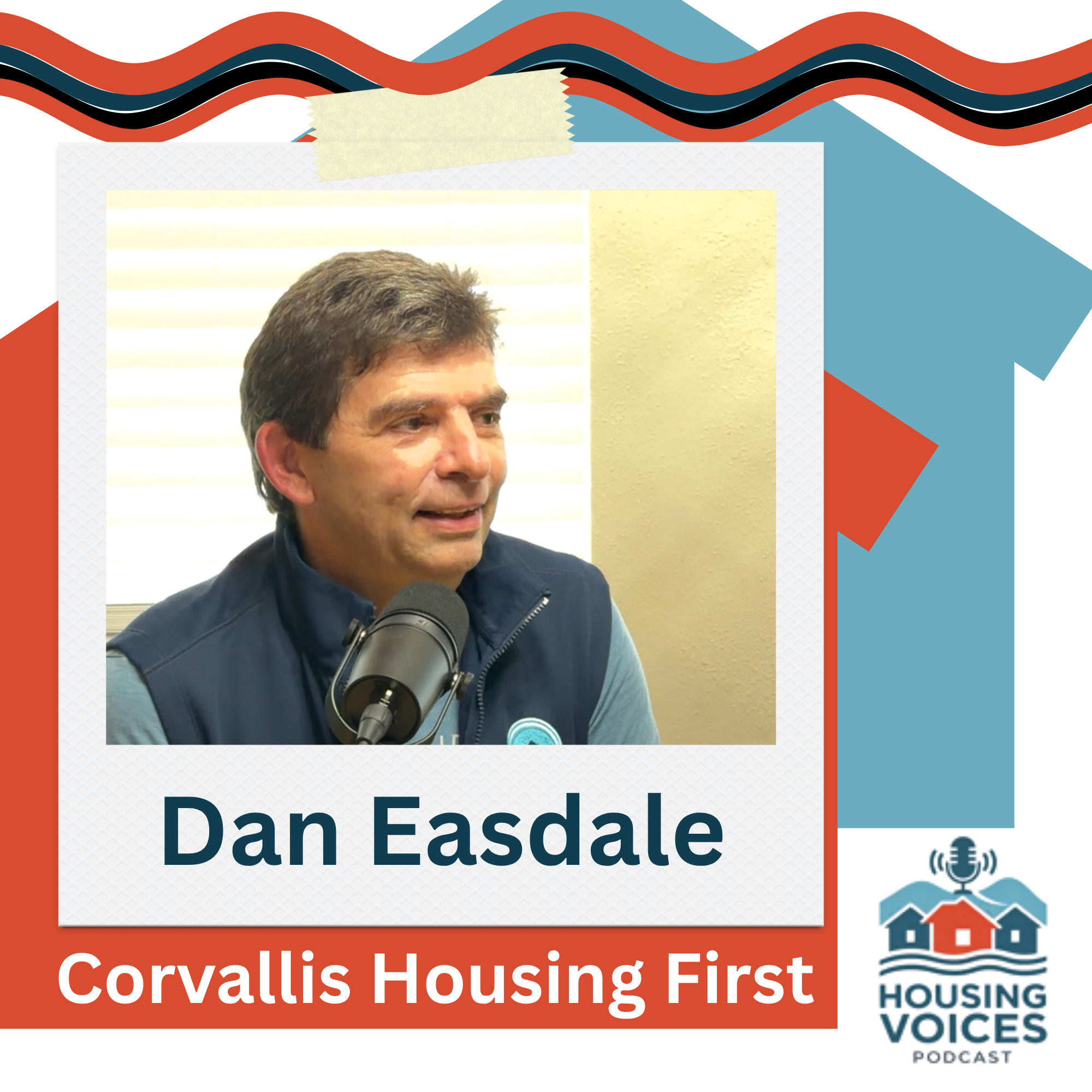
[00:00:06] Speaker B: All right. Today we have the pleasure of having one of my dear friends, Dan Easdale, with us today. He is like a brother from another mother, right?
[00:00:15] Speaker C: True.
[00:00:16] Speaker B: We've known each other seven, eight years.
[00:00:19] Speaker C: Yeah, seven. Seven years.
[00:00:21] Speaker B: Seven years through volunteer. Well, my volunteering. You're working because, you know, sometimes you do the job of a saint.
[00:00:30] Speaker C: I don't know that I agree with that.
[00:00:32] Speaker B: But the job is not you. Yeah, I'm just joking, of course. The.
[00:00:37] Speaker C: The work.
[00:00:38] Speaker B: The work. The work is fantastic. You want to give a quick little
[00:00:42] Speaker A: for those of us who haven't known Dan for seven or eight years? Dan, would you be able to introduce yourself to us?
[00:00:47] Speaker C: I'd be happy to.
So, Dan Easdale. I'm the program director for Corvallis Housing First. But I've been there for seven years now. About the time I met you.
Born and raised in Albany, so I'm a local kid.
Quick side note, as soon as I was able to, I got the heck out of Albany because I thought it was the worst place on the planet. Turns out it wasn't so bad. I lived there again.
[00:01:15] Speaker B: Where did you take a break.
[00:01:17] Speaker C: Detoured to San Francisco, which was about as opposed to Albany as you could get at the time.
And then from there, moved to Argentina.
[00:01:28] Speaker B: Okay, and that's where you met your beloved?
[00:01:30] Speaker C: That is not where I met her.
[00:01:32] Speaker B: She's so lovely.
[00:01:34] Speaker C: She's great.
I met her in South Albany High School. She was an exchange student.
[00:01:38] Speaker A: Hey, South Albany Rebels. Where I graduated.
[00:01:41] Speaker C: Well, rebel or, you know, a Red Hawk.
[00:01:43] Speaker A: I was a rebel when I graduated.
[00:01:45] Speaker C: Yeah, we're now Red Hawks. Yeah, she was an exchange student my senior year in high school. That's where I met her.
And then I chased her down.
[00:01:52] Speaker B: Is that why you went to Argentina?
[00:01:54] Speaker C: It's why I went the first time.
And then the second time I went. We moved down there to live.
[00:02:01] Speaker A: From the porches and shelters, streets and the room.
If the house had voices, the truth could break through.
[00:02:17] Speaker B: So, Corvallis Housing First.
[00:02:18] Speaker C: Yes.
[00:02:18] Speaker B: Do you want to talk about what Corvallis Housing first is and how it came about?
Kind of do that.
[00:02:25] Speaker C: Yeah. You can help me on this because you. You've been associated with the organization maybe longer than I have. That's true, but we've been around almost 20 years. I think next year we'll be celebrating our 20th anniversary.
Started as a shelter organization and then shifted to housing nine, 10 years ago when they bought their first building.
What we do is we house people who've experienced homelessness generally Chronic homelessness, which means they've been homeless for a while, they have a disability, and they have very few options. So we currently have almost 40 units of housing to do that.
[00:03:09] Speaker B: But that's not where the magic is with chf. Corvallis Housing first. Right. The magic really is in. Or the part that speaks to me most is in the wraparound services. Right. And the fact that you can take someone who is homeless. Right. Or houseless, bring them into shelter, but really create a community for them.
Right. And help them to acclimate to the changes. Because that's a big change for people.
[00:03:38] Speaker C: Yeah. It can be. Can be overwhelming to be back into housing. It can feel oppressive a little bit. All the walls.
And so sometimes the transitions look different.
Sometimes people spend one night and then they're gone for three, four days. Then they come back and they spend another night or two.
But most time people are ready to be indoors again.
And. Yeah, so you're right, housing is one component of it. Right. But the services that we provide are really the key.
And I would say currently there's 15 employees. Approximately 12 of them do case management.
So most of the folks in Corvallis housing first are doing direct service.
So we do case management for everyone that's in our housing. But then we also provide case management to Unity Shelter for the shelters and for their transitional housing program.
We're at the drop in center now. We have an office there. We also work with the county and provide case management to people who have been housed but need some help stabilizing through that process.
[00:04:55] Speaker B: So what would you say the number of people that are in case management today?
[00:05:04] Speaker C: How many on any given day?
[00:05:06] Speaker B: On any given day,
[00:05:09] Speaker C: 100, maybe more. 125.
Between all of the different locations and. And programs that we're providing service to, probably that amount.
[00:05:21] Speaker B: And so that means that each case manager, you know, They've got about 15 people that they're helping.
[00:05:29] Speaker C: Yeah, it depends on the location. If you're doing case management with folks who are in housing, maybe the caseload is smaller because you've got a lot of work to do.
Sometimes in outreach, there's a lot of work initially to get people moving along that process, and then it's hurry up and wait because it takes a while to get either a Section 8 voucher or something else to help you afford the housing.
So the caseloads vary, ideally 20 max.
[00:06:04] Speaker B: Okay, so can you do a solid for Brie? Because, you know, Brie catching her.
So let's say we find somebody.
[00:06:12] Speaker A: I'm catching Strays here today.
[00:06:15] Speaker B: I know I never give you straights. I'm sorry. I'm a little feisty today.
[00:06:18] Speaker A: I never do anything to deserve it. So this is an attack.
[00:06:22] Speaker C: Golly.
[00:06:24] Speaker B: It's deep in here. Okay, so, Dan, this is what I'd like you to do because I love and respect the work that you do. Let's talk about. You meet someone on the street the first time, meeting them. Can you walk us through the process and the steps that chf, as well as the case managers take in the process, the timeline in order to get them into a housing.
[00:06:49] Speaker A: But I want to jump in a little bit before that.
[00:06:52] Speaker B: Of course, first.
[00:06:53] Speaker C: Great. Because I wanted to correct Marty. So you saved her.
[00:06:56] Speaker A: Can you talk about housing first and what that means?
[00:06:59] Speaker C: Oh, yeah, okay.
[00:07:00] Speaker B: I was getting there. That was my.
[00:07:02] Speaker C: We'll get back to that question. I'm sorry.
[00:07:04] Speaker B: It's okay.
[00:07:06] Speaker C: Housing First. It is a national model, as the name suggests.
It has been studied over and over again that it is much easier and much cheaper to provide services to people when they're housed.
And this was actually adopted by the Bush administration, which Bush? George, I think.
Pretty sure it was George's son, Dubya. Yeah, W.
And that was the main thing was it's just cheaper to have people indoors. Why? Because the service utilization goes down for emergency services, you know, for other issues as well. People are then able to take care of other issues that they have. But I will say housing without services isn't the housing first model. So it's housing, but also providing that service that goes along with that. Some people need more services than. Than others, but that's the basic tenant.
[00:08:08] Speaker A: And we're talking mental health, substance abuse programs, things like that.
[00:08:13] Speaker C: Yes, all of those things. It's been shown over and over and over again.
Much easier to do when someone has a stable place to be and to recover from. And so that's. That's the model essentially. Get people in and then. And then they can work on the other goals. And what we've seen here in Corvallis is essentially that maybe people don't completely give up substances, but they use less, far less.
But most of the time, people then turn and say, I have to go see a doctor. You know, I've been putting this off way too long. I've got to go see a doctor and get this taken care of.
So those are the kind of things that happen once people get stable.
[00:09:00] Speaker B: And so that's something I'm glad you opened up and touched on. Is the National Housing first initiative based on it people being clean and sober when they arrive or not. And what is kind of, what's the philosophy behind that?
[00:09:19] Speaker C: Yeah, it is definitely not. It is considered low barrier, which means we try to eliminate as many things that keep people out of housing as possible.
So there are many places that require you to be clean and sober to get in.
Many landlords that look at criminal backgrounds and will, you know, not rent to you for a lot of different reasons.
Low barrier means we try to overcome as many of those things as we can get people in house.
So very much not a clean and sober kind of requirement program model.
[00:09:56] Speaker A: And I, I'm glad that we're actually talking about this because there have been a lot of, there are a lot of folks or detractors, let's say from the housing first model that kind of decry the model as it's prairie freewheeling. You can do whatever you want and do drugs and alcohol and it doesn't matter as a reason to not support the housing first model because they believe that if you are using taxpayer money, you should be clean and sober.
Which is a little bit frustrating to hear for me because there are a lot of people that are housed that are not clean and sober.
[00:10:33] Speaker C: Correct.
[00:10:33] Speaker A: And also, as somebody who does street outreach here in Corvallis twice a week as well, especially in the winter time, you can either choose, you know, drinking to stay warm so you don't freeze to death overnight.
[00:10:46] Speaker C: Yeah.
[00:10:48] Speaker A: Or you can stay clean to get in to one of those higher barrier programs. And I think that is a impossible choice for to expect a lot of people to make or if they have medical conditions, maybe they're trying to not feel right where they don't have access to the health care or, you know, traumatic events that they also do not want to remember until they're in a space where they can get mental health care. Right. And it's either use the substances to get through the day or stop using the substances and struggle with your health concerns, your personal concerns, whatever. And then maybe you might get into a higher barrier care.
[00:11:25] Speaker C: Yeah, I, I mean, I completely agree with you. I think when people think of housing that it's very, it's this simple thing, it's just housing, but it involves so many other layers. Like you mentioned, physical health.
One of the greatest population increases we see now is with elderly generally on a fixed income.
And, and so the, yeah, it, it is a complex world that people are trying to navigate and not be housed. And so, you know, I've explained it many times.
All the things that you do in your house that are legal, are illegal when you're on the sidewalk, but you don't have a place to do those things. And so it is so easy to.
To run afoul of the law or your neighbors or.
Or many, many different things. Not to mention just the psychological impacts that people have to deal with every day. You get judged all the time. You get judged all the time.
You know, during COVID this was particularly challenging because there was no place to shower, go to the bathroom. I mean, and so you walk into a store or a hospital or ER and you just get judged all the time. And so it's not just the housing, it's all the other things, too. And you mentioned it. Trauma.
Trauma is something that we see not all the time, but it's probably the most common denominator that there might be.
And it's rampant. And, you know, when we have new employees or interns. Come on. I always say, when you're having your first conversation with someone, see how long it takes them to bring up something traumatic that happened to them as a kid. You know, you do street outreach. It's going to be quick.
And those traumatic experiences, if they don't get dealt with, don't go away.
And they haunt you and they haunt people. And so we see that over and over again.
[00:13:30] Speaker B: I think one thing that's being forgotten is the fact that when people are on the street, right, they're getting judged, but they're also ignored. They're silent and they're invisible.
And humans need community.
[00:13:44] Speaker C: Yeah.
[00:13:45] Speaker B: And that's part of what Corvallis Housing first does, right. Is it's creating a community because that's truly a foundational human need.
And there are many times when we can walk down the street, you know, because I've been, you know, educated on it. Right. Anytime I see someone that's houseless, I say I talk to them. Right. Even if it's just a hi or how are you doing? Or what, you know, is, I want
[00:14:08] Speaker C: people to know, acknowledge them, that they're seen.
[00:14:11] Speaker B: Right. That they're my neighbor. Like, oh, okay, I don't care. Right.
[00:14:15] Speaker C: Yeah.
[00:14:15] Speaker B: Because it's sad when you walk down the street and you see people circumventing or something. You're like, this is just another person.
[00:14:22] Speaker C: Yeah.
[00:14:23] Speaker B: You know, And I think it also mentally inhibits our neighbors, our community members, when they're not seen. Right. When they're ignored, when they're not cared for.
And I think that invisibility, to me, sometimes is more impactful than the Judging.
[00:14:41] Speaker C: Yeah, we hear that a lot. That people feel like they're. They're not seen.
You've mentioned it a couple of times. Community. And I think that is a key because that's, that's a human need as well. Not just the housing, but also a sense of belonging. Like you belong to someone, to a community, and that's difficult to reproduce, but it's really. It's really important.
A lot of our housing is shared, which means that you share the bathrooms, you share the kitchen, and so there's lots of opportunities to interact. We had one guy who just moved out of our Van Buren house into his own place.
And the week before he was to move into his new place, he had cold feet. And he texted me and he said, I think this was a bad idea. Why?
Because what if I get lonely? At least at Van Buren, if I feel lonely, I can go downstairs and someone is there.
And this is a guy that stayed to himself pretty much all the time, and yet he knew that if he needed to see someone, someone would be there.
That's really key. That's really key.
And it's also hard to do. So sometimes we get it right, sometimes we don't. But that's also humans.
[00:16:00] Speaker B: Yeah. So I have the blessing of knowing all of the locations and things, and I've been lucky enough to be a part of some of the purchases. Right?
[00:16:08] Speaker C: Yeah.
[00:16:09] Speaker B: But can you go through and explain to Bree what the different models of housing that Corvallis Housing first has, you know, what they're used for and what they're geared towards and what the purpose was behind them?
[00:16:22] Speaker C: Yeah, we have four buildings.
The one I mentioned, Van Buren, is an old sorority. It's the old Betty Crocker house.
Previously was the veggie house.
In fact, we still. We still get mail for that. I think if you Google it, it still says veggie house.
It's 17 rooms.
[00:16:43] Speaker B: 17 bedrooms.
[00:16:44] Speaker C: Bedrooms. Not. Not full units. There's only one or two that actually have a bathroom in them.
So we have 17 rooms and we have one medical respite room in that building as well. We have two total.
So Van Buren is unique because it is that shared housing. So people have to be able to get along a little bit. If that's not going to work for you, then this probably isn't a great space for you to be.
[00:17:14] Speaker B: And is that all male? Female?
[00:17:16] Speaker C: It's how.
[00:17:17] Speaker B: How many stories? What does that look like?
[00:17:19] Speaker C: Yeah, it's a three story building.
[00:17:22] Speaker B: Wow.
[00:17:22] Speaker C: The one thing about it is it also involves stairs because it's 100-year-old house. And so that is one thing that we have to keep in mind, too, is can you go up and down the stairs? And sometimes we've had people who can when they move in, but then as they age, then they need something different. So we either need to find a different arrangement for them because we don't have downstairs. There's nothing on the ground floor except for the medical respite room.
We have both men and women there. We have had a couple children there. It's not super adequate for children, but one was born there.
And so when they were a baby, there wasn't so much risk of going up and down the stairs. But generally it's individuals or couples.
[00:18:15] Speaker B: And that one's really close to Oregon
[00:18:17] Speaker C: State University, right off of campus.
[00:18:20] Speaker B: And so there's local services and restaurants and things around. And how does that one work within the community?
[00:18:27] Speaker C: It's very wild because when I tell people where that building's located, they go, what?
I've walked by it a hundred times. I never knew when school is in session. I would say it looks and feels a lot like the fraternities and sororities around it with a lot less beer pong, just an older population in there.
And now that the students are gone, it feels like we have the run of the neighborhood because there's no one around. But it has worked just fine. For the most part. Nobody even knows we're there.
[00:19:06] Speaker A: Yeah, I think I took a tour of it maybe a couple years ago, and I. Because I went to Oregon State, too, and I was like, wait a minute. This is right here. I walked by this so many times, and I had no idea.
[00:19:18] Speaker C: Yeah. Yeah. And that's. That's great. That, for me, that's a compliment. It is that, you know, we're just. We're just another house in the neighborhood.
And so it. It has worked great.
The, you know, the limitations, as I mentioned, is the stairs and. And all the shared space.
But sometimes that's exactly what people need is to. To try to integrate a little bit more.
[00:19:44] Speaker B: We used to have our board meetings there.
[00:19:46] Speaker C: We did, yeah.
[00:19:47] Speaker B: For a long time.
[00:19:48] Speaker C: That. Well, Van Buren was the. Everything. We had all of our offices there, too. And so, you know, when I started, we were four.
Four employees, maybe.
[00:20:00] Speaker B: Yeah.
[00:20:01] Speaker C: There wasn't very many of us, so we all fit in that office.
All the meetings were held there.
That was. Yeah, that. That's a special location for most of us who've been in the organization a while.
And that's. That's one building. Then we have Partners Place, which is a eight unit apartment building.
Most of them are two bedroom apartments. There's two one bedroom units. There's.
What we have done with partners and has worked really well is again, upstairs is all stairs.
And so we have put families upstairs on the second floor because generally they can go up the stairs. And then downstairs we have folks who have some kind of mobility or disability that they can't get up the stairs.
And it's been a great combination because the families upstairs will help, you know, look after the. The folks that are downstairs that are aging.
And that's been a great.
That's been a great building to have.
We have a couple units where we rent the bedrooms to different people so that they will share a unit.
You know, it can work out great. Just like any roommate situation can work out great. It can change over time but.
But that's been a great, A great building to operate there.
Then we have DeeDee's, which is a single family home really with four bedrooms in it that was donated to us by a local family with the purpose of housing older women who've been homeless. And so that's what we do. There is women over 55 generally who've experienced homelessness, many coming from the street or from the shelter directly. We also have a medical respite room at that site as well.
[00:22:00] Speaker B: And that one has the medical respite. Right. It has its own separate entrance.
[00:22:04] Speaker C: Correct?
[00:22:04] Speaker B: Completely kind of separate.
[00:22:06] Speaker C: It's almost independent. Yeah. From the rest of the house.
Yeah. So that's great because we've had couples in there.
We have a mother daughter there now. The daughter is there to take care of mom after surgery. I mean the medical respite, respite rooms, we've done so many amazing things and you know, shout out to Anita Earl and Samaritan and their team for providing that.
And we have had two or three people, I can't remember right off the top of my head, actually spend their last days there in hospice and they had a place to be.
So it's remarkable just to have those spaces that we can do these kinds of things for people who, you know, would just be. Would dialed out in a tent or, you know, you just don't know. And so.
So those medical respite rooms have been great. And then our last building is Sycamore, which we purchased. You, you were in on that? Yeah, during COVID You did. It's a fourplex of one bedroom apartments and
[00:23:19] Speaker B: all are like zero entrance too.
[00:23:21] Speaker C: They all have their own Entry, their own door, separate their complete units.
Again, the nice thing is it's ground floor, which we desperately need those ground floor units. And so everyone that goes over there has some need to be on the ground floor. And there's no shortage of people that need them.
[00:23:42] Speaker B: No, there's interest.
[00:23:43] Speaker C: And yes, of course, we're not talking about the big project yet.
[00:23:49] Speaker B: We're not talking about that yet. Andrea is going to get to come and talk about that.
[00:23:53] Speaker C: I won't steal all of her thunder.
[00:23:55] Speaker B: Steal her thunder? No.
[00:23:57] Speaker C: Yeah.
[00:23:57] Speaker A: Well, one of my questions that I have while.
[00:24:00] Speaker C: Yeah.
[00:24:00] Speaker A: While you've been at CHF and, and you could probably speak to this a little bit too, Marty, how have you seen the need change you've been here through Covid, you mentioned as well. And that obviously was a huge event for communities across the world, not just us, but how have you seen the need change in Corvallis?
[00:24:23] Speaker C: Covid was a big wake up call, I think, for a lot of communities.
We have a lot of fragile people out there that's easy to kind of turn your head away because they're in the shadows or whatever.
Covid made that very real. Where do people go?
Where do people go when you say stay home?
You know, whatever, whatever it was that. What if you don't have one of those.
A lot of the services closed.
A lot of the volunteers faded because most of the volunteers for many organizations were elderly.
So it was a huge. For me, it was a public health wake up.
So, yeah, the, the immediate need there was for first, a place for people to quarantine.
[00:25:14] Speaker B: Yeah.
[00:25:14] Speaker C: Because if you got sick, I mean, you know, if you got sick, you needed a place to be sick and recover.
But then we had all of these elderly and frail people, people with cancer, people with just incredible needs that needed some place to be.
And of course, we, we purchased 3rd street with the turnkey project. And I'll let Andrea go into detail on that. But, you know, we learned so many lessons there.
One, having a space to do those kinds of things, to quarantine people, for people to do medical respite. We did a ton of medical respite there to get people safe, you know, and Covid, it was really about physical health.
But that safety piece, that, that's another thing that housing brings is, yeah, you're safe generally in your home.
You can lock the door. Yeah, you can lock the door. You can not have to worry about your stuff, you know, which is another thing that keeps people up at night and during the day is you're carrying your Entire possessions with you every day.
And so yeah, so having that door was great.
[00:26:31] Speaker B: I remember a couple months ago and
[00:26:34] Speaker C: I remind me, I don't think I answered your question. How has it changed? But do you want me to cut you off? You can knock me off, Mark. You cut me off, I'm cutting you off.
[00:26:42] Speaker B: You finish with Bree's question?
[00:26:43] Speaker C: Yeah. Let me talk to Bri.
One of the. Well I would say two big, two big changes even in the seven years. One population continues to get older.
And that isn't just people who've been homeless a while who are aging.
It's also older folks who are losing their housing.
You know, we've seen the rents in this community. I would be curious to know what rents were seven years ago when I started. I guarantee you they've gone up as much as possible in that time.
[00:27:19] Speaker A: According to some of the latest data I've seen from the state of Oregon, Corvallis is when it comes to affordable housing the least affordable in the state.
[00:27:28] Speaker C: Yeah. Still I think continues to be.
[00:27:31] Speaker A: Rent burden is extremely high. Yeah, it's hard.
[00:27:35] Speaker C: I will say that Linn county is catching up because they the remind me to get back on track. But there's so much to talk about.
When the Lynn Benton Housing Authority put out their new limits for housing this year for Benton and Linn county used to be there was a two hundred dollar difference between the two counties. Benton being higher now it's like fifty bucks.
So Linn county is, is catching which is not great news. But so that elderly population is one that we, we are seeing a huge increase and the other things that we see with that is even in shelters and maybe Sean talked about this when he was on taking care of people who can't take care of themselves.
What do you do?
What do you do? Because shelter staff, housing staff, we're not prepared to do that and the bar to qualify for services is pretty high.
And so a lot of times we get in a real pickle when people are struggling to take care of themselves and yet they don't qualify for services or they're waiting to qualify for services
[00:28:55] Speaker B: or they're waiting for their voucher.
[00:28:58] Speaker A: Yeah.
[00:28:59] Speaker B: How are the vouchers doing?
[00:29:01] Speaker C: It's about four years now. Fully section 8 voucher a year ago. Two years was about two and a half years.
I would say less than two years ago. Last year was terrible.
We, we just didn't see vouchers coming out and so that really extended the, the wait time to get a voucher. So yeah, a few or four Years. And the other thing I would say about that, and they remind me to tell you, what's the other population that we're seeing a lot of, is if you want to get a voucher, you really need to either be over 62, disabled, have children, terminal diagnosis.
Except for terminal diagnosis, all of those preferences will get you on the four year wait list.
If you have none of those, if you're just poor, you don't have enough income, you're in a bad situation right now, you can also get on that wait list, but your name will never get pulled. Never. So that four year wait list is heartbreaking. Is really for those preferences.
The other thing that we see with those vouchers, the vouchers, you know, there's a pot of money to support all those vouchers. When rents go up, it covers less.
And so there's fewer vouchers going out for the same amount of money. And so that, that was a big limitation last year was that, you know, the funding either shrunk or stayed the same, but rents and everything kept. Kept that going up. So
[00:30:47] Speaker A: the other population.
[00:30:49] Speaker C: Thank you. The other population.
[00:30:50] Speaker B: I was. I actually remembered that too. Yeah, yeah.
[00:30:53] Speaker C: Look at you.
[00:30:54] Speaker B: Look at it.
[00:30:55] Speaker C: Look at you.
Families.
[00:30:59] Speaker A: That's what I was gonna.
[00:31:01] Speaker C: Families. And the real tragedy is there's no place for families to go. So COI does have 11 rooms for families, but a lot of those are contracted out.
So excuse me, if you're. And COI is Community Outreach Inc. Another fantastic partner.
There's such a key link in this whole housing spectrum that we have,
[00:31:30] Speaker B: but
[00:31:31] Speaker A: it's a little fractured when it comes to families because we've got another great organization, Jackson Street Youth Services, that supports youth up to 26, I think is their cut off.
[00:31:41] Speaker C: 25.
[00:31:42] Speaker A: 25. Okay.
And then if there's a family with kids as well, how do you support the kids? Because maybe some of the kids can go to their school and get support or Jackson street street, but then their parents aren't able to. It's hard.
[00:31:57] Speaker C: Yeah. And that's why for families seeking shelter and the wait list for Community Outreach is years, honestly. And so, yeah, the families are a real problem. We are just getting inundated. And I know speaking with folks at the Corvallis Daytime Drop in center too, they're just getting a ton of phone calls for families and we don't really have any place to send them.
[00:32:27] Speaker B: No, there's some place.
[00:32:29] Speaker C: And so what we see a lot with families is sleeping in their car or they have to split up. Maybe the parents will go one way. Maybe the kids can go to Jackson street, or maybe they go with someone who will watch them and then. But even for couples, there's no shelter for a couple. So if you want to go to the men's shelter, great, but your wife has to go to the women's shelter.
And that's the same at community outreach, too. So for families to stay together and find a place challenging, which seems super
[00:33:06] Speaker A: challenging, like something that would help everybody if those families were able to get into a housing situation on their. On their own. I mean, not of their own recourse, but their own situation, that would help the entire fabric of our community. Because that's what most of our economy is predicated on. Right? Being able to buy a house and, you know, pay taxes on that house and have your kids go to a good school. And we are paying out all of this money that they deserve for housing through vouchers. That it's essentially is putting our economy and our communities in limbo where we have all of these folks that could, you know, contribute to society.
I'm, you know, putting air quotes because I don't really like that framing, but that are unable to because they can't get past that first step of, you know, a security deposit first and last, or, you know, whatever the landlord requires, and then we're stuck.
[00:34:08] Speaker B: Well, and you have to then rely on the generosity of others and the community.
But also, it's about the disservice that that is doing long term to the children.
[00:34:17] Speaker A: Oh, absolutely.
[00:34:18] Speaker B: We had someone on before about the educational effects of kids who are homeless and how quickly and easily they can identify those children in the classroom.
So not only are these children living a vulnerable lifestyle, these children are also not getting the blessing of an education that they could possibly get right if they had a nice, safe place to lay their head. And I think that these issues are part of why we wanted to. To do this right, is to raise the awareness of how interlocked all of these aspects are.
I'm going to go back and put
[00:34:55] Speaker C: you on this point.
That's a great point.
I would also hate to agree with Marty.
[00:35:00] Speaker A: I would also just like to flag that Marty's had a couple soapbox moments on this here podcast and she has a lot to say about my soapbox moments.
[00:35:08] Speaker B: It's so true. It's so true. I do that to you all the time.
This is. Yeah, this is like my people.
[00:35:16] Speaker A: Yeah, Well, I mean, equal opportunity, so equal opportunity soapboxers.
[00:35:19] Speaker B: Okay. All right.
[00:35:20] Speaker C: Before you put me on the spot.
[00:35:22] Speaker B: Because, you know, I'm going to.
[00:35:23] Speaker C: Yeah, well, I'm used to it.
I just want to shout out Benton county, in this case. They started what's called the flexible housing subsidy pool. And that was really rapid rehousing funds to get people back into housing.
And the majority of the households that they housed were families.
And so that has been one saving grace to this unfolding tragedy with families is. Is that county program has housed a ton of families, so that's been helpful. But the families and the elderly just keep coming. And. And it's. It's about affordability. In most cases, you know, they're. These are people who work their entire lives.
They're now on a fixed income, and the costs have just driven them out or a medical emergency or something.
[00:36:18] Speaker A: Do no fault of their own.
[00:36:20] Speaker C: Yeah. That, you know, that unforeseen. That they couldn't or, you know, we've. We've seen it too, where people are in the hospital for three weeks and they get out and they have an eviction notice. And some of those things are fixable.
But.
But generally it's, you know, I got. I got in this mess somehow, and I don't even know how. And, you know, as we age, some of us, you know, there's a little cognitive decline.
[00:36:49] Speaker A: Well, of course. But in a functioning society, we should.
[00:36:52] Speaker C: There would be a safety net.
[00:36:54] Speaker A: We should be able to take care of all of our people throughout all of their different needs, throughout their walks of life. Like that's the benefit of living in a society.
[00:37:02] Speaker C: Yeah.
[00:37:02] Speaker B: Well, it's interesting. I was listening to a podcast. I think you actually recommended it, and it was.
[00:37:08] Speaker C: How.
[00:37:10] Speaker B: I know that hurt, by the way, but how, you know, the costs of everything are going up except for the cost of labor. Right. And it's the devaluation of human service. Right.
For the good of our people versus for the things, you know, to that point.
[00:37:29] Speaker C: If I just A quick fact.
Of the 15 employees that we have at Corvallis Housing, first, I would say
[00:37:36] Speaker A: 12 of them commute in, which is really, really interesting.
Outside of those folks as well, we have a lot of folks in the community that work in community service or they're working for the city or the county, and they are working every day for our communities, and they can't even afford to live here.
[00:37:58] Speaker C: Correct.
[00:37:58] Speaker A: And if we have an emergency outside of. Outside of all of that, problems with, you know, if they work here and they work on behalf of our communities, they absolutely deserve a spot to live in. Our community also presents. Yeah. If they Want also presents a staggering problem if something hits the fan and we have a disaster and all of our people that are trained to help us are not even in our community. Boy, we're up a creek.
[00:38:22] Speaker B: She's done.
[00:38:23] Speaker C: Sounds like I. I stepped into something that's dear to her.
[00:38:28] Speaker B: Yes, yes.
[00:38:29] Speaker C: But it's true. I mean, for us too.
People are driving a long ways away to get here.
[00:38:35] Speaker B: Right. And there's other costs to that as well. We won't get into those today. Gas, environmental. Should we get into any of those? Okay. Now, you recently, with the help of a friend, made a really big presentation.
Yeah, yeah. About Housing First. I did. Right. Do. Would you share that with us?
[00:38:56] Speaker C: Sure. Be happy to.
[00:38:57] Speaker A: You have a PowerPoint too?
[00:38:58] Speaker C: Yeah. Oh, no, I didn't want him to be that prepared to click through it.
[00:39:02] Speaker A: And this is the part where you put in the. The presentation right over top.
[00:39:07] Speaker C: Yeah, yeah, yeah.
[00:39:08] Speaker B: You can do it off the cuff, right?
[00:39:10] Speaker C: Sure.
So I'm trying to remember when it was July or August.
Andy, Andrew Menden hall from Central City Concern in Portland and myself, we went to San Francisco to present at a conference.
And the.
The topic was about doing housing first when behavioral health supports are really challenging to.
And we have that issue here. Oregon is, you know, as. As along with being highly unaffordable, also has a lot of shortages around mental health care. Yeah.
You know, it's bad.
And so part of being able to live into the model of housing first is. Is to be able to have those supports in place. But how do you do it when they just aren't available?
And so that. That was the gist of the.
Of the presentation.
I think it was well received.
Oh, that's awkward.
Sorry about that.
[00:40:26] Speaker B: It's smart.
[00:40:27] Speaker C: Yeah.
[00:40:27] Speaker B: It's usually my phone.
[00:40:29] Speaker C: Usually they take my phone out.
[00:40:33] Speaker B: Mine went off earlier, but you were talking, so I just.
[00:40:36] Speaker C: It was probably Ed calling.
Yeah. So. So we presented at this conference for Housing First.
Unsurprisingly, it's not just an Oregon issue.
This is an issue that is happening around the nation as well.
You know, and the. One of the big components to this is the question of autonomy. Right. And so what we see are people who really are not capable of making good decisions to take their health or mental health, and yet there's no mechanism to get them that care. And so it just goes on and on and on. And generally what happens is they end up in jail because they'll commit some crime and maybe they go to jail several times, and then maybe there's a process where they can get the. The attention that they need.
[00:41:36] Speaker A: But it's a. It's a difficult balance to strike, though. Yes, it is, because that can also be used to harm in addition to help.
[00:41:44] Speaker C: Yeah. Which is kind of how we got in this mess, is that we had a system that, well, we'll just lock people up.
[00:41:50] Speaker B: Right.
[00:41:51] Speaker C: For their own good. And that didn't work well either. But the solution was we'll just put everyone out on the street. And so that didn't work either. And so we haven't found that balance.
And, you know, Oregon is just woefully short of all kinds of behavioral health care in this. I mean, youth all the way up.
And so it's really, really tough when someone is asking for help for mental health reasons.
And the answer is, well, we can get you an assessment in a month and maybe you can start treatment in six months.
[00:42:31] Speaker A: And it's gutting to hear that.
[00:42:32] Speaker C: And they need that right. Right now. And so what do you do? You go to the emergency room. They're not, you know, that's not the place for that.
So that, that was the presentation that we did in San Francisco. It was great to be back in San Francisco.
[00:42:49] Speaker B: Even when it wasn't your marathon that you ran for your.
[00:42:52] Speaker C: It wasn't that. In fact, you know, the. The hotel we did the presentation in. The only other time I'd been in there is when I worked as a bike messenger in San Francisco and made a delivery to the. To the hotel.
And now to be back, you know, presenting, that was kind of a surreal experience. But it was great to work with Andy, you know, in his organization up there.
You know, the. The urban. And I don't know that Corvallis really is rural, but certainly much smaller than.
Than Portland. You know, they're.
They operate thousands of units of housing. They have a thousand employees, and we have 15, and we operate 40 currently.
It was just striking to see that even though the programs in size are significantly different, the issues that we face are still.
Still the same.
[00:43:52] Speaker A: Well, it's. I think it also gets to why we started this podcast as well, is if it was just as easy as putting somebody in a house and then calling it good. Yeah, we would be in a much different position with our housing crisis that. That we're having right now that it's. It's really hard to just say, okay, here is one solution, and that's it. We're fixed. It's done. So people are, you know, messy. We don't fit in one single box. There's not one single solution.
And there is a whole lot of dereliction of duty across multiple different spots in our society that has gotten us here.
[00:44:29] Speaker B: Right.
[00:44:29] Speaker A: One is mental health care, you know, access to regular healthcare, housing, you know, substance abuse supports, all of that stuff. And just trauma that people go through generationally as well, and all types of this, that if it was just as simple as putting somebody in a home, we would not be in this mess. And that's why we're, I think, trying to have all of these conversations to really pull back the curtain in a lot of ways that for folks, you know, like myself, that does street outreach. Marty, you're very involved in CHF and a number of different organizations, but a lot of folks, as we've talked about, have really no clue. They haven't been in a situation where they need to access service and they don't know how hard it is to access services or they will. They just don't want to admit it. Because there are what I think the last statistics that I saw. 72% of Americans are living paycheck to paycheck. And it's frightening to consider that you are one paycheck away, one injury away, one emergency away from homelessness. And it's frightening and it's hard to realize sometimes for people.
[00:45:37] Speaker B: I'm going to.
[00:45:38] Speaker C: Yeah.
[00:45:38] Speaker B: That's one of her soapbox.
[00:45:40] Speaker C: It was a good one.
[00:45:41] Speaker B: When I say bops, I mean boxes.
It was a good one.
[00:45:45] Speaker C: It was a good one.
[00:45:45] Speaker B: It was a good one. Yeah.
So I'm going to go back to.
I'm on the street and I'm homeless and I've been there for a while and you find me.
[00:45:54] Speaker C: Yeah.
[00:45:55] Speaker B: Let's talk about that journey from going from there to I'm. I'm in a room at Van Buren. Right.
There are a lot of steps to get there, and there are a lot of unknown factors that people don't realize that need to happen in order for that to happen.
[00:46:16] Speaker C: Yeah. And this was your original question, and we're finally circling back to.
[00:46:21] Speaker B: Thank you for realizing that. Because I think there's somebody.
[00:46:24] Speaker C: Yeah.
[00:46:26] Speaker B: That might have got. Yeah. Off my original question. Yeah.
[00:46:30] Speaker A: We work well together.
[00:46:31] Speaker C: We do.
[00:46:32] Speaker B: We do.
[00:46:36] Speaker C: The question is.
Is a complex one as well.
So the, you know, the. I think the first time you framed it is like, what's the process from getting. Well, that process looks different for each person. And so I'd like for you to give us like.
[00:46:57] Speaker B: An average one.
[00:46:58] Speaker C: Right.
[00:46:59] Speaker B: Not one of the really complicated ones.
[00:47:01] Speaker C: Sure.
[00:47:01] Speaker B: Right. Because I can remember one of My first experiences and why I remained with CHF was I had been working in the women's shelter.
[00:47:08] Speaker C: Yeah.
[00:47:09] Speaker B: And there had been someone who learned. And I was. It was one of my nights when I was staying over there, and I got woken up, which those who know me know that can be rough. But I was sitting on the floor with this woman who was crying, and she had an addiction issue, and she learned about the death of one of her children, and it was shattering. Right.
The case managers and everybody came in, they took care of her. Right. I had just sat there holding her hand and crying with her. Right. Because I'm a crier.
[00:47:47] Speaker C: Yeah.
[00:47:49] Speaker B: A year later, a year and a half later, we're doing a fundraiser, the T. Right. For the women's shelter. And you were there.
And she walks in, and I'm like, wow, I know that woman. And I couldn't place where I knew her from.
And it's because of the work that the case managers did to help her get on her feet, to help her get to the point of recovery.
And she point out, she goes, marty, you don't remember me? And I'm like, I know. I know you. I thought maybe she was one of my children's friend's mom or I had met her out and about, couldn't place her to save my soul.
And sure enough, it was the work that the case managers had done to help this woman, you know, get clean and sober. Right. To help her get the mental health and physical health that she needed. Right.
[00:48:38] Speaker C: Yeah.
[00:48:39] Speaker B: So that she could come back. And she's still to this day. And that was. That was before I even met you. Right.
And that power of that love and care that the case manager gave, I still see in my heart and in my mind, and it's just so powerful. And it's why I think it's kind of, you know, the work of a saint. Because so many people can't do that work.
[00:49:03] Speaker C: Yeah. I mean, I like to think of it as love.
[00:49:08] Speaker B: It is.
[00:49:08] Speaker C: You know, because that's also a human need. We need to feel loved. And however, I don't train people to go out and love people, but.
But it's essentially what we're doing is we are.
You know, that that's the biggest thing, is just showing some unconditional regard for people and.
And admitting that they have every right that we should have and that they are human being and they deserve some dignity.
Relationship is definitely where it starts. So when, you know, when we have new people come on board, that is what we talk about. You are building a relationship, you're building rapport, and more importantly, building trust. And that is something you really don't want to take lightly, because people have been burned a lot.
And so that's where it all begins to get someone to be able to open up about what they need. Because essentially we're not.
We're not setting goals for anybody. They have their own goals.
[00:50:15] Speaker B: Absolutely.
[00:50:16] Speaker C: We don't need to do that for people. We just need to show them how to get there sometimes.
And so sometimes a crisis, you know, is where it starts. You know, where we can. We can jump in and. And because you just never know when someone you know is. Is gonna take that leap. It can happen miraculously, you know, it feels like sometimes. But I would say, honestly, this is gonna take time, you know, to get back to housing. This is not an overnight process, but
[00:50:55] Speaker B: walk us through the process.
[00:50:57] Speaker C: So, you know, first of all, we want to get to know someone. We want to know, what are the barriers to you being housed? Were you housed before? Did you lose your housing? Do you have an eviction? Because that's a big deal.
You know, just what is it that's keeping you from housing? A lot of times it's just simply income, you know, for instance, 1200, let's say, for one bedroom. And my Social Security check is 1100. You've got an issue. Yeah, you've got an issue. And you've got no real possibility of making more income. So how are you going to afford rent?
That we have to figure out. And that is. That is the key to why it takes so long. So if you're waiting for a Section 8 voucher or you're waiting for some kind of a program that's going to have the rent assistance with it, it's going to be a wait. It's going to be a wait. In the meantime, what we can hopefully do is work on that other stuff, try to get you attached to some mental health, if that's what you want.
You know, maybe go to rehab, detox. What is it that you need to do for yourself right now?
But again, that's very difficult for some people to do when they're in shelter, because the shelter you got to be out at 9 in the morning, you know, and then you got to fend for yourself.
You know, there are other focuses that take your attention when you're trying to survive. Food.
Today I got to get out of the smoke because I got respiratory issues and it's hot. So I got to find someplace where I can just be cool.
You know, and so that's what occupies your day. Not, you know, I've got a, I've got to go see a doctor or I've got to go to Social Security, for example, you know, the office is in Albany.
If you can't just walk in anymore, you've got to get an appointment. So, you know, navigating the technology, those are a lot of things that case managers can help with.
Navigating the systems, navigating technology.
Some people are in shelters, they're going to need to go maybe to higher level of care too. And so beginning those processes, is it
[00:53:22] Speaker B: sometimes as simple as like, hey, let's get you an id.
[00:53:26] Speaker C: Yes.
[00:53:27] Speaker B: And then there's the process of trying to get an id.
[00:53:30] Speaker C: Yeah, I mean, you have to start
[00:53:31] Speaker B: with the birth certificate.
[00:53:33] Speaker C: Yeah. If you've had an ID in Oregon and you lost it, there is a great program where you can get just an id, not your driver's license, you can get another one. But yeah, requesting, requesting a birth certificate, some kind of document, divorce document, death certificate, all of those things. And the other thing is they all cost money.
And so, you know, first I don't know how to get my birth certificate from New Mexico and then I don't have the money to get it. And so yeah, let's start there, let's get that process going.
And that's a lot.
[00:54:11] Speaker B: Mailing, where do they get mail to? Right.
[00:54:14] Speaker C: The Drop in Center is a great place to receive mail. We have a ton of people who get mail at one of our locations, you know, the Unity shelter, you know, men's and women's shelter and the Safe Place program, you know, you can get mail there. But the, one of the issues that does come up, especially with Section 8 vouchers is you put down a mailing address four years ago.
[00:54:41] Speaker B: Yeah.
[00:54:42] Speaker C: And that's where the mail is going. And Housing does everything by mail.
So they don't try to reach out to you, they just put an envelope in the mail that says, hey, you're at the top of the wait list. Do you want it? You have 30 days to respond. But that mail went to an address you put four years ago. And so you know those kinds of things. So checking to make sure you're on the wait list, what addresses, stuff, going to those kinds of things and watching for it. Lots of people have waited four years, missed a 30 day window and had to start all over again. So imagine the frustration and the feeling of hopelessness that this is not going to happen. For me, it's just not I'm, you know, I'm cursed, you know, whatever.
[00:55:25] Speaker A: Yeah, why bother?
[00:55:26] Speaker C: Why bother? You know, it. Because.
Yeah, it can be extremely frustrating. It's easy to become homeless. It's really hard to get out of it.
[00:55:39] Speaker B: I would like for you to give us a little bit of glimmer of hope.
[00:55:45] Speaker C: Well, I mean, your story is, is the hope.
I would say despite all of the challenges, all of the barriers, people are really resilient and relentless about improving their lives.
[00:56:04] Speaker A: Even if folks may not. It doesn't look like it from the outside looking in.
[00:56:08] Speaker C: Absolutely. But we just see that over and over and over again. And that, you know, that's the reason that we do this work is you just get to watch people become who they want to be.
[00:56:24] Speaker A: It's exciting.
[00:56:25] Speaker C: Yeah, it's, it's wonderful, you know, to see that, that evolution for people who many folks would give up on, you know, and have in some way. I've given up on you.
[00:56:38] Speaker B: Would you say that most of the clients or most of the people in the housing first model are disabled?
[00:56:45] Speaker C: Yes.
[00:56:46] Speaker B: Are they the majority?
[00:56:49] Speaker C: Vast majority.
[00:56:49] Speaker B: Vast majority. Are they in a position or ability to be able to find a job or work?
[00:56:54] Speaker C: Work generally not potentially part time.
And so I would say the percentage of folks in our housing currently that are actually employed, probably 10%.
But there's two main reasons for that. One, they have a significant disability and two, they're already retired. They're, you know, they're elderly.
And so they've, they've put in their work.
And so, you know, again, it just comes down to simple economics. My Social Security check after working for 40 years is $1300.
That's what rent is. And so it just doesn't pencil out. And so that's, that's the folks that we're currently seeing mostly in our housing.
[00:57:42] Speaker B: It's good for people to know what the demographics are, what the people look like, because a lot of times humans will jump to a conclusion, well, all they need to do is work, you know, it was that easy, you know.
[00:57:54] Speaker A: Well, even if they can get a job as well. Right. Even on street outreach, there have been folks that have gotten a job and then they got their belongings taken through a sweep and then they couldn't verify their identity with their new employer and they couldn't hold the job while they waited two weeks for a new Social Security card and a new driver's license or id.
And then they're like, so why the heck did I even bother, right? I'm doing everything I'm supposed to Do. And here I am.
[00:58:24] Speaker C: Right.
Yeah. It feels like the system sometimes is rigged against you. Now, you know, admittedly, we all make poor decisions at times.
[00:58:32] Speaker B: Oh, yeah.
[00:58:32] Speaker C: But.
But, yeah, those kinds of things just are heartbreaking when people are trying, trying, and then, you know, through no fault of their own, they get this. Another setback.
And so, yeah, it's, you know, the demographics, you know, that we talk about. We want to think that, you know, as I heard all my life, well, just get a job or, you know, you just need work, or pull yourself up by your bootstraps.
[00:59:05] Speaker B: Many of the clients. Right.
[00:59:07] Speaker C: Yeah.
[00:59:08] Speaker B: Don't necessarily have the skills, which is why they need the case management to be able to do those things. Right.
Sometimes I know I am, like, going. I feel crippled with either indecision or pressure or stress or whatever it is. Right.
[00:59:23] Speaker C: Yeah.
[00:59:24] Speaker B: But I'm lucky because I'm in community with people who will step in and go, okay, all right. What can I do today? How can I help you? What can I do?
[00:59:32] Speaker C: Yeah.
[00:59:33] Speaker B: And that's what you're doing. And the other case managers, I have
[00:59:37] Speaker C: to call it out because I spent a lot of time studying this in Oregon State. Shout out to go Bees. Go, Bees.
Social capital is what you described. Yep. And that's really key. It's community. In university terms, I think it's. Yeah, we have resources that we can use when something goes wrong for us. If. If we have that $400 payment, we got someone we can go to. If our car breaks down, we can borrow someone's car.
It's when folks don't have that social capital or that community that it just starts to compound.
You know, if you live in Albany and you work in Corvallis, there is a bus.
[01:00:21] Speaker A: Doesn't come that often.
[01:00:23] Speaker C: Yeah. And so, you know, traveling to Corvallis for work, it just. It just starts compounding.
[01:00:31] Speaker A: It's expensive to be poor.
[01:00:33] Speaker C: It Very, very much so. Yeah.
[01:00:36] Speaker A: And hard.
[01:00:37] Speaker C: Yeah.
[01:00:38] Speaker B: Well.
[01:00:38] Speaker C: Yeah.
[01:00:39] Speaker B: And you don't tend to eat as well. Right. You're. You're doing so much more damage.
[01:00:44] Speaker C: And folks who've been chronically homeless die much younger.
[01:00:49] Speaker B: Yeah.
[01:00:49] Speaker C: 10 to 15 years.
[01:00:51] Speaker B: Yeah.
It's hard on. It's hard on bodies.
[01:00:54] Speaker C: Sorry.
[01:00:55] Speaker B: So to be a case manager.
[01:00:56] Speaker C: Sure.
[01:00:57] Speaker B: Right.
[01:00:57] Speaker C: You applying for a job?
[01:00:59] Speaker B: I don't know. I don't know if I get promoted. So let's see.
What are the requirements? What is the background that's necessary?
[01:01:09] Speaker C: Some experience in social services, especially working with this particular population.
But really, you know, the.
It's the soft skills that are harder to, to screen for, but character. I want to know that you can sit across from anybody and see them as another human being and without judgment. And we've, you know, we're going to get to work because I can teach you all of the resources and, you know, who are the people to contact, but that's, that's something that I, that I really want. I want you to see the person there just like a colleague, just like someone from your family. That's what I want.
[01:01:54] Speaker B: I so love that you didn't start with. Okay, here are the educational requirements.
[01:01:59] Speaker C: Degree. Yeah.
Well, a lot of us have lots of fancy degrees and sometimes it doesn't really help much.
But, but the other thing is, who are the folks that don't have those opportunities to get degrees?
And those are the folks that we want working for us sometimes because they bring the right perspective for us to. As we, as we shape programs, as we shape systems, that we don't repeat the errors that we've done in the past.
And education is one of the things. It's a, it's a blessing. It's such a privilege to be able to get, you know, higher education and to afford it and not have debt.
[01:02:44] Speaker A: That part, you know.
[01:02:45] Speaker C: Yeah.
And that's not available to everyone. So we recognize that. Yeah, great. You've got your degree.
Fantastic. I still want you to be able to sit in front of someone, forget you have that degree and just be human.
[01:03:00] Speaker A: I'm glad that you brought up the lived experience or that you can, you can relate in some way.
In, in my experience, in my, my policy background, I worked for, in the Senate for many years doing policy in, in D.C. and especially when it comes to topics like housing, I don't think that you can do a good job addressing a problem that you don't have any personal experience or you don't know anybody who has personal experience with the problem. Especially when we're talking about complicated topics like housing that there's so much going into why somebody may become unhoused. And it takes experience to understand how to get out of it and how to perfect systems and how to say, well, yes, you can write the most spotless piece of legislation that reads incredibly.
But then when it gets down to the level of actually accessing the services, sometimes the text, the legislative text, creates unintended consequences, hoops that you have to jump through that are silly when you are coming from the perspective of a case manager or from direct service provider.
And I really appreciate that you brought that up because I think more People need to, I think, fully understand that. And across the spectrum of society, that lived experience is worth its weight in gold.
[01:04:26] Speaker C: Yeah, it's experience.
One of the programs that we have started at Corvallis Housing first is our peer support program.
And what. What we did is we trained our residents to be peer supports and not, you know, peer support is generally associated with recovery, with alcohol and drug recovery. But there's the other component, and that is recovering from being homeless. And what we do with our peers is we will connect them with people who are moving into housing who've been homeless a while and help them with that transition. It has been so good to have that. And there's no way that we can provide that. We don't have that experience. We don't have that knowledge.
And our peers do such a lovely job at that.
[01:05:19] Speaker B: Oh, and the joy that it brings them to do it. I can remember when they got trained and the big smiles that were on their face. And Corvallis Housing first also does a really amazing thing, is they have board members that are.
[01:05:34] Speaker A: I love that.
[01:05:35] Speaker B: That are. Have experienced homelessness. Right. Sometimes they have to fall off the board. Right. If something, you know, life happens. Right.
[01:05:43] Speaker C: Yeah.
[01:05:44] Speaker B: But the fact that they want to embrace that. Yeah. Throughout all levels. Right. Is so vitally important to it.
One question I meant to ask you about your presentation and the research that you did and Andy did in preparing for that.
What would you say your three greatest takeaways were or your surprise factors of doing that?
[01:06:08] Speaker C: Well, I don't know if anything is a true surprise because we knew the mental health situation was bad and. Yeah, it's bad.
So that we also know the connection of the services with housing. Right. So it's not just housing. Housing first isn't just put people in housing, like you said. It's put people in housing and provide the services that they need so that they can move forward.
We knew that those connections were vital.
I would say the. The research that Andy has done, and they have a white paper on that, is.
Is really more around the physical housing end of things.
The cost of maintaining and providing the housing for many organizations is becoming overwhelming, you know, and.
And so what. What we've seen in Housing first is kind of a squeeze because there's. There isn't housing above, you know, for people who need more care. And so they're falling into permanent supportive housing projects and they're not thriving.
And when they don't thrive, even a few people can.
Can really run the costs up. And you talk about community and can Also really destroy that sense of community when people are not feeling safe in their own thing and struggles are having a financial impact on organizations to. To do that.
So that, for me, was probably the biggest takeaway of Andy's research.
You know, the other takeaway is this is all fixable.
It's all fixable.
And honestly, in a place like Corvallis is damn fixable. There. There's plenty of resources in this community to deal with it all.
[01:08:22] Speaker A: Just. All of us have to have the will to do.
[01:08:24] Speaker C: Yeah, we just have to really dig in. Corvallis is expensive, and there's unintended costs for that.
For that. And so, you know, we, as a community, we have to understand that.
That there is a cost.
We're seeing that now as people are scrambling to develop projects and housing.
You know, there was a cost to not developing for a while.
[01:08:50] Speaker B: For a long while.
[01:08:51] Speaker C: Yeah. And now we're really, really behind the eight ball.
[01:08:54] Speaker A: We all pay for that.
[01:08:55] Speaker C: We are all paying for that. I mean, you know, if you. Even if you're not working with homeless population, but like I said, your employees can't afford to live here, it impacts your business as well. So you've got to pay more so that they can drive in or, you know, so there. There are a ton of unintended costs to what we've done, and we should celebrate any new housing project it brings, does bring, but, you know, when we build 150, 200 a year, and we need 2,000, we got to keep that in mind. That, you know, it's great.
That's. That's helpful.
We got to keep going. We got to keep going.
[01:09:36] Speaker B: So how is Corvallis Housing first primarily funded?
[01:09:39] Speaker C: Primarily?
There are several primary grants. I would say county funding is funding a lot of our outreach stuff, and some of the case management we do that's pass through money that comes from the state.
A lot of our funding is different grants through the state. So we have burn money, which is the measure 110, the marijuana tax.
We get some funding from them.
We have a small permanent supportive housing grant that funds four units.
Yeah, we. We piece it together from as many different sources as we can.
That's. That's a great conversation for Andrea. You know, she makes the money, she brings it in. I just spend it.
[01:10:35] Speaker B: That's.
[01:10:35] Speaker A: I want your job.
[01:10:36] Speaker C: Yeah, yeah, yeah.
[01:10:39] Speaker B: But the ball stops with Andrea. You don't.
[01:10:41] Speaker C: Yeah, it's true.
[01:10:42] Speaker A: Well, I think this also is a great segue for one of the other things that we love to do on this podcast. Is which we. Reminds me, we still need to follow through on if you had a magic wand.
[01:10:55] Speaker B: That's my question. Haha.
[01:10:57] Speaker C: The magic wand question.
[01:10:58] Speaker B: It's the magic wand.
Go ahead. No, no, no.
[01:11:03] Speaker A: You had a magic wand to change one thing about the homelessness, unhoused issues.
You could just do it. What would you do?
[01:11:14] Speaker B: Or permanent supported house.
[01:11:16] Speaker A: Yes, yes. Any of the things that CHF does.
[01:11:18] Speaker C: Here's what I would do.
I would.
I would use my magic wand to.
For people who have this idea in their head, oh, I should do this to just do it.
[01:11:33] Speaker B: Nice.
[01:11:34] Speaker C: If people would just follow through. If the, you know, the compassion that they have in their heads, or I want to get involved or I want to do something, or I want to donate something and just do it.
Will go a long ways.
[01:11:48] Speaker B: How can people volunteer for Corvallis Housing first?
What are ways that they can do what are.
[01:11:54] Speaker C: Pass an extensive background check. Marty.
[01:11:56] Speaker B: I passed it. So almost anybody again.
[01:11:58] Speaker C: All right, well, you should contact our development director, Lindsay Stallard.
[01:12:08] Speaker B: What's kind of work that a volunteer might do when working there?
[01:12:11] Speaker C: So here's one thing that I request a lot from our volunteers. I need help moving people in and out of housing.
[01:12:20] Speaker B: I have a guy for that.
[01:12:21] Speaker C: Yes, you do. And he's been great.
[01:12:24] Speaker B: Not Ed this time?
[01:12:25] Speaker C: Ed.
No, no.
[01:12:28] Speaker B: Wow.
It's one of the best.
[01:12:30] Speaker C: Honestly, I don't know that we've asked him, but I'll put him on the list. But yeah, that, that kind of moving stuff, you know, is.
Is really key. A lot of times we have to find the things for people to move in. Right. We got to find them a bed because they don't have a bed or fur.
But that act of moving things in and I would say it's one of the best days in people's lives too. So that's a great time to be volunteering and to help someone move in is when they're getting their place.
[01:13:02] Speaker A: That so exciting.
[01:13:03] Speaker C: You know, the people who are 50s and this is the first place they've ever had that has their name on it. Right. And so that's, that's a great volunteer time. The other thing is depending on what you're willing to do, but sometimes people need rides or we need to get food baskets to people or, you know, just those. Those kinds of things. We have someone who organizes donations that we get for household items.
[01:13:34] Speaker B: Hygiene items.
[01:13:35] Speaker C: Hygiene items come in really handy.
And if we get, you know, bombarded with them, we. We share with the shelters or whoever might need them.
Yeah.
[01:13:46] Speaker A: Talk to Lindsay, there are ample opportunities.
[01:13:49] Speaker C: Ample.
[01:13:50] Speaker B: I'm just letting people know.
[01:13:52] Speaker A: Yeah.
[01:13:53] Speaker B: And there are other committees that help and support both. Corvallis Housing, First Unity Shelter, all of
[01:13:59] Speaker A: the Drop in Center.
[01:14:01] Speaker B: The Drop in Center, which all do just fantastic work.
[01:14:04] Speaker C: Yeah. That's my magic wand is just. You've got an idea in your head, do it. Because I think Covid, you know, we isolated a lot and some of us are still kind of isolating a little bit.
Get back out there.
[01:14:19] Speaker B: Yeah.
[01:14:21] Speaker C: You know, you've had this idea in your head for a while.
Put it into action.
[01:14:26] Speaker B: That was one of the things we always ask, too.
We ask you to say, hey, what would you like to do? What's the action item for our listener?
And you just told them to get off their bums because you're good like that.
I really appreciate strong arming you and having you come up. Thank you so much. And we really appreciate what you do.
[01:14:50] Speaker C: Yeah, my pleasure.
[01:14:51] Speaker A: Thanks for having me to our soapboxes that we were pretty equal this time around.
[01:14:56] Speaker B: I know that's not usual for us. Yeah. You. Yeah, I'm up there with you today.
[01:15:00] Speaker A: I'm proud of you.
[01:15:01] Speaker B: Good job. All right. Thanks, Dan. And thank you, Dan. I'm Marty.
[01:15:06] Speaker A: And I'm Bri.
[01:15:06] Speaker B: And this is Housing Voices Practical Solutions meet.
[01:15:11] Speaker A: A special thanks to our partners Marty Bulford.com and Cyanet.net for supporting thoughtful dialogue around housing in our communities.
Music for Housing Voices is provided by Karen DeWolf and Adrienne Kriz. Thank you for helping us set the tone.
You can find
[email protected] and connect with us under House Housing Voices on Instagram, Facebook, LinkedIn, Bluesky, TikTok and our YouTube channel.
If you found value in today's conversation, share this episode, follow the show and help us expand the dialogue.
Until next time, this is Bree. Let's keep listening, keep learning, and keep building practical housing solutions together.