[00:00:00] Speaker A: The truth can break through.
[00:00:05] Speaker B: Welcome back to Housing Voices. My name is Bre and I am Marty.
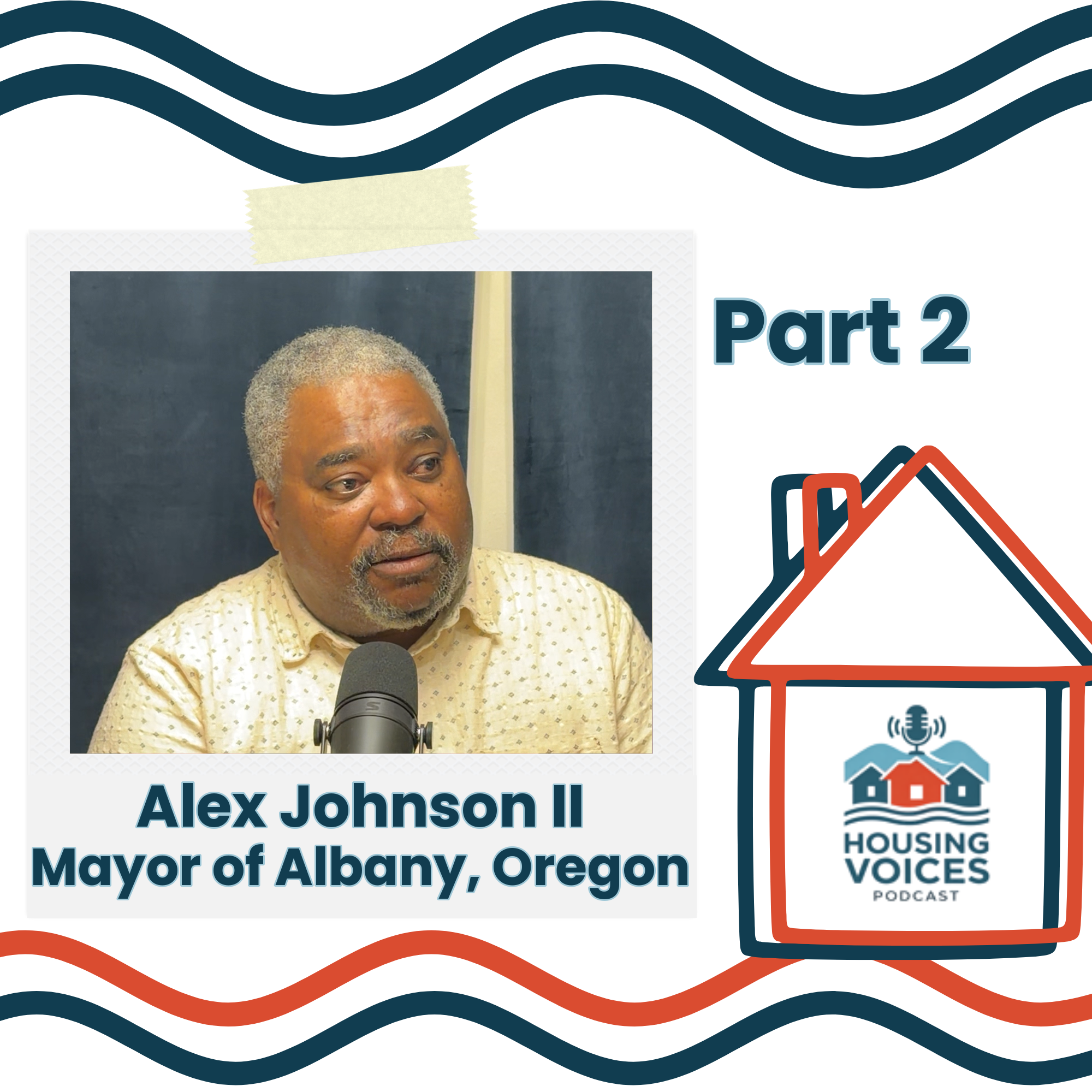
[00:00:09] Speaker A: And we are still here with Mayor Alex Johnson II. Thank you for staying and for sharing your time and everything with us.
[00:00:16] Speaker C: Well, thank you for having me. I'm really honored to be here and kind of share the story of what's going on in Albany.
[00:00:21] Speaker B: So I want to jump back into our conversation that we've, we have been having in the previous episode talking about a lot of really good things that have happened in Albany.
But what have been the challenges? Right. You have to have run into roadblocks that I think maybe other cities can empathize with other mayors and other Oregonians.
[00:00:43] Speaker C: Well, there have been challenges. You know, some of the city councillors do not want growth.
That's just the way it is. They don't want growth. They don't want to see Albany change.
But, you know, when we talk through things, I think whether or not I have to bring an ordinance back for the second reading because it was a unanimous vote, but usually that next time it comes back, I'll get a 4 to 2 or 5 to 1 vote.
So anti growth people on council, that's a problem.
But I understand that they grew up here or they came here and don't want to see anybody else come here. For me, it's Albany is growing. Albany's change is constant. Either support it or you, you will have enough votes to pass it anyway. So I think for me, the most important thing is they need to understand that when you're on city council, you're not just a city councilor. You have sworn service to the city of Albany. And I take that very seriously.
I'm not just the mayor. I am the service, the person that's leading the growth of Albany. And I'm of service to the city of Albany. So I go to everything.
And so some of the challenges, anti growth folks that don't want any expansion or any growth, any new stores, any corporations.
But when you share, if I share my vision enough, I go out and talk to the community. I can sway opinions, I can swear positions. And so being a person that's willing to get out there and stick his neck out and say, this is why we need this, I'm okay with doing that. You know, I'm okay with the hard conversation because I refereed football for 25 years.
[00:02:15] Speaker B: Oh, yeah, yeah. There are some parents that take that.
[00:02:18] Speaker C: Yes.
[00:02:19] Speaker A: Way too seriously.
[00:02:20] Speaker C: So I think every elected official, I don't care what level, should spend at least five years referee in youth sports. Yeah.
[00:02:27] Speaker B: You know how to resolve some conflicts.
[00:02:30] Speaker A: Because it's not the kids.
[00:02:32] Speaker B: It's not the kids.
[00:02:33] Speaker A: Yeah, it's not the kids. What other challenges? I love that question. Bri, great job.
[00:02:38] Speaker C: Have you found with the growth challenges with traffic, transportation? So our transportation system plan is. We're going through a development now. We're just a whole new one.
So I've asked several people to represent me to be on that plan. And what I like about her, the person I chose and interviewed and selected, she actually drove buses in like Los Angeles for 30 years.
[00:03:01] Speaker A: Oh.
[00:03:02] Speaker C: So she has that real boots on the ground.
That stoplight doesn't need to be there. That lane doesn't need to be there. She knows, right? She knows. She's lived it. Right. She drove buses all over San Diego. I mean la. It's like coming into the Albany. Right? Coming into Albany, there's no. There's parking on that street. But there's always a backup at second street because those parts you can't turn. If that was just a turn lane, think about how easy it is to flow through Albany if you want to turn on second. So she actually drew a map out for me and I gave it to our public works director. I said, think about this for a moment. He's like, this is a damn good idea.
Right. Because that's cool. So. So she's.
[00:03:39] Speaker A: Yeah, because there's always a backup.
[00:03:40] Speaker C: There's. There's always a backup there. Well, that would solve that. Now I will ask you this.
When you come over the bridge into Albany from 20 on Highway 20, do you see the three bedroom house on top of the building?
[00:03:50] Speaker A: I have you.
[00:03:51] Speaker C: Have you? So you've seen it, have you?
[00:03:53] Speaker B: I think so, yeah.
[00:03:53] Speaker C: A lot of people don't know if there's a house up on top of that building.
[00:03:57] Speaker A: Somebody might have clued me in.
I don't know if I was that
[00:04:01] Speaker C: transportation has been a hindrance the water concerns, because we have like vine street used to be by your house. Vine Street's over 113 years old.
[00:04:13] Speaker A: Yeah.
[00:04:13] Speaker C: You know, it makes up to 20 million gallons of fresh water a day. So that's part of the infrastructure piece that we're concerned about. So that part of infrastructure and then the. The east growth. So growth out east, we make sure that we get Cox street interceptor. And so we have the adequate supply of water to out there down south. I think downs, the. One of the biggest issues down south is we need a grocery store. Yeah, we need a grocery store.
Take impact off traffic coming into town. If There's a grocery store there because it would bring people all 34. It'll take care of all the elements inside. Right. And all the, the animal kingdom will take care of all of them. It also take care of my neighborhood because, you know, the bowling alley right across from the bowling is called the Preannal property. That's where our sp. Our commercial is supposed to go.
[00:04:55] Speaker A: Okay.
[00:04:56] Speaker C: It would take a lot of pressure off downtown Albany and also up where Fred Meyer and Safeway are. So getting someone a grocery store, a group of stores that can come there and develop it would solve a lot of problems for us as May.
[00:05:09] Speaker B: Or would you go out and find.
[00:05:11] Speaker C: I call people.
[00:05:12] Speaker B: Okay.
[00:05:12] Speaker C: I have no problem calling, say, hey, I need to come take a look at this piece of property. So I do, I do actively call people.
I, I actively call grocery stores, actively call businesses that want that one looking for land.
And I spend probably an hour a week looking for businesses that possibly fit in Albany. Hilton's reached out to me about building a hotel in Albany. So is Brian Obie, Obi. Obi Properties. They're building one Gordon here.
They have a plan to build one in Albany as well. So I actually seek business out to come to Albany and I have fun doing that. And this is before the Pac12 broke up. I literally had the phone numbers of every executive assistant and AD the teams were playing them because with a hotel in Albany, I'd rather have their family stay in Albany. Enjoy our food, enjoy. Enjoy our carousel, enjoy our splash pad. When they came to play, the beavers and the Pac 12 broke up. So now I'm restarting the whole investigation of who is executive assistant, who's the deputy ad, who's the AD of these new schools in the system. Now because they're going to come here, there's not enough hotel space here.
I want them to come to Albany.
[00:06:24] Speaker A: I'd like to go back and talk to you about the anti growth. Right. Because there's a lot of places here in central Oregon or in the middle of Lament Valley who've had that anti growth mantra from day one, from the 70s to change.
[00:06:39] Speaker C: Right.
[00:06:40] Speaker A: But a lot of their reasoning in some recent conversations I have is they're so afraid of losing value.
And that has really been a real hindrance. So how are you balancing the maintaining of property value with the growth?
Because there is a balance there. Right. You don't want to lose all the money because there have been cities that have had that.
[00:07:06] Speaker C: Well, they're building too fast.
So we're not building Too fast. We're building what we need.
[00:07:11] Speaker A: So how many units a year are you averaging?
[00:07:14] Speaker C: Oh, my gosh. 300, 178, 98, 273.
That's just this last two years. So. And then there's another 1441, 120.
I'd have to write them all out. So since I've been mayor, that's just the numbers I listed.
That's just a fort. This housing. And there's apartment numbers as well that need Dave Montagna's 275. You know, so there's a lot of apartment numbers. 108 just got approved. You know, so those. I'd have to make a list.
[00:07:48] Speaker A: Yeah. No, I'm just curious.
[00:07:49] Speaker C: So I would say since I've been elected mayor, probably about 3,900.
[00:07:52] Speaker A: That's awesome.
[00:07:53] Speaker B: Yeah, that's.
[00:07:54] Speaker A: And that's how many years? Five years.
[00:07:56] Speaker C: This is my sixth year. So I'm. So I'm up for reelection on this term, this November 3rd. And then. So I've already started making my list of 15 for the next term. And so what I'll do is before the election, I'll go out and I'll meet with folks and then I'll solidify it after the election results come out. And then also I'll pull together the people that help me shape that next 15. Because every two years I have 15 things.
First three are all done.
So my next goal is the next 15. And some of those things just making something ongoing, you know, I'll move that forward. But the goal for me is that to have a clear vision of housing implementation for the next two years. And then what does that look like now and what's it going to look like after January? January 1st.
And so some folks are saying I'm going to wait until the election results before I bring my project to Albany. Wow. Because they know I'm supportive of housing.
[00:08:48] Speaker B: Yeah. Is there.
On this list, is there a specific type of housing or project that you still. You want to focus on or. We have an invested. Enough.
[00:08:57] Speaker C: So I met with several. So my business, I work with a lot of seniors. And one of the things, one of my. A group of them brought to me is congregate housing where they have eight women, eight bungalows, common courtyard. And they can thrive. And because they lose their. They lose their husband or. Or they take their husband's income because it's higher. So they could. But they can't afford the current home.
[00:09:20] Speaker A: Right.
[00:09:21] Speaker C: Right. And so they want us where they can. They can congregate Together and have housing, you know, without having to be in assisted living or an independent living facility, which is 6, $7,000 a month. Yeah, but they can sell their home. They can sell. Right? They can sell their home, buy one of these smaller units. Right. And live with women people in the same situations they're in.
[00:09:41] Speaker A: That's so funny is I had a conversation this weekend. I was at Craft weekend with girlfriends, and that was what somebody said, oh, Marty, can you find a piece of land where I can build this? And I was like, well, yeah. Wow. Okay, let's talk about that. Right?
[00:09:55] Speaker C: Yeah, this is very.
[00:09:56] Speaker A: But it's not the first time I've
[00:09:57] Speaker C: heard that very real conversation. And it makes sense. So you're looking at a college dorm, right? The college dorm bungalows where you have a gazebo and you have. And parking in the back. And everybody can have a safe space to age in place without having to worry about traffic flow and all those other things. And I think it's a great idea. So I'll be looking at the congregate housing going forward.
[00:10:21] Speaker B: That's really cool to see.
Some of the things that we talked about on this podcast around housing is allowing maybe some creativity, different ways of living and creating housing for what works with. For people in this day and age. Because people change, families change, dynamics change. Right.
There were a lot of folks, more than I. I wouldn't say a lot of folks, but more than I would have realized a lot of the poly dynamic where there's, you know, multiple people in a relationship that are coming together to buy a house. Right.
And those people still deserve housing.
[00:11:01] Speaker C: Right.
[00:11:01] Speaker B: And I think it serves. I think it serves us all to have options, different styles, but the.
[00:11:09] Speaker C: The boards and commissions have to be able to adjust. So when you appoint somebody to a board of commissions, they have to be open as well, right?
[00:11:16] Speaker A: Yeah.
[00:11:17] Speaker C: They have to understand that different types of people need different types of housing, and some folks have a hard time adjusting to that.
[00:11:25] Speaker B: And if somebody in Albany was interested in getting more involved in housing or they wanted to be part of a board or a commission or I have
[00:11:33] Speaker C: an opening right now in the planning commission.
[00:11:35] Speaker B: Very cool.
[00:11:36] Speaker C: Yes, I do have an opening. One of my commissioners moved out of the city, and so I have an opening right now in the planning commission.
[00:11:43] Speaker B: That's awesome. We had. That was part of our conversation with Alexandra with Loc is she said, if folks want to get involved, the best place to start is to go to your city, go talk to. And she also brought up staff, too. And that's something you alluded to earlier in our first episode, that your city staff have a lot to deal with when it comes to implementing a lot of this housing legislation.
[00:12:08] Speaker C: That's why I'm gonna slow down.
Yeah, let me get this stuff in before you start changing those rules for the next two or three years. I'm like, slow down.
And so part of my argument has been middle housing. They give us the middle housing and then we start implementing and then they change it again.
Well, staff.
[00:12:27] Speaker A: So can you explain a little bit about what those changes are and how something simple.
[00:12:32] Speaker C: Setbacks. Right.
So in this one package, setbacks was 10ft or seven and a half feet. Well, this next package, now it's 10ft. And then as you start implementing those things, then it changes to 15ft. So it's like, pause for a second, give us a chance to see the results of the initial change before you make this other change. Because staff has to fix all those things and all the villagers and developers have to adjust all those things.
[00:12:54] Speaker B: And that makes it more expensive.
[00:12:56] Speaker C: Makes it more expensive.
[00:12:57] Speaker B: And you said you've been testifying on these changes.
Has the legislature, has the governor been receptive, you think, to this?
[00:13:07] Speaker C: So I was testifying on rulemaking for housing and. But what they did was I testified and I only gave me three minutes and I had a written statement and I had a check by my community development director. He made some adjustments and I said, okay, this is going to work. They had to be in my tone and my way of speaking.
But they actually came back and said they heard enough that they're going to pause the rulemaking until they've had more conversations. So that helps. Right. So Alexander Ring was instrumental in having me come in and speak because a lot of mayors, I think it's a stretch for a lot of mayors that haven't had public speaking training or public speaking experience. And so they'll send their city manager, they'll send their community development director, but the legislators don't want to hear from elected officials because we're directly impacted by decisions we make. If we screw up, we're gone.
Yeah, right, right.
[00:14:00] Speaker A: If things change in the world, sometimes you're gone.
[00:14:03] Speaker C: Right, right. That's true.
[00:14:04] Speaker A: Change is the only constant.
[00:14:05] Speaker C: Yes, it is. I agree with that.
[00:14:07] Speaker B: What has been.
This is a two part question here. In your experience creating housing in Albany, what has been one of the things that you would do a change first that I think maybe statewide, a statewide thing. And one is, what has been the best thing that has helped the housing
[00:14:28] Speaker C: creation so the first thing, I would standardize the tiered SDCs, I think, across the board.
However, I know some cities depend on SDC money to operate. Yeah. So I would say tyranny SDC is where possible, where feasible. So a city like Salem or Portland or Eugene, if they can tier their sdc, make it more affordable to build initially without having to spend all your capital paying SDCs.
What was the second part of the
[00:14:56] Speaker B: question and what is one. One thing that has really supported.
[00:15:01] Speaker C: I think two. Two things to answer that question. Tearing the SECs and delaying SEC fees until occupancy. We also give people an opportunity to pay it 100%. 50. 50 for 50. 25. 25. So we have options for our developers to pay the SECs.
[00:15:20] Speaker A: So how does it work with occupancy SDC fees? When the developer turns over keys. Right.
[00:15:28] Speaker C: They pay the city their cut. Their are cut.
[00:15:31] Speaker B: That's it's due. Then as soon as a certificate of occupancy is issued.
[00:15:34] Speaker C: As soon as it's issued, pay your sccs.
[00:15:36] Speaker A: Okay. All right.
[00:15:37] Speaker C: So they have. So they have the capital the whole time so they can build more units. And then. Okay, I'm going to sell the first 15. They pay the SECs on that 15.
[00:15:45] Speaker A: All right.
[00:15:46] Speaker C: Right.
[00:15:46] Speaker A: So it's put in there before the transferring of title.
[00:15:49] Speaker C: Yeah.
[00:15:50] Speaker A: Or of keys.
What aren't you building that you want
[00:15:54] Speaker C: to build the congregate housing?
I would like to see a.
I've never seen one before. I'd like to see a container village,
[00:16:03] Speaker A: I think a container village. Talk to us about that.
[00:16:06] Speaker C: So I do a lot of research on different types of housing and container villages. And there's a lot of containers that can be converted into a single bedroom with a patio and doors and windows for that young person that has, you know, can pay 600 bucks a month. Right. I think a container neighborhood would be great. People would probably push back on that, but we have to have options for everyone, you know. And one. One person actually showed me his renderings of a container village and looked pretty cool.
[00:16:40] Speaker A: I've seen it on Instagram.
[00:16:41] Speaker B: Yeah. Utilitarian.
[00:16:43] Speaker A: Yeah.
[00:16:43] Speaker C: Yeah, it's very, you know, spartan and it's nothing flashy, but it gets them out of the rain. It puts a roof over their head. They can come home and lock the door and live, put their TV on, watch a movie. And they can do all kinds of design work with it. They can put patio. They could do the stone around it. I think it'd be something that'd be really interesting, not just in Albany, but a lot of cities.
[00:17:04] Speaker B: That's incredible. And asking you to kind of prognosticate a little bit here.
I know you're up for election reelection right now, but let's just see. Say you, you're. You're gonna win for our, for this hypothetical, what do you see for the next five years of Albanese growth?
[00:17:23] Speaker C: Next five years? Well, right now we're sitting just under 60,000.
I say we'll probably be at 63 because all the growth that's going on.
[00:17:32] Speaker A: What do you mean you're under 60,000?
[00:17:34] Speaker C: We're right at 60,000 as far as per pop per population.
[00:17:37] Speaker A: Okay.
[00:17:38] Speaker C: Yeah. And so with, with the growth with businesses coming to town, hopefully we'll get us a factory of some sort.
I know Ball is building out in Norrisburg, but their employees are living in Albany, you know, and so is Timberland. Their employees are living in Albany. So I've met several hundred of them. Not 100, several dozen or have told me that we live in Albany, but we work in Millersburg, which is not really that far away. So next five years. Well, so I shouldn't say that online on so next five years, I see more grocery. I see more like cleaners service. Because down south we're growing.
I see more elementary schools, at least one, maybe two, but for sure one.
I see that Albany is going to add more events space.
We don't have a space for the conventions.
We need something like the legal organ cities and all the different conferences. All the organizations have these big meetings, but they're in Salem, they're in Portland, they're in Eugene, but nothing in Albany. And we're Hub city. We're right in the middle of everything.
[00:18:39] Speaker B: Yeah.
[00:18:40] Speaker C: And with orsu's Innovation Corridor, it's Portland State, Oregon State, Oregon. Well, we're right in the middle, you know, and if we can get to tire Innovation center of some sort in Albany, it was sponsored by the colleges. Yeah, it'd be a great thing because it's right off i5. Yeah. And so MultiCare is coming. You know, MultiCare OHA approved the merger or the affiliation.
Well, Multicares pledged to spend 750, $700 million over the next 10 years in Samaritan Health System.
So at the meeting with the CEO, the elected officials meeting, I said Albany needs a new hospital.
I'm quite blunt about it, very matter of fact about it. Also we need urgent care on the east side of town with the growth out there. I said the Middle Knight Village is willing to give some land to Samaritan to build a clinic on their site.
[00:19:31] Speaker B: Well, it works out for them too.
[00:19:33] Speaker C: And it works out for South Albany, all those houses in Ellington Road. And so she was like, you actually have a list? I'm oh, I got a list. And I pulled my list out and I started reading off of it. So she said, I'll reach out to you and we'll have a conversation about Albany's needs. And Samaritan owns land on the east side of i5.
You know where Santiam just passed that Walmart. They own like 80 acres back there. I'd like them to put some workforce housing. There's.
[00:19:58] Speaker B: Mm.
Absolutely. And for. For all of those amazing things that you just listed, and maybe there are other city leaders, mayors who want to do the same thing. What would you. What would you tell them how to accomplish that?
[00:20:13] Speaker C: Come see me.
40 mayors have been to Albany to take my tour.
I've driven around town. We've had hot dog at the carousel or lunch downtown. We walked a waterfront. They've been to the shelters with me. I've driven to all the developments. And I say, a month from now, I'm coming to your city for your tour.
[00:20:32] Speaker A: So are you putting together like a ref handbook or a coaching handbook? Because it kind of goes back to your.
[00:20:37] Speaker B: Your roughing?
[00:20:38] Speaker C: Yeah, pretty much. Right. So. So ultimately, I write. I free write probably once or twice a week, and I just get in there, just write stuff down, and then at some point I'll feed into AI and it'll shape it for me and give me a rough draft and I can start messing with it. But I want all the mayors to understand that their city's unique. Their city has its own beautiful things. Things that need to be changed, things need to be fixed. We have your own problems, but if we get together and we talk about those things, maybe I have a solution for Reed sport or I have a solution for less. Let's. They may have one for me that I hadn't considered because I'm thinking on larger scale, but it may be the small problem, just bigger. Right. So we like Willman and Scott Kaiser. Last year I won mayor's leadership award for large city. Scott is one of the mayors that has been here and developed a tour for his city.
He got the middle Medium sized city award for leadership. And Will Warman from Select got the one for small city. This year, Denise McGriff got for medium sized city. And Travis Stovall got it for large city. And these are mayors that have been to Albany. I've been to their Cities, we spend time talking about what's going on in our city, and we share information. We share the waste treatment stuff. We share STCs, we share the city services fee. So we. We have this in some reach. Recently reached out to Mary McMorin of Philomath. I need a grocery store. He needs a grocery store. Why don't we go at it together?
Your. Your priorities higher. So we'll have them build one for you first and then come to Omnisecond. So if you tell a grocer, you're going to get two stores out of this thing, we served by the whole city and us with 15, 20,000 people down south, we might be a better package if we did something like that.
So he and I are going to meet and kind of discuss partnering to go after grocery store.
[00:22:19] Speaker B: Well, I mean, South Corvallis needs a grocery store, too.
[00:22:21] Speaker C: That's not my problem.
[00:22:25] Speaker A: You don't want to do.
[00:22:26] Speaker C: You don't want to include that in the partnership.
I didn't know that. You're the first time I'm hearing that, so. But you got. You got the Safeway on 53rd, right?
There's a Safeway just.
[00:22:36] Speaker A: Is that still between third and fourth?
[00:22:38] Speaker C: Is that still open?
[00:22:39] Speaker B: Yes, a.
The Co Op, the natural foods.
But that's in South Corvallis. That's. That's the game.
[00:22:48] Speaker C: That's it.
[00:22:48] Speaker D: Yes.
[00:22:49] Speaker C: Yeah. And okay, so maybe that's part of that. Adds corrals to that discussion. Because if a grocery knows that they're going to get three stores, they're going to be served that will be able to move food. They might be more attractive to come here.
[00:23:00] Speaker A: Yeah.
[00:23:01] Speaker B: It's come up a lot in conversations.
[00:23:03] Speaker C: So Safeway probably wouldn't be the one, because Safeway already has two stores here. But what other store chains would be interested in building three new stores right.
In Albany? Colosseum and Fulomouth. I don't think anybody's ever approached the company and said, I have three cities for you.
Come talk.
[00:23:20] Speaker B: That'd be pretty powerful, right? I would think.
[00:23:22] Speaker A: Yeah. Because when we lived in that part of town, it was always like, oh, I have to go in town. Yes, to go to the grocery store.
[00:23:28] Speaker C: And that's down in South Albans. I live over by lbcc. And going up there, it's like.
So I come home and Norma texts me, what's the thing I like about texting? She'll just send me the list and I just stop on the way home.
[00:23:40] Speaker A: But it is. It's convenient. So we're gonna get to My favorite part. Okay, it's the magic wand question, right? If you could wave a magic wand and change something for Albany and something for the state of Oregon that you're gonna say, hey, this is what we want to change and this is how we want to do it. And this is how we want you to help. Okay, what's it going to be?
Bri will probably embellish because she's super.
[00:24:07] Speaker C: I think that. Well, we have two airports already because that's one of the things I want to do is build a regional airport close to Ross, Michigan, close to Ross and Lebanon airports and Albany's airport and put one right off i5. I want a trauma center. I want a trauma center right off 5 5.
I mean, so people that are in Portland that need cardiac care, critical cardiac, come to Albany. I want a helicopter pad helicopter so we can transport people during trauma.
I want a world class surgical center in Albany. That would be something that would benefit the entire state. People can be flown over from Bend, you know, so part of that would be a mental health hospital that we can get those people that are having crisis into care that's supervised, that's locked so they can get better instead of being pushed away. And also we need a big emergency room. Our hospital's emergency room is smaller than this entryway right here.
Seriously, it's tiny.
So having a world class hospital I think would be really important.
And also the next thing would be we need to figure out police and fire.
We need to figure out. Because fire trucks are running 1.5 million now. Yeah, right. And so better purchasing power, I think.
And I want a, a convention center outside of Salem, Portland and Eugene, I think event center, because we're right on I 5, 34 and 20. We're Hub City. Everything must pass through Albany, you know, so. And for the state, I think the entire state's power infrastructure needs to be fixed.
[00:25:44] Speaker B: Oh, amen.
[00:25:45] Speaker C: Yes. Entire state. Matter of fact, Liz, Iris brought this to my attention. I had no idea one company manages all that stuff for the state of Oregon. We need to support that growth and save them some money by putting more centrally located so power systems can be tested and built in the city of Albany because we have the industrial land for it.
[00:26:05] Speaker A: That's awesome.
[00:26:05] Speaker B: Future planning for our livability and safety in the future.
And we've talked about this a little bit already, but what can an Albany resident or a resident of another city do to be impactful on the issue of housing? You've talked about, you know, talk to you about planning commission, planning Commission is one.
[00:26:26] Speaker C: Definitely. Planning commission, I think when also, whenever there's a task force that is based around or centered around housing, volunteer.
But they could also, when there's a community conversation about housing, come.
Your voice. We need to hear your voice. I mean, because we can send emails and text messages and we can do social media posts, but when the people that are in the room actually can make change or impact change in a positive way, be in the room. Right. Show up. Because we post everything online. It's like, oh, we're having a meeting about infrastructure. Like, for my campaign, I'm having one on infrastructure, one on housing affordability. So I'll be having these public meetings. If you can just come. I don't even care if my opponents come. Just come and share your voice, because I'm building that next 15.
And so as I build that next 15, by the time the election goes down, I'll have the 15 done. Right? And I'll have a list that I'm gonna be working on the next. Next time. Like, one of the 15 was my strategic plan.
Before I became mayor of Albany, the strategic plan hadn't been touched materially since 2007.
[00:27:28] Speaker B: Boy.
[00:27:28] Speaker C: Yes. It's supposed to be a living document. Now, by my. My motion to get it put into permanent structured maintenance. Every four years, the city council has to review the strategic plan.
Right. And then go out to the community and get a report card. We have a. I have report cards of how we performed, basically what we told everybody. So this year, Kayla Barber, our deputy city manager, she's an amazing person, by the way.
Took me three years to get my city manager to hire her or hire a deputy, but she actually tied our budget to our strategic plan.
[00:28:01] Speaker A: Nice.
[00:28:01] Speaker C: So you can actually go online and look at how we're performing against the plan itself and how it's impacting the budget. It's amazing. It's like. And that. That I, I. I grovel at her feet. I mean, she. She's awesome. And so I'm hoping that people will understand that we're doing these things for transparency and also accountability.
If I'm not holding up my hand, get rid of me. You know? And the elected officials don't like accountability.
They just don't. You know, I'm okay with somebody saying, you screwed that up. Yeah, I probably did. You know, that's like being a referee. Yeah. Booty that call ref.
You know? And so I'm all about being out in the community. I think that we as a society, we as a city or county, we need to hold our accountable, our elected officials accountable. We also need to show up when they need us, when they ask us.
[00:28:51] Speaker B: Absolutely. And I will also, from personal experience on these housing specific tours, there are some cities, mostly larger cities, that will actually pay you to show up to talk about your opinion. They give out gift cards and provide food, catering and everything because they are actually that desperate for community input.
[00:29:13] Speaker C: We've done that I think once or twice in the six years I've been mayor, but for the most part, I need to talk to you guys about housing. People show up.
I'm going to be at this corner and we're going to talk about this street and people show up. And my office manager, I love her dearly. What she's done for me is because I get stressed out sometimes because me like one week, I lost three clients in the same week. And so she's like, alex, here's an address, go park your car and go for a walk.
[00:29:37] Speaker B: That's nice.
[00:29:38] Speaker C: And I go for a walk. Mayor, what are you doing? I'm just checking out your neighborhood and they'll join me.
People come out, kids come out. You know, I got tokens for the carousel, but I'll go for, you know, 30, 40 minute walk. But I have 15 people walking with me and they're telling me about their city. Stray cats. You know, they tell me about, you know, this lady has had her yard overgrown. Does anybody knocked on her door and found out why her yard's overgrown? Her husband might be in the hospital or she may her lot, she may have a lawnmower. Perfect example. Got a phone call from a gentleman. I have, we have this, we have stray cats in my neighborhood. What are you going to do about it? Well, I don't know where you are. So he gave me his address. I'm going to park my car in front of your house and I'm going to go for a walk. So the first day I went for a walk, no stray cats. Second day I went later in the day, about five o', clock, no stray cats. Third day I went at seven stray cats. So three or four ran by and I walked to the corner and three more came by me. I turned the corner, walk six blocks down and they all turn. Then I turned, there was a, there's a woman sitting outside putting down food.
And so I said, excuse me, are these your cats? He goes, they keep me company. I lost my husband six months ago and these, they keep me company.
Oh, I said. So I told her who I was and I walked back to the house. I said, you don't have a stray cat problem. You have a lonely neighbor problem.
So the next day, four of us walked back down there. I did the introductions. Cats are gone. Now they involve her in everything.
[00:31:01] Speaker B: That's awesome. That's community building, right?
[00:31:04] Speaker C: And success for me is when the person calls and made the complaint saying, my problem's been solved. Thank you so much for working with us and getting this done. You know, I was driving home the other day from work, There was a man laying on Pacific, just laying out there in the Pacific. And so I literally, when I looked, I was. Oh, crap. I swerved around and parked my car, cut the flashers on. I made the. By his central school, right across from the train station. He was laying out there in the street.
And so the lady saw me park my car. She jumped out and parked her car, put her flashes on, and she's telling people to change lanes. And then another lady got out of her car and she came over and. And she started. She was talking to him. His name was Ron. And so I say, hey, Ron, check this out. You got a story to tell. He's like, you just met the mayor, right? You're not the mayor. And he started laughing. So we ended up calming him down. Then he finally told me his name.
And so by that time, several people, probably 30 cars. Mayor, do I need to call? Do I need to call? I said, no, please are on the way. Help us on the way. Thank you very much for stopping. And this gentleman, he sat up and he was holding my hands, and I said, people are coming. I said, just, I'll stay with you the whole time. And this other lady, she's. Now, she sat down next to him on the ground, not on one knee. And we're having this conversation with this guy. He wanted to die. Yeah, he wanted to die. You know, Pacific's a busy road.
[00:32:21] Speaker B: It is, yeah.
[00:32:22] Speaker C: Right? It was like five o', clock, too. So I was like, holy crap. So the police showed up and they put him in cuffs and took him to the hospital. And they called and said, he's in the emergency room. He's under observation. He's gonna be okay. He's having some kind of attack. I'm like, okay, that's good.
But the number of people that stopped and asked if they needed to call somebody or do you need help?
It was heartwarming to know that that many people gave a damn. So it was really nice to see that.
[00:32:45] Speaker B: That's amazing.
[00:32:46] Speaker A: Thank you for sharing that. It's nice to have hope, right? It's nice to see the positive and the good in the world and that
[00:32:53] Speaker C: people are innately good and people are. But this is something that was a lesson that I learned my second year's mayor. You know, especially during AEP annual enrollment period.
I've moved so fast that I don't see everything right. So. And I was driving to work one morning, and it was the first time I didn't have an 8:00 clock appointment. And so I'm just chilling. I'm like, okay, I'm just rolling. Got my coffee and everything. And I was. I hadn't picked up coffee yet. And so I'm driving on Pacific, you know, where the furniture store. Then there's a human being. Okay. So I get by there and I see this gigantic tent area. It's bigger, like this whole area. I'm like, where the hell that come from? Because there was a lamp sticking out of the top of it, right? I'm like, what? So I swooped in there, parked, and I said, how long has that guy been there? Three weeks.
I didn't see him for three weeks.
I had not seen. I've been driving that same road every day and had not seen that place.
So I got two cups of coffee and I walked back down and I said, hey, excuse me, Would you like a couple of copies? A little cold out here.
And he says, yeah, I appreciate it. So I gave it to him. I said, let me ask you a question. How'd you get here? And he started telling me how he hitchhiked, whatever, I don't know. How did you get here?
And he told me that he was a veteran. And I thanked him for his service and I told him I was a veteran. He saw my place and I said, I'm sorry that happened to his wife. Met a woman six months before he deployed, gave her power of attorney. He got her traumatic main injury. She sold everything and broke out.
Gone, right?
So I said, is there anything I can help you with? I didn't tell him where I was. I said, my name is Alex. I said, is anything I can help you? Well, I'm looking for a shelter. How many helping hands? Like 100 yards away.
And so I said, would you like to walk with me? And just. There's a shelter right there. So I walked him down to the shelter, and we're talking. He served in Fallujah and all these different places. I told him I was in the Navy. I said, I took the ease away. I went in the Navy. So we're laughing and stuff. And I said, but he was the Army. I said I was in the Department of Defense, but I was in the men's department because Marines are, you know, little girls or whatever.
So we all. We pick on each other, you know, it is.
[00:34:54] Speaker A: It is. It's a thing.
[00:34:55] Speaker C: It's a thing. Yes. And so. But. But. But I turned him over to Emma Dean and Lee Bok, and as I'm going back to my car, he says, sir, thank you for seeing me.
[00:35:05] Speaker A: Yeah.
[00:35:05] Speaker C: About to tear up.
[00:35:07] Speaker B: That's what people need.
[00:35:13] Speaker C: I was. I didn't see him.
[00:35:14] Speaker B: Yeah, sorry.
[00:35:17] Speaker A: But you ended up seeing him, right? It took a little bit of time, but that's what we're all here for, is to see all the people in our world.
[00:35:25] Speaker B: Right.
[00:35:26] Speaker A: And to provide all of them with opportunities and housing so that they can, you know, get the help that they need, both mentally, physically, emotionally.
[00:35:35] Speaker C: And we're all in a different space. Right?
[00:35:36] Speaker A: We all are.
[00:35:37] Speaker C: And not one Solutions will solve it for everyone.
But if we must, at least find an opportunity to help as many people as we can that want help, or even if they don't want help, at least help them get connected with people that could, at some point, help them.
[00:35:50] Speaker B: Absolutely.
[00:35:51] Speaker A: Thank you for coming on the podcast. We really appreciate it, and really for showing your true, authentic self and being open and vulnerable. That's a gift so many don't get, and I appreciate that.
[00:36:03] Speaker B: Well, thank you, Mayor Johnson, for coming. And I'm Bri.
[00:36:07] Speaker A: And I am Marty.
[00:36:08] Speaker B: And this is Housing Voices
[00:36:13] Speaker D: Practical Solutions Meet.
A special thanks to our partners MartyBulford.com and Cyanette.net for supporting thoughtful dialogue around housing in our communities.
Music for Housing Voices is provided by Karen DeWolf and Adrian Kriz. Thank you for helping us set the tone.
You can find
[email protected] and connect with us under Housing Voices on Instagram, Facebook, LinkedIn, Blue Sky, Tik Tok, and our YouTube channel.
If you found value in today's conversation, share this episode, follow the show, and help us expand the dialogue.
Until next time, this is Bri. Let's keep listening, keep learning, and keep building practical housing solutions together.