[00:00:00] Speaker A: The truth can break through.
Hi, I'm Marty.
[00:00:06] Speaker B: And I'm Bri.
[00:00:07] Speaker A: And we are back here on Housing Voices. Thank you for joining us. We know that housing is already hard enough. Yeah.
We're talking about land costs, infrastructure, permitting. What am I missing?
[00:00:22] Speaker C: A lot of stuff.
[00:00:23] Speaker A: Okay.
[00:00:24] Speaker B: But we'll just gloss over that.
[00:00:25] Speaker A: But in Oregon, there's also another layer on top of that.
[00:00:28] Speaker B: Yeah.
[00:00:29] Speaker A: Wildfire.
Wildfire. And who do we have today?
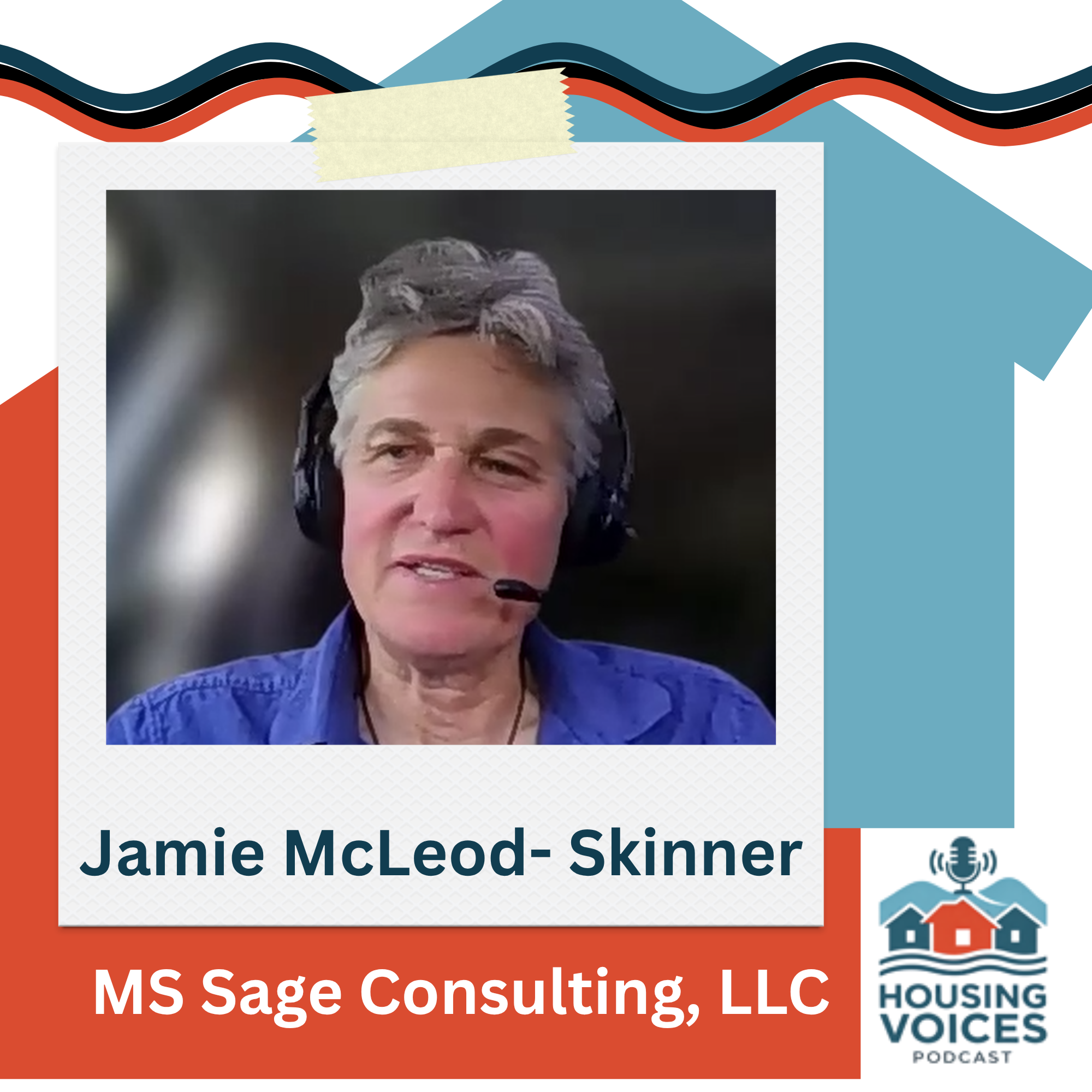
[00:00:32] Speaker C: Jamie McLeod.
[00:00:33] Speaker D: Skinner.
[00:00:33] Speaker A: I know. And it's going to be really cool talking with you today.
I'm really excited about this. I'm excited to hear how her previous expertise in Bosnia relates with wildfire management and the aftermath of that. Yeah.
[00:00:50] Speaker B: Well, she was a huge part of the recovery post, post Alameda fire in Southern Oregon in 2020.
She was in the heart of the mess, really, post wildfire recovery and really working to guide that community out of that disaster.
And I think our state legislators, people across the state, in the cities, counties, can really take a lot of good next steps from her experience navigating that.
[00:01:23] Speaker A: And I think it's a lot of great, learned, lived experience that, you know, hopefully been documented and all of that good stuff. Yeah.
[00:01:31] Speaker B: And as we know, in Oregon, we're going to have more wildfires and we have to know what's coming and. And be prepared.
[00:01:38] Speaker A: Let's do it. Yeah. Let's get into it.
From the poes and shelters, streets and the room.
[00:01:49] Speaker C: If the house had voices, the truth could through.
[00:01:57] Speaker A: And welcome back to Housing Voices.
[00:02:00] Speaker B: We are here with Jamie McLeod Skinner.
[00:02:03] Speaker A: And Jamie, thank you for your time and for coming on the podcast with us. We're really excited to hear all about your experience in southern Oregon.
[00:02:12] Speaker C: Yeah, delighted to be here and really excited about this podcast and all you're doing to help educate folks about what needs to happen to tackle the housing challenge that so many Oregonians are facing. So really appreciate your work with this podcast and other work to provide housing to Oregonians.
[00:02:30] Speaker A: Thank you.
[00:02:31] Speaker B: Tell us a little bit about yourself. I think some folks know you from your races, running for office for a couple different offices in the state and you're now doing some consulting work, is that correct?
[00:02:46] Speaker C: Working for a housing developer and so have been in the housing field. I was a city planner or years ago, so worked in helping to move forward. I was a council member, so helping to review and approve major projects.
And right after the 2020 wildfires, which were devastating for our state, the mayor council down at Talent asked me to step in as their interim city manager because they lost a lot of Folks, a third of the homes and businesses burned down.
I was very familiar from the area. I graduated not 10 miles from, from Talent and so knew the area well, had family in the area, was devastated by the impact of the fire and was really honored to have the opportunity to go in on a six month contract work with an amazing team to help get the city essentially start the recovery process. And so the focus now is worked on that disaster response and then for New Spirit Village, which is an affordable home ownership project that was a carryover from the wildfire and kind of a response to Wildfire. It's down in Medford and we're midway through on that project.
I've also as a consultant, the Oregon Community foundation has asked me to document and capture some things in terms of both best practices. But some of the projects worked on. But in terms of my professional background, my background's in civil engineering.
Got a bachelor in civil engineering, a master's in city and regional planning, and then my law degree is focused on natural resource law, water law, Indian law, but also has some land use components in that. So I really look at the challenges facing Oregonians and really it's a national problem, a national challenge from several different components.
Early on in my career I did emergency response post war in Bosnia and Kosovo. But then I was more focused on repairing schools and hospitals so that people could return home. So I really approach this, the crisis piece from multiple components. And actually after my work in Talent, I worked for the office, the Department of Human Services for orem, their Office of Resilience and Emergency Management. And we were helping communities build resilience hubs and respond to the crises that they were facing. So that's everything from the immediate response to kind of that longer term recovery and resiliency building. So I've looked at this, these challenges from a couple of different angles now.
[00:05:28] Speaker A: So usually, or what I've learned in my life, right, is that helpers like you, people who go out there usually have some driving force that there's some catalyst that's created the change or the desire to make a difference. Do you know where that point is in your life and what kind of made that catalyst for change?
[00:05:47] Speaker C: Oh, that's a great question.
I guess I've been so influenced by my mom.
She's a retired teacher, but she was always focused on helping the community. I mean, she told me once when I was a kid, always leave a place better than you found it. But I've faced some challenges. When I was young, my mom was a single mom, two kids and really struggled to put food on the table. And so having that lived experience, seeing the challenges that she faced, I really see that in others when they're facing challenges.
And I really honor the parents and families struggling to provide for their families. So I'm really motivated by helping families accomplish what I saw my mom work to accomplish for me when I was a kid.
[00:06:34] Speaker A: So it's like you're paying your mom back with the goodness that you're trying to do for others. That's kind of how I'm interpreting that.
[00:06:41] Speaker C: Paying back and paying forward. Yeah, yeah. No, we're all part of paying forward.
[00:06:44] Speaker A: Yeah, yeah, yeah.
[00:06:47] Speaker B: And I, I'm really interested in talking about your work specifically on wildfire recovery. I worked previously for Senator Wyden for many years and I was working in his D.C. office handling a lot of COVID response which was, you know, a layer on top of all of the wildfire, you know, chaos truly that you had to deal with as you're evacuating.
Also there is, you know, a virus that we need to avoid as well and support people through.
Can you talk to me a little bit about how the post post fire, when the fires were finally out, what does that look like? How do you jump in and help immediately? Because there are folks that need housing immediately. Right. The fire is out there. They just lost their housing now what?
[00:07:42] Speaker C: Yeah. And I will say when I first went to talent back and it was a couple of months after the fire, but it.
My first impression, it looked like a bomb had hit. I mean people, as many folks know, people literally had minutes to flee. It was a very fast moving fire. It was devastating. It burned things down to the ground.
But I had experience in war zones and I know what it looks like when a bomb hits. And it, it looked like that, but it didn't just look like that. For one area, entire neighborhoods look like that. They were literally burned down to the ground.
And so you had people having just moments to grab family members and get out, you know, of. I believe there were three for the Alameda fire down southern Oregon. I believe three people lost their lives. And the story as I heard it was one.
One woman had actually gone back into her apartment to grab her cat. She wanted to get her pet and she didn't make it out. I mean one of the really tragic pictures I saw afterwards was so many people after the fire went back and put bowls of water and food in front of their homes, hoping upon hope that their animals had been able to get out. And it was just so families lost Everything. The other really cruel thing about that fire was it was some of the most vulnerable people were the hardest hit. So when you looked especially at Talent, the folks who were hardest hit, farmworkers, seniors on fixed incomes, Talent and Phoenix, which were the two areas that were hit, Phoenix lost about a quarter of their homes and Talent lost a third.
Knowing Southern Oregon, those were where the affordable homes were for folks who were part of a critical part of the economy.
Frontline workers, you know, that's where if you couldn't afford to live in Ashland or Medford, you lived in Talent or Phoenix. Great communities, but that was already the affordable housing and that's what burned. And you know, people had moments to flee. They returned to absolutely nothing. Some people could not afford insurance and so had absolutely nothing.
And it was just devastating. And so, you know, the immediate thing of course is getting people into emergency shelter. A lot of people stayed on couches or were being helped out by family or friends. But that first round is supposed to be FEMA coming in and providing emergency shelter.
Even that process takes a long time.
You know, in the case of the Alameda fire, you're talking about 24 homes being burned down, about just right around 750 in talent.
But you know, all of that, all of that impact and then the other thing with fema, even though that's supposed to be the, you know, the, the first, first to show up at the federal level, many folks who were impacted were not eligible for FEMA assistance. So if you are not a US citizen, even though you've paid taxes, even though you've contributed to all the resources, you could not access those resources which, you know, there was whole issues on fairness. I remember talking to both Senator Merkley and Wyden's team about those, those challenges. But it's what we were working with.
So that was the setting as we went in.
The fire was in in September.
I started the very beginning of January, so a couple months later.
And so there's the impact to people who live there in residents, but there's also the absolute exhaustion of the staff and everyone who's in the city.
So a lot of folks had either left or were in the process of trans because they gave their hearts and they just couldn't. They had no more to give and they were exhausted.
So when I went in and started again, it was a couple months after the 1st of January, I had this whiteboard and I just wrote down team building, community engagement, resource development and housing.
And those were going to be my north stars for my six Months there and also the sense of how do we engage community? What does a safe community look like to you? Because that whole, you know, no one could even have conceived of what that would look like.
So that was really my starting point.
We faced a bunch of challenges and there's, you know, built a team and worked with the team to overcome them.
And I'm happy to go into some of those specific challenges that we saw and some of the things we used to, to, to try to tackle.
[00:12:14] Speaker A: How was it with those four points as your North Star? Right. With the community embracing them and getting behind what was initially the biggest hurdles that you faced besides FEMA not helping everybody affected?
[00:12:28] Speaker C: Yeah, well, there was the staff stress which I mentioned. So the team that would, that the community turned to was exhausted and also insufficient. I mean we had insufficient in terms of the need. So you had this amazing outpouring of community support, signs showing up, you know, and people giving away food and water and supporting the community really rallied and came together. It was incredibly heartwarming.
But again, you had just a high level of stress with staff. There had been some, you know, every community faces challenge and there had been some pre existing challenges that the city was facing.
There had been some turnover and, and there was also limited resources. You're talking a town of just under 5,000 people. So not a lot of staff and not a lot of resources to be able to tackle the challenges.
Obviously tremendous loss of housing for everyone and in some cases even staff members having to struggle to provide for themselves and their families whilst at the same time taking care of communities. But you know, the demand just in terms of the permitting, so whenever you go in to build a new home, we first of all had to make sure the debris was removed because the assumption was all debris from the burns was all toxic. So that was the first step of getting that out. So you couldn't go in. People weren't even supposed to go back on their property because of potential toxicity of the debris. So you had to get that out. And then when people wanted to rebuild, they would submit a permit. Well, you have a small town that went from an average of maybe three permit applications per month with the staff. They then they initially had to over 50 per month with fewer staff.
Yeah, and it's just, and the demand is just. But the big thing was also the community trauma. So there is of course fear of wildfire. There's what you've lost, there's fear there's going to be additional fire. Whenever there was smoke for years, I think it's still true. Whenever people see smoke, even if it's a prescribed burn in southern Oregon, there's this terror that creeps in because of the loss.
But on top of that, you mentioned Covid. That was a challenge. But also we were in a period then of a lot of fear of government, especially with a lot of folks who lost their homes.
Farmworkers were under tremendous pressure, as we're seeing today. It's gotten worse now, but back then we were seeing tremendous pressure on communities, especially communities of color, Latino community, who was, who was, you know, being terrorized by the federal government.
So you have the government stepping in saying we want to help when you have people saying, I don't trust the government.
And so how do you deal with those things? Yeah, so we had to, for the team piece, we had to, you know, rebuild the team, bring some folks in, be really creative with some volunteer opportunities. We had some staff who were on loan, work with consultants, work with partnerships, mutual aid assistance from other cities.
We had to figure out how very quickly to develop some resources. So we had resources to spend both from the state and federal, come up with both some interim and some permanent housing solutions. And there's a bunch of stuff I did, from emergency orders to developing partnerships to help to set the stage for both the immediate emergency housing, but also long term permanent housing, the expedited permitting. So we, we set things up creatively so we could still check the box of meeting the requirements for permitting. I, I'm an AICP planner myself, there's certain legal requirements you have to meet while, while expediting those processes. But a big thing we did was community engagement. So literally, I think on day one I reached out. I knew the area fairly well and worked a lot with some of the farm worker communities there. Just from, you know, knowing the area and having been in the area, having some good friends and reached out to a bunch of folks and said, okay, who is someone in the community who is trusted, who I can bring on board as part of the team?
Because we need someone who's already trusted by the community.
And I was incredibly fortunate to be able to hire a gentleman named Hector Flores. He and his brother had actually started the only is a Latino magazine that is Caminos they call it, and it's a monthly that's in southern Oregon.
And he had grown up in the community, his family, he was well known and well trusted. So he came on board an amazing person. He's become a really close friend, but was able to help both create a sense of safe space within the city structure, but also help to educate us all within the city how we can best connect with the community.
So from that point on, and this is really rare in, even in, well, in all cities, but especially in small cities, all of our town halls, my goal was to make them all accessible to, to our diverse constituents. So we would have both a translation and interpretation for all town halls and all, all, you know, city council meetings, it was available.
We also, you know, documents that went out of course would need to be translated into Spanish as well. So there was that sense of accessibility and so we really wanted the community and had listening opportunities for the community. I went out and met with friends. I had worked for different organizations, mostly farm worker based organizations throughout the area.
You know, I, I didn't ask people to come to me. I went, I went out to community meetings and actually the site that's now a FEMA housing site that FEMA came in and put a bunch of housing in, which was actually the first in the nation to be put in, in a burn scar area.
That took a lot of work and working with the, I'm sure with the owner who was first very hesitant to have FEMA come in. The reason why that came up is I was at a farmwork organization sitting around and meeting with some folks and the woman sitting next to me said, what about where my home used to be at Totem Pole?
And so I reached out to the, that evening I reached out to the property owner and I talked to FEMA and FEMA say we've talked to the property owner, he's not interested in following up. And so I called the property owner myself and he said no, it's just a pain in the neck. And so I, I made the argument, I convinced him. I said, Look, FEMA's going to come in and spend hundreds of thousands dollars on infrastructure that's burned down.
You will then have that for your site going forward. It makes a lot of sense. Can we figure something out here?
And it was because of a woman who used to live there before her home was burned down, who had the courage and had the tenacity to say what about my home? And that educated and inspired me and I was able to then be part of the conduit to help get that set up. And that site is still, it still felt incredibly painfully slow.
But I think it was in May, May or June that it got up and got up and running, which seemed incredibly slow to me. But it was one of the first ones to get set up.
[00:19:30] Speaker B: I think a lot of people Especially even now in our housing emergency that we have statewide.
And I'm totally not conflating or equating a wildfire disaster and our general housing problems across the state, but a lot of people think just build the houses, just do it. Like, why, why, why is it taking so long? And, and I even share that frustration too, of like, okay, let's, let's get going. Yeah, Marty hears about it. A lot of, okay, let's get going. You know, like, it does seem incredibly slow when we're talking about folks that don't have anywhere else to go. And you mentioned especially like marginalized communities, low income folks, seniors, people with disabilities,
[00:20:17] Speaker A: and all during the winter and the wet weather. Right?
[00:20:20] Speaker B: Yes.
[00:20:20] Speaker A: With FEMA backing. Right. That is a long period of time. I agree with you. That seems like long.
What do you think was the primary reason for the length of time?
[00:20:36] Speaker C: The fact of the matter, government is slow. And so I was trying to find ways to make what we did the city very quick and then also to remove barriers and, and let me talk a little bit about those. But just to go back to what you said, that's what the mayor and council was saying to me is just build housing. I mean, that's what everyone would desperately wanted to see. And they told us, tell us how to do it, we'll do, we'll give you, you know, we want to do anything we can to do that. And so one of the things that's really important, I think is also really important, I know you do on this podcast, is try to educate people what that process looks like. So let's talk about that in a little bit. But in terms of things I did, there was, so there was the temporary solutions and that was how could I expedite the process? So one, I developed and signed an executive order because we were still under an emergency situation that had been announced at the, at the local, state and federal level. The president recognized, you know, that's how FEMA came in. So it was an executive order that streamlined the process for emergency and temporary housing. So for instance, allowed RVs and mobile homes to stay on site, what we're building, and, and allowed people to use areas that they otherwise would be told, you know, you can't stay here, you can't stay this. So we kind of waived those restrictions for a period of time. And then there was transitional housing. So I mentioned the FEMA housing. There was also this site called Gateway. So right as you come into talent, people see, it's right on 99, there was, it was going to be a long term development.
I signed an order that allowed for RV parking in terms of almost a large RV site to go in for a temporary period of time. It doesn't meet long term planning, but for a temporary period of time to go in and allow people to set up. And that was an area that was really important because I mentioned the FEMA site, but not everyone was eligible for that FEMA resource. So for the folks who were not eligible, the city and this is something that the mayor and council is very passionate about. I shared their passion, but I really appreciate all their support in saying we wanted to serve everyone who was impacted, not just pick winners and losers based on restrictions that we thought were unfair that were at the federal level and then also be able to issue temporary use permits. So now this is getting into the geeking out as a city planner piece. But there are restrictions, zoning restrictions and other restrictions that are in place we're able to look at. And I was working with an outstanding planner who came in, he was part of the RV CoG and he came and helped out for a while, just like I said, worked with an incredible team and we helped to make sure the permits were compliant with building code and fire code. So the safety measure was met. But things that were on the planning side of things, more the aesthetics. We provided flexibility so we could essentially just get the job done. But for the long term, you know, you have to walk and chew gum at the same time. So for the long term, during that six month period, we actually updated the municipal code to make housing development easier. Now for those who do, who do zoning code things in Oregon, you know, that is not a short process, but we were able to just expedite and work with amazing consultants. But you know, it was hair on fire every single day. I was working like you know, 14, 16 hour days, as are a lot of folks in my team, just to get this stuff done. We saw the need and we were, we were responding.
We also had an interpretation that since become state law. And this was in another site that Casa's gone in and done this really creative site. Working with Coliseo on Fortaleza on also a multiple mobile home park that had primarily burned. But it was to work with that property owner as well to provide some flexibility, but also provide an interpretation that allowed people to go back and build as is and not have to meet current zoning code requirements, which is typical when there's, there's, when you have to rebuild more than a certain percentage of
[00:24:29] Speaker B: your, your development is helpful for cost savings. For folks who, because my understanding, and please correct me if I'm wrong here, that FEMA will give money to folks who qualify for the, the funding in a disaster area to rebuild. But a lot of times it is nowhere near the cost that is. Is needed to actually fully rebuild it to what it was before. Is that correct?
[00:24:56] Speaker C: Absolutely. Yeah. And there, there, there's some standard kind of buckets of money, if you will, that you get from fema. But also Oregon got what's called a community development block grant and disaster relief CDBG Dr. Funding that is also allocated. Looking back to the, the 2020 wildfire and OHCS is in the process of figuring out how to allocate that. So they're trying to also come up with creative solutions through that bucket of money. But that's a, that's a limited bucket.
So we did that. And then the other thing in terms of the long term was to really look at facilitating partnerships. So as a city you can only do so much. You essentially you're permitting, you're creating usually more of the restrictions. So bringing partners together, bringing developers and landowners together, meeting with people separately, that's. Cities don't usually do that. They usually kind of wait for someone to show up to have the conversation. I was proactively going out and meeting with folks. Again, the situation called for it, but also bringing potential developers together. It was during COVID so we had a virtual meeting with developers that ended up resulting in the Talent Mobile Estates project. Now CASA stepped in and also the Renaissance Flat, which is a long term affordable housing project in Talent, a great project, but we really reached out across state, try to bring in those partners so that we were doing all of those things. So some of the housing didn't go in for a couple years, but you got to start in order to finish. And so we're trying to do all those things at once and put all those pieces together.
[00:26:29] Speaker A: Were more or different considerations or values or things done for those who weren't eligible for the FEMA benefit than for those who were eligible for the FEMA benefit to, you know, offer a different level of compensation. Is that, Am I making sense?
[00:26:44] Speaker B: Yeah, try and do it. Yeah, go ahead.
[00:26:47] Speaker C: I want to really give a shout out to folks at the state level, the legislature, the governor that we're all very open to figuring out. They recognized it was a problem. And the legislature really leaned into saying, how can we equitably serve to the best of our ability with our limited resources, how can we serve all Oregonians? And you know, at the Federal level, there was a narrower definition of who qualified as an Oregonian. But at the state level, I'm really proud of how our state approached that and had that broader definition. And so there was, you know, there's always a balance, of course, of how can you equally or equitably serve and also gap fill where there's not other resources. And that's something. There were a lot of discussions, but I think, you know, that was.
I really think there was. There was in many, many ways bipartisan support across the board. You truly saw the legislature stepping up and saying Oregonians are impacted, and we're going to try to figure a way for this to happen because even, you know, sometimes we fall into silos. You mentioned before, I've been politics. Sometimes we tend to fall into those silos. But. But at the same time, you know, if you're talking farm workers being impacted, you're talking the ag economy, and so you're, you know, there's ways to see an extension of ourselves as Oregonians. And I really think that, again, to the best of our ability, at the same time of this all being new, that level of disaster had never even been conceived of before. So people are having to learn as they, as they went. And that was true at folks, all levels of government. But I'm really proud of how Oregon and Oregonians as a whole really tried to step up and serve those in need.
It felt like it took a lot longer than it should have. It felt that way, I'm sure, to people who are impacted. It felt that way to, to me, too. And when I was, and I knew how hard we were all working, but it sometimes is a frustratingly slow process.
[00:28:49] Speaker A: So having to leave after six months. Right. And not feeling everything is as done is. How did that go? How. What did that feel like to you?
[00:29:00] Speaker C: Well, I left with a tremendous amount of gratitude for the opportunity to step in and to be part of that effort with just an overwhelming admiration for the team. I'd worked with people who both had been there before and also joined me and were working.
Like I said, the mayor and council were falling over themselves to say anything, just build, just build.
And so trying to daylight that for folks and have people see that at the same time trying to collect as much as we could. I mean, we did another big thing was resource getting resources. And so in that time, from the state level, I got about 7 million, which in some, you know, if you're from Portland or something, it doesn't seem like a lot, but for that was, you know, about one and a half times the annual budget for the city had queued up some letters of intent of up to 23 million from federal funds. So kind of queued things up for potential problem solving and providing the resources so people could do the work.
But I was literally driving home. I live in central Oregon, so I was over the Cascades. And when I was there, I worked with a lot of folks who were trying to step up and help and contribute.
And I just got reception passing over the Cascades when I got this phone call from a gentleman named Barry Thalden who said, hey, we want to invest some of our own personal money. He and his wife had retired to Ashland.
And he said, we want your help in bringing people together because we want to do a project. We want an affordable housing project. And they had a bunch of really cool ideas, affordable home ownership, and they had a bunch of creative things.
And I had first met the Thaldins, I'd actually driven them around talent. Some other sites. I'd first gotten a call from Barry's wife, Catherine, and she had left a voicemail back. I don't know, probably in May and April or May.
And you know, you get a lot of calls, you get a lot of people offering to help and. And it's really heartwarming. So you try to, as your time allows, plug them in where they can be helpful. And it actually, you know, when the call came in, it was incredibly busy, as it always was, and it took me a couple days to get back to her. And so I called her back and said, hey, you know, really appreciate. Wanted to help. And I was thinking, you know, where she could volunteer or something like that and who I could connect her with. And she said, no, we've.
We've retired to. We've done well in our career. We set aside this foundation. We want to donate a million dollars to building housing. Yeah. So, yeah, my eyes got that big too. And that's when I was like, okay, this is different. And so actually that's why when I was there, I took the time to drive them around to some sites. We couldn't find a good match in terms of what they wanted to do at the time.
You know, there's also some of the negative that kicks in. So initially, some of the property owners thought that this is going to be an opportunity for a windfall. And so they were charging like four and five times the market value of their property. And so that's why some of the housing also took a while to go forward because you need somewhere to build it's one of the basic components and a lot of projects just simply wouldn't pencil out. Some of the projects that actually started a bit later end up moving more quickly because they had to wait that out. But I got. So Barry called me and said, hey, can you help me? We want, we've got this vision and we want to call it New Spirit Village.
And I helped them identify some sites in the area. They end up finding something in Medford, six acres.
And they bought the land outright and then started convening these meetings. And because I knew a lot of the players well in the area and some statewide, we have had this goes back to late 2021. We've had almost since then, bi weekly meetings, partner meetings and it started out with outreach to community. They had some in person, but it was during the time of COVID which made it challenging. And we wanted to look at, you know, well designed homes that promote dignity, pride of ownership, help people get out of cycles of generational poverty. So if it's affordable homeownership, build individual assets, economic security, that was their vision.
And so that's what we've been working on since then. That development is partially built. We're still, it's still in process.
And we've also as part of our learning during that process, learned more about the CLT's community land trusts. And so we're working with Proud Ground based in Portland and using that as that long term development model for this site.
[00:33:43] Speaker B: That's really cool. I wanted to go back a little bit to something you talked about. I'd love to talk about the process that you went through and a part two to that question as well is we are facing potentially very bad fire season again here in Oregon. I think as climate change continues to be exacerbated by human activity, it's just going to get worse. And what lessons can you take from that process and that can help us today and in the future as we continue to face these.
[00:34:21] Speaker C: Yeah, and you're absolutely right. We are now facing a new normal. So it, it's not a matter of if, it's when.
That's just the fact. And any development.
And then a lot of folks think okay, if you're in urban areas, think okay, maybe that's a rural issue.
In, in talent Phoenix, those were urban fires. Yes, smaller cities, but those were urban fires. And, and so again it's, I think all development, no matter where it is now needs to think. I mean for a long time we were thinking, okay, let's think about green building Standards and lowering energy demands. And what are best practices in that regard? Well, best practices now absolutely require resiliency, wildfire resiliency. And so to your question, there's many different ways to look at that. A city can make sure that, that their emergency plan allows for the quick turnaround and flexibility in those situations.
You know, every city has some sort of emergency plan. But really going back and looking at that and thinking if the unimaginable happened, could we turn on a dime and move as quickly as possible to do these things and to incorporate those short term things that I mentioned? You know, there was a lot of lessons we learned on the go then. And I was just really fortunate to be working with some amazing professionals, really creative, committed people to have had some of the experience I had myself to really kind of think outside the box for solutions so cities can, can kind of set the stage for that and get those things ready so that if the unimaginable happens, they can move forward quickly. There's also agreements between, between cities, so, you know, interagency agreements and getting those intergovernmental agreements, those IGAs lined up, thinking through what the key steps will be. Again, in our case, before people could go back into, you know, even start rebuilding housing, there was debris removal. And there was a great guy, John Viall, who's now actually the interim city manager in Medford, who was the county director at the time for that component of it. And he was in charge of coordinating all the cities and coordinating, working with the waste disposable site disposal sites so that they would have the place to put the waste that they could come in and collect it and test it. So having those things lined up again, Oregon's learned a lot. Our statewide emergency plans have really improved. Organizations like orem, the Office of Resilience and Emergency Management, where I worked for several years, they formed because of this crisis. So some of those things getting them in place, developers also should really be thinking about how do we incorporate this resiliency into our communities. And then also resilience hubs. So the communication pattern, how do people connect with each other?
You know, a lot of systems will go down. There's you're going to lose electricity, your phones might not work. Do you have a family plan? So all of those things they talk about, it starts with your families. Your family have a plan? Does your community have a plan? And building up resilience hubs and resilience networks is really key to setting the stage for safety and success going forward.
[00:37:42] Speaker A: What would you say was the biggest lesson that you learned.
[00:37:46] Speaker C: There were a lot of technical things learned, but one of the things, and I think the most profound thing for me was how community came together. How, you know, literally how neighbors saved the lives of their neighbors by just dropping everything in that moment and when the fire hit and getting people out, but how the community just leaned into helping each other. It really, it made you really proud to be an Oregonian to see that it was so incredibly, so much about community and even cities like I'll never forget Gold Hill. So I put out kind of an emergency request through the network of cities and counties when we were so desperate for planners and asking any city that could, you know, loan us a staff for. Because we had to process all these permits so that people could start rebuilding to get housing back in.
And Gold Hill as a small city on the coast, I think they had one planner and their city manager made the decision to send us their planner two days a week so we would have someone else on site developing our plans. I mean, that kind of like. I got you.
It was really heartwarming. I will never go through Gold Beach. I'm sorry. Gold Beach. I will never go through Gold beach again and not think of that commitment that that city made and that city manager made to helping us out. It wasn't their problem, but they were going to be part of the solution.
The local surrounding cities really stepped up and helped out on things.
So that was a real.
That was more of a profound experience and a gratitude and a reminder. Maybe it's learning. A reminder that how important community is and how even in our toughest times, we stick together.
We'll get through things if we. If we can stick up for each other.
[00:39:49] Speaker A: Yeah. And. And the fact that you're never going to forget that when you go through Gold beach and neither now. Well, Brie or I. Yes.
[00:39:55] Speaker B: Love Gold Beach.
[00:39:56] Speaker A: Right. It's it.
When you hear stories like that and people doing that hard loving, kind choice. Right. To make other people that they have no relationship to. Right. There's no interdependency there.
That is huge.
You know. Yeah.
[00:40:14] Speaker B: I. This is especially.
It's really resonates with me. I grew up in Grants Pass in Medford, so I totally.
Wildfire was part of life. Right. Every summer fire season it was. It was a part of life. However, the dial has been turned up through via climate change and our new normal, as you said. Do you think going forward we need to as pulling on your planning background here? Do we need to change our standards for the areas that have increased Wildfire risk for building.
Do you think that the state legislature needs to step in, especially with the resilience hubs that you talked about? It's a lot. It's something that I've personally been talking about and thinking about for a long time now is what do we need to do to proactively jump in to do the best we can to mitigate risk.
[00:41:13] Speaker C: Yeah, it's, it's, it's tough because some of the things, once you establish some of these things, it starts stepping on toes a little bit. I mean, I think of things that Senator Jeff golden tried to do on some of the wildfire, even mapping and things like that. And it became so threatening to folks and so, and for him, he was, I talked to him the day after the fire. I mean he was so, and he was been so supportive of so many projects and it was very personal to him.
But it, you know, there's the, in the moment that I talked about or in that response period. But, but in terms of long term planning, it, it does impact, you know, different, it does impact people's, you know, ability to build things and perception of what's your right and what's not your right, what's the state's right.
There's, there's also though, the larger, the larger impact we're seeing with the, with the drying climate, wildfire, you know, forests that once were pretty healthy and, and pretty resilient are just very, very vulnerable now. So we're seeing massive fires. One of the things I, I was, I served on the Oregon Watershed Enhancement Board for seven years. And one of the things that has been a real focus for a lot of OWEB was to really turn not just use western practices of natural resource management and forestry management, but look back to indigenous practices because indigenous practices included much more a recognition that wildfire is natural. It happens. And if you allow it to happen in that smaller, you know, the smaller, more natural areas instead of just preventing all fire and you don't get the buildup of fuel essentially and it mitigates that and it sometimes makes for a healthier forest. So there is looking back at what are the better practices, what are some of the wisdom and especially indigenous wisdom that we can turn to and learn from and start practicing. But on top of that, times have changed with, you can call it the change in climate, you can call it change in weather, more extreme weather events, you can collect climate change. You know, people use different language in different areas, in urban, rural or different political areas. But the fact of the matter is everyone's recognizing that we are in a new normal. And so even what may have been, you know, good indigenous best practices 100 years ago will even need to be adapted for this, this new reality we're facing. So barriers, it's a lot of thing that people talk about now. Make sure there's a sufficient barrier on your property.
Fire breaks so that when things do break out, some of these are controversial in different ways. But, but I think it's really incumbent on us to say okay, what are all the, what's all the learning we can do? And not just say set in ways that we've, we've gotten used to or, or one perspective on it. Let's look at other perspectives on how we can better manage our resources, better protect our homes. May use different materials.
Initially for New Spirit Village the intent was to be poured concrete and they just, it ended up being such a challenge because that's not part of the state building code and there was other issues that came up so we ended up going to standard stick built housing. But some of those other creative technologies are out there that we can lean into. But that's also where government's a bit slow sometimes of getting up to speed on having all our be recognized and, and developers being able to move forward with some of those creative new technologies.
[00:44:50] Speaker A: With the creative new technologies. Right. Especially ones in a fire prone area or a fire risk area. What's a way to speed that process up so that they can have the concrete block homes and they can do those measures.
[00:45:10] Speaker C: And again with so much learning and such a commitment to learn from the 2020 wildfires. So you'll see like DLCD is really leaning into trying to reach out and invite new kinds of technologies and has essentially asked developers they did this last year is saying what are some of the things that you would like to build so that we can review it? A lot of cities are also looking at things like reviewing generic plans and once that generic set of plans approved, then they can replicate and it reduces the permit review time.
So there are some steps being taken to try to make that possible. But ultimately the planning piece is at the city level. But it's a state level where you have building code that's established and so there are efforts to try to look to be more flexible. But you know, if, if folks listening have ideas, run it by DLCD and, and, and see if they can review it and you know, make that part of the portfolio of options that are available.
[00:46:17] Speaker B: That's interesting. I didn't, I actually didn't know if you had an idea, if I was an expert, I can just reach out to DLCD and say, hey, can we talk about this?
[00:46:25] Speaker C: Yeah, yeah, they're, they're doing some really creative things now. I was actually talked to someone from DLC just recently who's looking at long term planning.
And then they've also got some, some things they've incorporated for short term planning as well to try to help cities and developers find solutions to move forward to address the housing crisis that we're facing.
[00:46:45] Speaker A: Excellent.
So in real estate, right, you've got floodplains and you know, in many parts of the country we can't rebuild in a floodplain. Right. Because the cost is too extreme.
Is that something that you're seeing as a future problem for wildfire mitigation?
[00:47:05] Speaker C: Well, it's funny because there was.
Go ahead.
[00:47:07] Speaker B: Well, we had the fire maps issue here in Oregon as well that, that you touched on briefly.
[00:47:14] Speaker C: Yeah, well, there was, I remember there was this one parcel we had that was next to the river and we went back and forth and back and forth. FEMA and their biggest concern was flood safety. And it felt so ironic to be addressing recovery from a wildfire and have that be their number one thing. But if you look at, from their perspect, and this is true for all of us, we get kind of caught in our respective ruts. FEMA as a whole had been dealing with flood, you know, flood disasters mostly on the east coast. And so that was their hard wiring is to worry about floods.
And again, we're talking about climate change. There is a new normal. So going back to my civil engineer days there used to, you know, you'd have 100 year events on say a flood and you would map that out and you look back 100 years in data and the highest flood you had then became the, your high watermark. And you had to design for that if you were using that 100 year standard. Well, now we're seeing quote, unquote, hundred year events happen every 15 or 20 years.
So you know, we, because of massive, just climate extremes we're seeing this summer is going to be extremely dangerous. And there's tremendous fear, especially here in eastern Oregon and east of the Cascades, which tends to be drier because we didn't get the snowpack. So there either wasn't enough precipitation or when it did come down, it came down as rain. It didn't stand the snowpack. So the snowpack is usually our big, you know, our big storage area for water. And then it melts during the Summer comes down our stream so our fish can survive. And, and also so we have water that, that is used for farmers and, and also to keep things from getting too dry. Well, we're, we're not going to have, this is going to have an extreme drought this year.
The governor's already declared that for several counties.
And it's going to be really scary this year. And so we're going to see extremes from, yes, wildfire, but also even then we were having some flooding.
Burns.
Burns last year had a major flood event and the year before that they had a major wildfire event.
And so it's, you know, it's all the above. Umatilla county and C2IR, the Confederate tribes, Umatilla Indian Reservation a couple years ago had a massive flood event. And so we are seeing these more extreme events that are impacting. So to your question, can we rebuild? Well, some areas are not safe to rebuild, but even for those who have homes now, they're not going to be safe based on some of the threats with the temperature extremes or the weather extremes or extreme weather events.
And those are some of the challenges that we're facing. So it's not just rebuilding homes or it's thinking about where we're building new homes, but also how do we mitigate and protect existing homes.
[00:50:06] Speaker B: And as we go into the long session here in the state of Oregon this coming year, for maybe legislators that are watching this or staffers in the legislature, what from your experience dealing with these wildfires, as they're thinking long term, what would you, what advice would you give them? What, what flags would you say? Like, hey, you should pay attention to this because I, I really, really hope that they are thinking long term and I'm sure that they are thinking long term of there is going to have to be a state level, a robust state level response to the future of this. And what do you have to say to them?
[00:50:52] Speaker C: Yeah, well, make it a priority, work with your colleagues because different parts of the state are very, very different.
And I think one of the things the states really leaned into because of the housing shortage is finding ways to push to require there to be building.
And I don't think that's necessarily a problem because we do need more housing, but I think we always need to balance it with what works or what's appropriate in a certain area. And so one of the typical things they see a pushback is local control. Having served on a city council, there's always that sense of local control and sometimes local control slows down. What ultimately needs to happen.
[00:51:37] Speaker A: Absolutely.
[00:51:38] Speaker C: Sometimes that's true and sometimes there are legitimate concerns and issues that come up. Or when you are in post wildfire and you need help, it's not a one size fits all.
When I was the interim city manager in talent, helping them to rebuild after the fire, we needed resources.
And I would have loved having an advisor at my side who had experience in that situation, that circumstance, who could help guide me. I still needed, because I was responding to the needs or to the, you know, to the direction of the mayor and council. You still need someone who's operating at the local level and understands the local issues, but can also achieve those overall goals. And so I think it's kind of a. I think building out the resilience hubs is really key because that's also building that resource that's going to be ready to go, the resilience emergency networks as well.
I think providing resources and having people who can go in and help folks locally not to step on their toes or to tell them about their communities because they know their communities, but people who come in and have experience, who can provide expertise and guidance and ideas and options so that they can then choose which one of those options work for their communities.
And so providing those resources and making them available.
And I do think in my conversation with folks at ohcs at the Oregon Housing and Community Services and also dlcd, I really appreciate the staff there, do have an appreciation that they're Salem based and Salem's not the whole state.
And so I think they really try to understand local issues and try to lean into that. But they also do have their own bias.
[00:53:25] Speaker B: As we all do.
[00:53:25] Speaker C: As we all do. Exactly. Exactly. But knowing your bias, I think is important. And so that awareness, and the thing too, I think, and we see this not just in housing, not just wildfire in Oregon in general, is that we do tend to have that urban, rural divide, that political divide that tends to fall somewhat in line with that.
And so being able to support all Oregonians but understand that there's different approaches to things in different areas and being able to respect the how we do things. So it's not necessarily do things, don't do things if something needs to move forward, but really respecting and listening to how we do things that are really appropriate in certain areas, in different areas, we use different language for the same things, it's the same ideas. But that respect for local communities I think will go a long way so that as these challenges arises, it doesn't result in unnecessary conflict, but it's really this sense of we're here to support, you know, moving forward to this, this end goal and how do we help you do that, I think is critically important.
[00:54:35] Speaker A: So you gave our legislatures or legislators, excuse me, a lot of great advice on what they should be doing during the long session. Now, what we want to do here is end with a little bit of hope and action for those people who listen to our podcast.
So can you give people, as everyday folk, right, some action items, some way that they can make a difference?
[00:55:00] Speaker C: Yeah. So contacting your legislators and setting this as an expectation so our elected officials, much respect to them, their role is essentially to allocate out state resources.
So making sure that they are aware of your respective community needs, making sure that you share potential solutions with them.
You know, we've got a lot of great folks who are looking to be helpful, but they also want to know what are those creative solutions that are out there?
So sharing information with them, setting the expectation that this does become a priority, and making it helping to facilitate us working together as Oregonians. There is, like I said, I'm really proud of, of folks around this state that in times of crisis, we do tend to come together.
That's something that's really precious and we can be really proud of. And it's one thing to come together, it's another thing to have those who have access and are allocating resources, to make resources available so that when we come together, we can actually get stuff done. And that's where the learning and the expertise is really critically important. And our folks in state agencies have really worked very hard to learn a lot from the crisis going back to 2020 and crises before then. And we have the threat of Cascadia, we have a lot of other things that are serious concerns ahead.
But being able to be really nimble, really responsive to needs as they arise, having people who can be there to either do the work or help people locally to do the work, those are all things that are resources that our legislators can invest in early to set the stage for build up. Like I said, those resilience hubs and networks, but also as soon as crisis hits, be able to provide those resources as needed. For folks on the ground who are doing the work, I think that's really important.
And then, you know, again, that was more for our legislators, for folks on the ground, you know, your community, your community needs you, obviously, your family first needs you, your community needs you. Willingness to step up and help, knowing what those plans are locally so that, you know, everyone's pulling in the Same direction is also critically important in times of crisis. Even if you've got a great idea, if it's not contributing to the direction that people are pulling in, you don't want to create conflict, you want to create solutions in those times.
So learning what those systems are, you know, and sometimes it's your church group, sometimes it's your, the organizations you're a part of, you know, even if it's a political organization, we are all one during times of crisis. And so making sure that, that we know what role we can play in times of crisis and leaning into that.
And like I said, it makes me almost emotional to that pride in who we are when times are at our worst.
Showing our best and coming together to do that is really something that's powerful and I've seen it. That's in us.
But really leaning in and doing that is something that can get us through tough times and can minimize and mitigate the awful impacts we will see from some of these disasters. But it's there in us. And I'm really proud of that and to encourage people to lean into that in times of crisis.
[00:58:33] Speaker B: Absolutely. You touched on a little bit what we've talked about before on this podcast that folks need to show up to advocate for what they want, not just against something, because it's going to take collaboration for the future that we all deserve to thrive in.
So thank you again, Jamie. I want to be respectful of your time and you have a hard stop coming up here.
Again, thank you so much for joining us on Housing Voices.
[00:58:59] Speaker A: We really appreciate it.
[00:59:00] Speaker C: It's delight to be a part of it. And thanks also for, for doing this because you are going out and connecting with Oregonians and so happy to, happy to share some information, but you're the ones getting it done and getting the word out. So thank you for doing that.
[00:59:13] Speaker B: Thank you so much, Jamie. And I am Bri.
[00:59:16] Speaker A: And I'm Marty. And this was Housing Voices Solutions Meet.
[00:59:21] Speaker D: A special thanks to our partners Marty Bulford.com and Signet.net for supporting thoughtful dialogue around housing in our communities.
Music for Housing Voices is provided by Karen DeWolfe and Adrienne Kriz. Thank you for helping us set the tone.
You can find
[email protected] and connect with us under Housing Voices on Instagram, Facebook, LinkedIn, Bluesky, TikTok and our YouTube channel.
If you found value in today's conversation, share this episode, follow the show and help us expand the dialogue.
Until next time, this is Bri. Let's keep listening, keep learning and keep building practical housing solutions together.