[00:00:00] Speaker A: The truth can break through.
Welcome back to Housing Voices. My name is Bre
[00:00:09] Speaker B: And I am Marty.
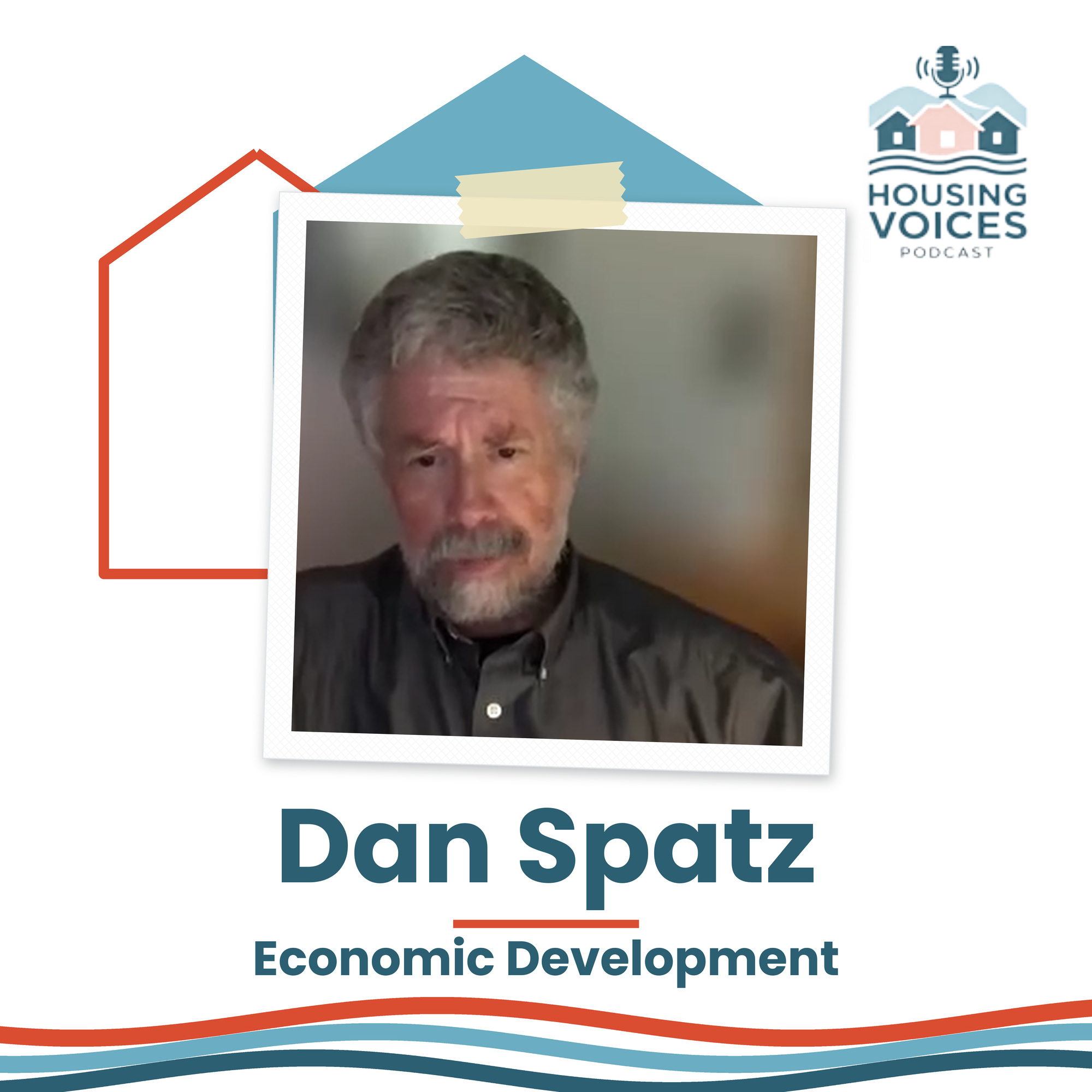
[00:00:10] Speaker A: And today we're having an incredible conversation with Dan Spots.
Right.
[00:00:16] Speaker B: Because housing isn't just a headline. It's pressured complexity.
[00:00:20] Speaker A: Right.
[00:00:21] Speaker B: It's our most critical human need underneath many of our problems today. And how does Dan fit into this?
[00:00:28] Speaker A: I think Dan fits in multiple of our buckets. He has just a wide berth of experience.
I used to work with him when I worked for the Senate and he really knows his stuff in terms of workforce, community development.
He worked for the Columbia Gorge Community College and has just so much experience to lend to this conversation. I'm, I'm really excited to talk with him.
[00:00:56] Speaker B: Well, and the hard thing is going to be is what are we going to focus on with him? Right. Because he's got such a wide breadth of experience.
So while he doesn't know it just yet, we might reserve the right to talk to him again. Yeah.
[00:01:07] Speaker A: Oh, absolutely.
[00:01:08] Speaker B: Yeah. 100% economic development is so huge and integral and sometimes an unseen part of our local politics and governmental systems that this is going to be a great way to highlight all that happens in the economic development office.
[00:01:25] Speaker A: Well, yeah, And I also want to talk about all of the other things that go into economic development. Aside from just, you know, jobs and supporting businesses. What else goes into economic development that we haven't been paying attention to?
[00:01:40] Speaker B: Yeah, yeah. He's going to tell us all the things. Yeah.
[00:01:43] Speaker A: So this is Housing Voices.
From the porches and shelters, streets and the room.
If the houses have voices, the truth could break through.
Hi. So welcome back to Housing Voices. My name is Bri.
[00:02:08] Speaker B: And I am Marty. And today we have the pleasure of having Dan Spatz with us.
[00:02:14] Speaker A: Hi, Dan.
[00:02:15] Speaker C: Hello, Bri. Marty, thank you for the opportunity.
[00:02:19] Speaker B: Thank you for being here.
Bri knows you from her legislative background, but would you for the kindness of me and everybody else, do a little bio introduction a little bit?
[00:02:31] Speaker C: Sure. Name is Dan Spots, Columbia Gorge resident. I spent about 30 years in journalism here, then about 15 years as development director with Columbia Gorge Community College. Wrapped a couple up a couple of years as economic development officer with the City of the Dalles. And I've done a few other things along the way, but kind of a long term fixture around the Columbia Gorge.
[00:02:54] Speaker A: Yeah, absolutely. I think a lot of folks in the region will recognize you and all of the really good work that you've been involved in in the Gorge region. So I'm excited to talk with you.
[00:03:07] Speaker C: Well, go ahead. Go ahead, Bri.
[00:03:11] Speaker A: So I, since this is a housing podcast. I wanted to start off our conversation.
You have worked on the topic of housing from multiple different angles, particularly from Columbia Gorge Community College angle, as well as obviously through economic development.
Can you give us from your vantage point now after the years that you have been in the community and watched the development, can you give us, you know, a state of play on, on housing in, in the Gorge region? Because there's a lot going on.
[00:03:48] Speaker C: Particularly of course housing. Affordable housing is a national issue. It's a state issue in the Columbia Gorge. We have a unique circumstance in it being a National Scenic Area.
So the boundaries of the National Scenic area drawn in 1986, Public Law 99663. I still remember the legislation established boundaries fairly loosely on the Washington state side and very tightly on the Oregon state side. That was a factor of politics. You had congressional members of Congress, representatives basically on the Oregon side, the Smith Brothers fighting it tooth and nail. And they were not at the table when the boundaries were drawn on the Washington side. Members of Congress kind of saw the train coming and they decided to be part of the negotiation. And so there's more room basically to develop on the Washington state side than there is on the Oregon side. In the Dalles we have a particular issue with the scenic area boundary drawn right up against the urban growth boundary. That creates a conflict with state law because you have to have an inventory of available expansion under Oregon state law dlcd that conflicts with the federal law. The federal law does not allow that expansion territory to really come into play.
So as a result, that plus the fact is a scenic area, second homes, Airbnbs, a lot of the market being taken up and staying vacant much of the year.
You have a very significant wealth gap in the Columbia Gorge. Folks who have the money to come in live here part time, recreate.
But the people who are actually serving those folks are not able, unless they've inherited a home to live close to their place of employment. They are driving long, long distances to get to a service level job that barely pays the gas.
[00:05:50] Speaker A: So a lot of those folks go over to Washington. Absolutely right. A lot of those folks that can't afford the Hood River, Hood river area particularly, that's kind of the, the hot spot for the high prices. But it's leaking into the Dalles and, and all of those cities around and folks are going across the river to the White Salmon area, right?
[00:06:11] Speaker C: Well, even White Salmon has the same issues as I live in the western, on in western Klicadat county. And it's like dropping a Rock in a pool. So it is almost irrespective of the state boundary.
If you want to find affordable places to live, you're driving out to Grass Valley or Goldendale, Carson, Stevenson, not so much. It's getting pretty expensive there.
Trout Lake, Glenwood. And again, those travel distances are just not supportable. We have public transportation.
There needs to be more of it. But the economics are tough.
[00:06:46] Speaker A: And additionally the Gorge has also been a hotbed for a lot of economic development and a lot of business growth. Right. There is a large number of more tech companies like drone companies as well as Google's got a substantial presence in the Dallas too, right?
[00:07:06] Speaker C: Yes, indeed. So you have in situ, you have a lot of high tech. And again that. That brings in higher wage individuals who are able to live in Hood River, White Salmon and those, those available property inventories are being taken up. We have more opportunities for development in the Dalles. Really. The Dalles could become a center of affordable housing.
But you know, we need to get through some, some of the same challenges. Availability of land, regulatory challenges, things of that nature.
[00:07:41] Speaker A: How have. With regard to the availability of land and, and that tension that you brought up between the scenic area boundary and then the urban growth boundary.
And you mentioned dlcd, which is Department of Land and Conservation Development. I believe that's correct. To find my acronym.
How have, how have those conversations with the state been? Because the state is really pushing hard on housing development and I kind of see an impasse here because there's. It's pretty hard to change the scenic area boundary. Right.
[00:08:16] Speaker C: It's very hard to change the scenic area boundary. It literally takes an act of Congress and we've been working with the Gorge Commission.
Those conversations could have turned out better. I think the.
At the end of the day there 10 there seems to be an almost permanent injunction on anything beyond very minimal expansion. I not an expert in that area. I didn't follow it as closely, but I believe the total is about 50 acres in perpetuity. I may need to correct that number.
50.
Let's check that number. And I do want to come back to you to check it. It's going off of memory in perpetuity. And when you talk about perpetuity. Well, really, you know, society does need to. Does need to grow. We do need to evolve and we do need to change over time.
[00:09:07] Speaker A: Yeah. When I think of other communities and about the available land that they have available.
Yeah.
Would be. I've heard like 1500 acres. Some cities have. And 50 is.
That's a huge constraint.
[00:09:25] Speaker C: Yeah. That's, that's when Congress passed the National Scenic Area, they allowed minor boundary adjustments to occur, but there was never a definition of minor boundary adjustment. There was never a definition of the process.
And that was a huge gap. Okay, yeah, we need to minor, but what is Minor? Is it 50 acres? Is it 100?
You know, at the same time, we don't want to see urban sprawl into agricultural areas. It's important to protect farmland.
And around the nation you see farmland disappearing at an alarming rate.
So that's, that's not the intent here. But there needs to be a balance. There are land that could be developed that are not farmland.
[00:10:09] Speaker B: What are the major industries there?
[00:10:12] Speaker C: We have retail, we have service industries, Google, the industrial base. You know, it's a good question though, because we lost the major employers that we used to have, the aluminum plant, the lumber mills, and we're still going through that.
You know, there's tourism related sectors. We have some downtown, but we could go, we could do a lot more in that. The high tech gorge Technology alliance represents a number of high tech companies. We have advanced manufacturing, things of that nature.
But those core employers that we used to have, timber and aluminum in particular, they're gone. And we never have been able to replace those. The Google data centers, they hire a few hundred people.
Many of them are.
It's not a replacement.
You don't replace a thousand aluminum jobs with a data center.
[00:11:14] Speaker A: Yeah, the, the data center does not employ even near close to the amount of folks that the aluminum industry or the logging industry did.
And then there's, you know, the whole host. We, we had conversations as well. And I want to ask you about this too. Is the infrastructure limitations that cities and counties have had with regard to housing. And I can't help but think about the data centers and how much water and electricity that they do use. And granted, you're on the river there in the Dalles. Is, is that a limitation? The infrastructure problems, is that a limitation for that area?
[00:11:52] Speaker C: I wouldn't tie the infrastructure issue to the data center.
The water they use does not come out of the river. The electricity they use really is what was formerly used by the, by the aluminum plant. Perhaps not exactly even trade off there, but pretty close.
The infrastructure, I would suggest more in terms of being able to develop housing in undeveloped areas. We do have an inventory in the Dalles of undeveloped smaller parcels and some larger parcels that could go into housing. And that's where you get into the economics of developing multifamily housing. How does the cost of that fall upon the developers, eventually the homeowners. I think those are some areas where really in terms of zoning policies, things like that, perhaps we can be looking at SDC system development charges. Can we defer the impact of those until construction has been completed? It becomes kind of a bookkeeping headache from a municipal standpoint. Yeah. How do you. How do you track those liabilities?
But we have city utilities. Could that be added into a city bill, for instance, after construction has been completed?
Can we look at especially developing upper story residential growing up instead of growing out in terms of housing?
[00:13:21] Speaker A: Absolutely. And because of this limitation. And I know where we got to, we have to verify the 50 acres. But that I see as. But regardless of the number, there is a shortage of available land to build in the area.
Do you see this as really limiting the economic development of the region? I feel like it's in a bit of a rock and a hard place right now.
[00:13:52] Speaker C: I think between the scenic area and also you. You have nimby even when the scenic area boundary does not come into play. Really good river has had some. Some real challenges there with larger housing developments.
There have been some in the Dalles as well, certainly.
So it's not all just falling upon the scenic area boundary. You still have the traditional.
Some of the big issues that face affordable housing elsewhere in the United States. We have those two. The economics are developing.
The land is there, but it's expensive. And so the economics tend to favor high end housing that does nothing for affordable housing or family wage housing.
A developer comes in, it makes economic sense for that developer to break a parcel up into two or three parcels maybe and put some McMansions there. And that's where the money is in terms of developing that for multifamily. The economics don't support it. It's too expensive.
There have not been any apartments built in the Dalles.
I think certainly not since the 1980s. Maybe not since the 1960s. Just molded.
Yeah. Condo development.
Now. I think there have been some reforms recently at the state level in terms of condo builder liability.
Yeah, I don't know if you've run into that one.
[00:15:18] Speaker A: We heard a little bit about it. We had a developer on one of our episodes that we already filmed talking about how builders really avoided condos for a lot of reasons, but the liability was one of them. And that hopefully some of these changes could. Could change the landscape a little bit for that. In terms of variety.
[00:15:40] Speaker C: Yeah, I'd like to check the current status on that. As of a year ago, I think there was Some legislative action to try to address that. But the idea that, okay, you build a condo and somebody finds a physical defect nine and a half years later and can go after that original builder because of that.
[00:15:58] Speaker B: Yeah, he mentioned that it was going to be coming down from the 10 to 7.
[00:16:03] Speaker A: Yeah. Oh, something lower. It was six or seven something. But it was lower.
[00:16:08] Speaker B: Yeah, maybe it was six. I'm not. Yeah.
What are you hearing most from people there as to as far as what do they want as far as housing options?
Are they wanting to focus really on it or is affordability really something that is being talked about?
[00:16:27] Speaker C: I think affordability.
Affordability.
When I was with the college, I'd meet with businesses. I go out and do site visits primarily because I wanted to know what type of workforce training programs those businesses were interested in the college providing. But I'd ask the general question, what are the biggest challenges you face? Affordable housing, Affordable child care, because it ties directly into workforce recruitment, workforce retention. There are companies in the area that are building their own housing for their employers and their employees because those folks cannot find a place to live.
So affordable housing.
[00:17:06] Speaker B: Can you talk a little bit about what you were doing at the school, community college and what you did to make that all work? Excuse me.
[00:17:17] Speaker C: I was the development director for the college and so I had the college foundation. I helped establish new programs and I eventually got into physical development, the. The Columbia Gorge Skills center and student housing, resident housing. So we had what's called Article 11G funding, that's a state funding source for community colleges.
It requires match.
So we were able to obtain match on a $7.3 million allocation and with that build a skill center and a residential hall basically on the college campus.
[00:17:55] Speaker B: Can you tell people what match is just because not everybody is quite as well versed as you?
[00:18:00] Speaker C: Sure. If anybody ever gets into grant writing, MATCH is amount of local funding or non federal or non state as the case may be.
Funding you need to come up with in order to qualify for state funding. Federal funding.
Typically you can fund a federal grant with state match as long as the state dollars don't originate from a federal source.
If you really wanted to get into the weeds, there's also leverage. That's the non monetary things that you can bring to the table to help win a grant. But match, there are very, very strong legal requirements that go along with that. If you say that you're matching $100 with $100, you'd be able to show where that $100 is coming from, that type of thing.
[00:18:53] Speaker B: What Led you to develop housing at the community college. Why did you do that?
[00:18:59] Speaker C: We ran a survey trying to figure out what barriers students were facing to enroll at the college. And lack of childcare and lack of housing were the. The top two issues that came out. Students sleeping in their cars, students couch, you know, And I had students tell me directly, yeah, it's true.
I was sleeping in my car until I finally found a job. Not me. The students telling me that bouncing from house to house to house, living with their relatives, not able to attend college, period, because they couldn't afford to drive. Another related issue is lack of broadband. Yes, we can do a lot of stuff in remote education, but not when you don't have broadband. I'm living up in the country myself. I was fortunate enough to get Starlink. We were a beta test site for Starlink.
But before that, my wife and I were trying to run Zoom meetings off of God, what was it? I can't remember the name of the service, but as a geosynchronous satellite. So the delay in conducting a conversation was several seconds. I'd say something, 10 seconds later I'd get a response.
[00:20:11] Speaker A: Oh, that's just impossible.
[00:20:13] Speaker C: Yeah, but we need talk about telecommunications. How about fiber? How about federal investment in fiber?
[00:20:21] Speaker A: Yeah, yeah.
We definitely have tried for a while to get rural broadband investment, and we were successful to some degree, but not anywhere near what folks need, for sure.
I really view my personal belief. I view broadband access as kind of the electrification of this generation or this century that we are in. How can you expect people to work from home, do homework, or, you know, any of the million things that run off the Internet now.
[00:20:54] Speaker C: Telehealth. Telehealth.
[00:20:56] Speaker A: Oh, by the way. Yeah. And it's. It's not like the. The gorge region has any problems with health care access either.
[00:21:03] Speaker C: Right, right.
I think sarcastic utility. It should be viewed as utility. We extend electricity to farmlands all across the United states in the 1930s. It's the same thing. Why can't we do it now?
[00:21:18] Speaker A: I strongly agree with you there.
[00:21:21] Speaker B: When with your survey, you added housing for students, which was probably fantastically successful. Is that a correct assumption?
[00:21:30] Speaker C: It's still got. We still have vacancy. We still have vacancy.
[00:21:34] Speaker A: Really?
[00:21:35] Speaker C: Yeah. Yeah. I think that there are still enrollment barriers out there.
I think, you know, and I've been distant enough from the college for just long enough. I can't speak to the real causes for that, but I think it has to do with finances. People are still struggling to make ends meet and not having the ability to attend college with financial supports.
[00:21:58] Speaker A: Well, the child care situation, has it changed? Because when I was working alongside you in the region, we were working together on some child care of one early learning center. Can you give us an update on that if there is one?
[00:22:16] Speaker C: Oh, sure. That's a sore topic.
We were on the cusp of converting a former middle school into a regional child care center. And child care is with the economics of housing. If you have density, it makes it more economically affordable.
Small child care centers are expensive, so economy of scale favors larger facilities which work in larger cities, but in a rural environment, it's a little bit more difficult.
So we had the site, we had the funding, we had a 20 million dollar EPA grant that would have made that possible. And the Trump administration yanked the grant without doing any investigation asking what it would be used for anything else. We wrote the grant under the Biden administration to DEI criteria and of course that, that shot it down under the new administration.
[00:23:12] Speaker A: Dang it.
[00:23:13] Speaker C: Yeah, yeah.
Oh, well, the need is still there.
[00:23:18] Speaker A: Yeah.
[00:23:19] Speaker B: Did the survey also bring up more needs or changes in how the university or how the community college educated or what they focused on?
[00:23:29] Speaker C: There was always an interest in distance learning to the extent that could be provided, and some additional programs. We didn't go too much in that survey into program development. That's some of the other stuff that we did in direct contact with employers, for instance, paramedic training and medical assistance, a program. We did start things of that nature. Dental hygiene is one that may be started here soon. But no, the survey focused really on those two key issues on housing and childcare, particularly housing, because that put some of the numbers together that we needed for the grant and for the scale of the development. How many units, that type of thing.
[00:24:13] Speaker B: How many units did you create?
[00:24:16] Speaker C: Oh, boy. Was it 50?
I think it was 50.
Yeah. I'd have to check that maybe in 48.
But, you know, the idea being that students can live on campus. And I think I want to see what the occupancy is. Now, I have to get back to
[00:24:39] Speaker A: you on that one and I want to jump to your time doing economic development for the City of the Dalles and speaking more broadly about economic development a lot for a lot of folks that, that I had talked, they think, you know, economic development is, you know, getting a company to come to your city and open a location. And that's, you know, that's that essentially like the economy is developed. Right.
But there's, there's a little bit more involved in that. Right. And, and also Particularly some attention to other things in the community, like. Like housing. How much of economic development considers things like housing and. And other supports.
[00:25:26] Speaker C: Housing is one of the first questions that a company asks.
I was working with a company that wanted to bring in a distribution center. It would have been 300 employees.
We would not have had a place to put 300 employees just like that.
The construction of women farms around the area leads to really seasonal shortages of hotel rooms, things of that nature.
They're pretty much booked up.
So housing is a. Is a big, big issue. The other big one, two other big ones, healthcare and education, public education.
So the school system companies always look to that. The fact that we have a community college is a big, big draw. It's one of the reasons that people got together back in the 1970s to create Columbia Gorge Community College. That was not a state initiative. It was a local initiative.
And the idea being that we need. Yeah, but the. The at K12 level, we need a new high school.
We desperately need a new high school to replace the structure built back in the 1940s.
Extremely inefficient old building.
But the cost Of. Of a new high school now, 90 more.
[00:26:44] Speaker A: Yeah, well, a lot of cities and localities that. That we've heard, and we had a conversation with Representative Gomberg as well, about investing in all of the things outside of housing that support housing, for example, the infrastructure challenges. And do you.
Do you see from. From your vantage point any, you know, opportunities on the horizon from the state of Oregon to invest more in that stuff? Because there are so many localities that need new schools. Right. Like, I grew up in southern Oregon, and, boy, they need new schools. Right. And so many other places.
[00:27:24] Speaker C: Bri. Unfortunately, on that one, I'm gonna have to punt because I've been over. I've been out of the loop just long enough, and I know how quickly legislative initiatives can change. I don't know if Nate Stice has been on the program.
[00:27:36] Speaker A: No, not. Not yet, no.
[00:27:38] Speaker C: But I would bring Nate on and ask him a question like that.
Certainly looking at the state, this, you know, the state of state finances right now and where we are at the federal level, I think questions like that need to go to the federal level.
[00:27:58] Speaker A: And for folks who don't know, Nate Stice works for the governor, Governor Kotak, he's on the regional solutions team.
They're regionally divided for different parts of the state, so they're kind of like the field rep, so to speak, for the governor of that area. But they do a lot.
[00:28:18] Speaker B: You. You mentioned back in the 70s that the community got together for the building of the community college and that they've reaped quite a bit of benefit from, from doing that.
How can it be done or what recommend recommendations would you make to do the same for affordable housing so that it too can draw in more workers?
[00:28:42] Speaker C: Interesting, interesting idea.
I think that if, if communities looked at all the different aspects that go into affordable housing and put together ideas like public land trusts looking at publicly available land and somehow subsidized infrastructure, delaying the cost of SDCs, looking at zoning requirements, do we, can we do more mixed use, for instance, especially downtown? Can we reduce real emphasis on single family residential and low density residential and increase use of high density and mixed use, including housing and commercial areas downtown, upper story residential.
Put all those things together into a strategy and bring in state funding and bring in federal funding if it becomes available.
Maybe try to take, try to bring the economics that now favor high end expensive single family residential and try to bring those economics down into workforce housing. It's going to, it's not an easy task. It's going to take a multitude of different, different elements that go into a strategy, a comprehensive strategy.
City of the Dallas completed a residential lens analysis and build out analysis and encourage bringing Josh or Matthew in from the city to speak to the specifics of that.
But yeah, we do it with a community college, there should be some way to do it. And also with childcare.
[00:30:30] Speaker B: Yeah.
[00:30:30] Speaker A: And then also on top of this, I just remembered a complicating factor because it's not complicated enough as it is right now.
Climate change, wildfire.
There are folks that are still struggling from the Rowena fire, last time I checked in, getting their housing even restored. There are folks living in temporary housing. Can you talk about that a little bit?
[00:30:55] Speaker C: The Gorge Commission did reduce.
They came up with an amendment to the scenic area ordinances that allowed those homeowners some flexibility in terms of fighting. And the footprint, trying to put a modern home on an old footprint that may or may not work anymore. So doing things of that nature, and I do credit the Gorge Commission with moving that fairly quickly along.
There was some, you know, but yeah, that did happen.
At the same time there were a lot of other factors there. Asbestos cleanup, things of that nature that, that had to be taken care of.
That community was wiped off the map. All but tragic, that fire. Yeah.
[00:31:44] Speaker A: And we can expect more of, of those calibers of wildfires as climate change continues to get.
How do you see, how do you see the region moving forward, balancing the wildfire risk and the need for housing.
[00:32:03] Speaker C: We need to look at a comprehensive approach. Vegetation management, access into fire, access into areas that may not have egress.
Western part of the Dalles was developed under county regulations before it was brought into the city.
And so the city was recently awarded state funding to have an overall development plan for addressing some of those issues.
Homes that encroach upon public right of way, restricting fire access, and then substandard housing and homes where you may not have adequate water supply or.
It's a real challenge because wildfires in a semi urban or an urban setting spread from house to house to house.
And no matter what you do as a homeowner in terms of vegetation management and hardening around your home, you can't help what the neighbor is doing 50ft away or 100ft away. And a fire can easily make that jump.
So what can we be doing in terms of informing people, Providing incentives, financial incentives, just basic knowledge about what types of vegetation is super flammable and what is not. You can. You can plant things that are not as dangerous and get rid of things that are. Arborvita, for instance. Yeah, man, that's a key thing. It's just like a blowtorch out there.
[00:33:41] Speaker A: Yeah. Do you think that the state or the county or whomever should be more strong with their requirements, say, for building materials? Right. If this is in a high risk area, and we know it's a high risk area, should it be. Should the homes be essentially hardened? Right.
[00:34:03] Speaker C: It gets back into that balance of requirements versus affordability. Yes, yes, you should. You should have concrete siding. You should not have cedar siding, things of that nature.
You know, T111 is cheap.
It's flammable, but it's cheap.
So where do the regulations land on that one?
That's a tough issue.
The Gorge. I was just at a meeting this morning at the Gorge Discovery center, that same thing. The Discovery center has come close to being taken out by wildfires a couple of times, including the Rowena fire. Here's the National Interpretive center for the National Scenic Area, and we're talking about the need for a concrete siding on that building. It's wooden siding right now, and it's a composite roof.
[00:34:52] Speaker A: Yike.
[00:34:53] Speaker C: Yeah.
[00:34:54] Speaker B: So if nothing changes, what do you see the region looking like in the next five, ten years?
[00:35:04] Speaker C: More diverse from an industrial standpoint. High tech. I think we'll see a lot more high tech.
I think downtown. And I'm being optimistic. Downtown will be more vibrant. We'll have more upper story residential downtown.
And I hope that There will be a continuation of our current agricultural base.
I would not want to see that displaced and a continuation of folks who have called the Dallas their home for so many years and not be displaced, frankly, by tourism. Tourism is icing on the cake. It brings in, but it's not a good, strong economic basin to itself.
[00:35:50] Speaker A: And additionally, there are also.
There's a huge agricultural industry in the area. Right. There's the. The cherry festival that the Dalles has and Hood R has. Amazing.
They've got the fruit loop there with all of those incredible orchards and, and the apples. It's. It's just incredible the things that you can grow out there.
There's been a need for farm worker housing. Right. And can you talk about that a little bit?
[00:36:22] Speaker C: Yeah, definitely a need. Again, I'm getting outside my realm of expertise, but I could point you to some people that would, that would.
The growers. I know that there have been restrictions the growers have been faced with in terms of developing and maintaining farm worker housing that add to the cost and the complexity of housing.
Beyond the housing issue on, on. On farm workers. Let's talk about the entire immigration crisis that we've got with this insane administration trying to destroy our workforce and, and deport everybody.
That's.
That's the big issue there from, from everything I'm hearing.
[00:37:05] Speaker A: Yeah. I mean, aside from the human impact and the human costs on the people themselves, there's also going to be a huge impact, a ripple effect through the entire gorge community because of the attacks on that. That community, specifically family disruption.
[00:37:21] Speaker C: You've got people being taken from their workplace and, and mothers don't know what happened to their, to their. To their husbands and, and it's. It's a crime.
Yeah. Yeah.
So what do we do about that? That's.
[00:37:36] Speaker A: Boy. Yeah, that's another episode.
[00:37:40] Speaker B: Because we're a housing podcast. Yeah.
[00:37:42] Speaker A: Sorry.
[00:37:43] Speaker B: It's okay.
[00:37:43] Speaker A: I go off on tangents too, Dan.
[00:37:46] Speaker B: So. So what do you think is one realistic next step that local leaders could do to start making a change and making it more affordable?
[00:37:56] Speaker C: They're taking those steps already. Some of the studies that are taking place to identify challenges, to identify strategies.
Let's bring in city leadership on that question. I can spout off a little bit, but I, I want.
[00:38:13] Speaker A: We want you to spout off.
[00:38:14] Speaker C: That's why foreign.
I'd like to bring in the folks who are closer to it right now in terms of tackling things like STCs. That's one of the, the issues I heard over and over again. System development charges Tend to be an early upfront cost for housing. Can we spread those costs out over time rather than assess them before the housing is actually developed?
So whatever we can do to take the upfront cost of housing off or defer it in some way.
That one. Or can we reduce some of the STC costs? I'd like to see STCs linked directly to the impact of the housing. And if there's no direct link, there shouldn't be an stc. Parks. I'm sorry, we love parks, but parks are able to charge an STC in the city case of the city of the Dalles, that parks SDC is higher than all of the other SDCs combined.
Yet housing development has a direct impact on water, on wastewater, transportation. Yes. Is there a direct impact on parks?
When I did student housing at the college, we needed to pay a parks SDC for student housing.
Okay. Stuff like that.
That's not, you know, that's not going to be a magic solution itself. But let's take a look at all of the different costs that.
That are incurred here. Look at zoning. Are there are. Do we need to focus as much on. On low density? Let's do some more in terms of high density.
[00:39:54] Speaker A: Yeah, a little bit more infill.
[00:39:58] Speaker C: Infill.
[00:39:58] Speaker A: So I, I'm going to ask you to. To spout off a little bit here, Dan. If you had a magic wand and you could, without restraints, change one thing, what would it be? With regard to housing?
[00:40:15] Speaker C: With regard to housing?
[00:40:17] Speaker A: Yes.
Easy question.
[00:40:19] Speaker C: A magic wand.
[00:40:21] Speaker A: Yes.
[00:40:21] Speaker B: Yeah.
[00:40:21] Speaker A: Yeah.
[00:40:22] Speaker C: Okay. I'd reorient the way we. We allocate federal spending and quit putting billions and billions of dollars into the military that we don't need and stop starting foreign wars that we don't need.
[00:40:33] Speaker A: You want more investment here in our. Directly into our communities?
[00:40:37] Speaker C: Yeah. We pay federal income taxes. What do we get out of those federal income taxes? What direct benefit are you getting?
Any of us?
You know, look to the, look to the entire text of Eisenhower's speech about the military industrial complex back in the 1950s. And he broke down way back then and said that the cost of a battleship is actually a theft from public education, from housing, from public infrastructure. And he broke that down by all the different aspects. And now magnify that by what we're putting out overseas now and domestically now, and the incredible injustices of that. And let's talk about the billionaires out there who control 95% of the wealth.
What are we going to do about that?
[00:41:29] Speaker A: Yeah, that came up in our conversation with representative Gomberg since he has a position of leadership on Ways and Means and he illustrated our budget problems that we're having in the state of Oregon and sounds like revenue generation problem. And I can think of a couple places that we can remedy that.
[00:41:53] Speaker C: Yeah, I think quite simply, you know, back in the 1960s, the wealth disparity gap was a fraction of what we see now. You actually had a middle class and now the middle class is under assault.
We were able to build the national freeway system. We were built bridges, railroads, schools, hospitals, all of that stuff. And now we've got this mindset that we have to struggle and pay for that with our local tax base because the federal government doesn't have the money to do it. Well, baloney. The federal government has plenty of money to do it if they just put it in the right direction locally where it needs to be invested in schools, in hospitals, in bridges.
We are struggling with the Hood River Bridge. It's built in 1924. Nine foot lanes.
It's built on consolidated gravel that doesn't go down to bedrock. If we have a major earthquake. Earthquake, that sucker is going down. It's closing down navigation in the Columbia River. Yet we are struggling to get federal grants that have been awarded. We don't have the paperwork to do it. Now we find out that federal loans are being allocated to red states instead of blue states.
[00:43:07] Speaker A: Well, and those have direct economic development impacts. Because when that bridge gets shut down for whatever reason, damage from heavy equipment or. Because there is a lot that goes back and forth between the two states.
When that bridge goes down, there's nothing that can happen.
And there's also health care concerns too. Right. There's not equitable distribution of health care on both sides of the river too.
[00:43:34] Speaker C: Let's talk about Medicaid cuts and the effect that those are having on rural hospitals. Rural hospitals survive. Yeah, yeah, yeah. Magic wand. There's so much we. There's only so much we can do at the local level.
We need to get out of the mindset that it's up to local leaders to solve all of their problems. When we're shipping most of our federal income taxes off someplace else and not getting them back, we're subsidizing the rest of the nation as blue states. And we're not getting that back. We're being penalized instead. And we all need to be sick and tired of that equation.
[00:44:08] Speaker A: We're overdue for reorganization with respect to that.
But I wanted to get back to, to the housing. I've been asking a lot of questions.
[00:44:18] Speaker B: You have, but you're good at that. It's one of your things.
What should citizens better understand about the housing challenges in their personal communities?
Hmm.
[00:44:33] Speaker C: I think we need to recognize that we all have a responsibility to help address it. And NIMBY comes into the equation still too much. Oh, we don't want that big development taking place right next to us. Well, at some point, our own home was developed on land that probably somebody else would rather have seen go to someplace else or not being developed at all.
So, you know, let's try to understand that if we choose to live in a. In a city that's part of the equation, that we have to be closer to services, we have to be closer to the homes next to us.
But also recognize, going back to things like wildfires, that it's a common responsibility.
We need to. We need to be able to work in common with each other. And I don't know how.
How that's going to happen, but there is so much antipathy. We've got to get beyond that.
[00:45:38] Speaker B: One of the things we're striving to do as we're concluding on the pot on this episode, is we want to give people action items, right? Something specific that they can do that's going to help lead to a solution. What is something specific you can leave people with they can do or a challenge that you can give them if
[00:46:00] Speaker C: they have any time beyond the demands of working two jobs to make ends meet?
If they have the time, Find a way to volunteer to become active and volunteering in the community, whatever it might be. Meals on Wheels, tutoring, joining a nonprofit organization, helping help your neighbor clean the steps in the winter. Help your neighbor get the snow off of the sidewalk.
Keep an eye on your neighbor.
Is he or she elderly and in need of assistance? Shut in mules on wheels might be the only opportunity that person has for human contact over the course of the year.
You know, volunteer in the schools.
[00:46:50] Speaker B: Wonderful.
[00:46:52] Speaker C: There are a million ways to do that.
Just. Just find out and ask.
[00:46:58] Speaker A: Absolutely. Busy hands help with a busy mind, though.
Not how that goes.
[00:47:04] Speaker B: There's.
[00:47:04] Speaker A: I thought it was there or something.
[00:47:05] Speaker B: Busy hands make light work.
[00:47:08] Speaker A: Oh, there's another one. Maybe I'm. Whatever.
[00:47:11] Speaker B: You know, it's okay to mix your metaphors and your analogy. I do it all the time.
Yeah, it's more fun that way. Right. It gets people thinking. And that's what we want to do, is we want to get people thinking. And according to your recommendation, we want them to be volunteering as well.
So I. Yeah, I like it. Yeah.
[00:47:31] Speaker A: And I always want to do a plug for go to a city meeting, go to a planning commission meeting, go to county commissioners meeting, show up.
[00:47:39] Speaker C: Yeah.
[00:47:40] Speaker A: Because that's, that's what makes a difference.
[00:47:42] Speaker C: Be informed, don't wait until there's some big controversy that draws you into the meeting and recognize that city officials are doing the best they can.
You know, if you realize, God, why didn't, why didn't they think of that? Well, the chances are they probably did think of that and there's a reason they didn't do it. And the reason usually comes down to money or lack thereof.
[00:48:05] Speaker A: And you can always ask your city staff about that, too. As a resident of that city, you can always reach out and say, what the heck?
[00:48:11] Speaker B: Can you explain this?
[00:48:13] Speaker C: And from my experience on working both private sector and public sector, private on the newspaper side, public as an elected official, city council and as also staff public servants are hard working, intelligent, dedicated, facing multiple challenges, doing fantastic jobs, often under duress, and appreciate what they're doing. Appreciate what they're doing.
[00:48:42] Speaker A: It's going to take all of us to address our housing challenges.
So thank you so much, Dan, for spending the last almost hour with us, answering all of our random questions and putting you on the hotspot.
[00:48:56] Speaker C: I'm going to get back to you on the 50 acre thing with the scenic area. I'll check the fact on that one.
[00:49:00] Speaker A: Yes. And we'll put it in the notes of the show when we get the answer.
[00:49:05] Speaker C: Okay. Thank you.
Thank you.
[00:49:08] Speaker A: Awesome. And I am Bri.
[00:49:10] Speaker B: I'm Marty and this is Housing Voices Solutions.
[00:49:15] Speaker A: Meet.
A special thanks to our partners Marty, Bulford.com and Signet.net for supporting thoughtful dialogue around housing in our communities.
Music for Housing Voices is provided by Karen DeWolfe and Adrian Kriz. Thank you for helping us set the tone.
You can find
[email protected] and connect with us under Housing Voices on Instagram, Facebook, LinkedIn, Blue Sky, TikTok and our YouTube channel.
If you found value in today's conversation, share this episode, follow the show and help us expand the dialogue.
Until next time, this is Bri. Let's keep listening, keep learning and keep building practical housing solutions together.